In January 2025, Taiwanese researcher and biomechanist Huai-Ti Lin unveils at the SICB (United States) seminar a discovery made in 2023: the dragonfly’s somersault.
Yes, yes… a somersault. Or, as the team calls it: the “Dunk and Spin” behavior. We’re clearly looking at a mix of Top Gun and the Olympics, insect version.
A quick reminder of the dragonfly’s already incredibly impressive flight
- Predatory, it hunts and eats in mid-flight. 300 insects per day. Easy.
- The male can hover over a pond for hours without ever landing. Without ever landing.
- Territorial, it chases away rivals by flying over its zone.
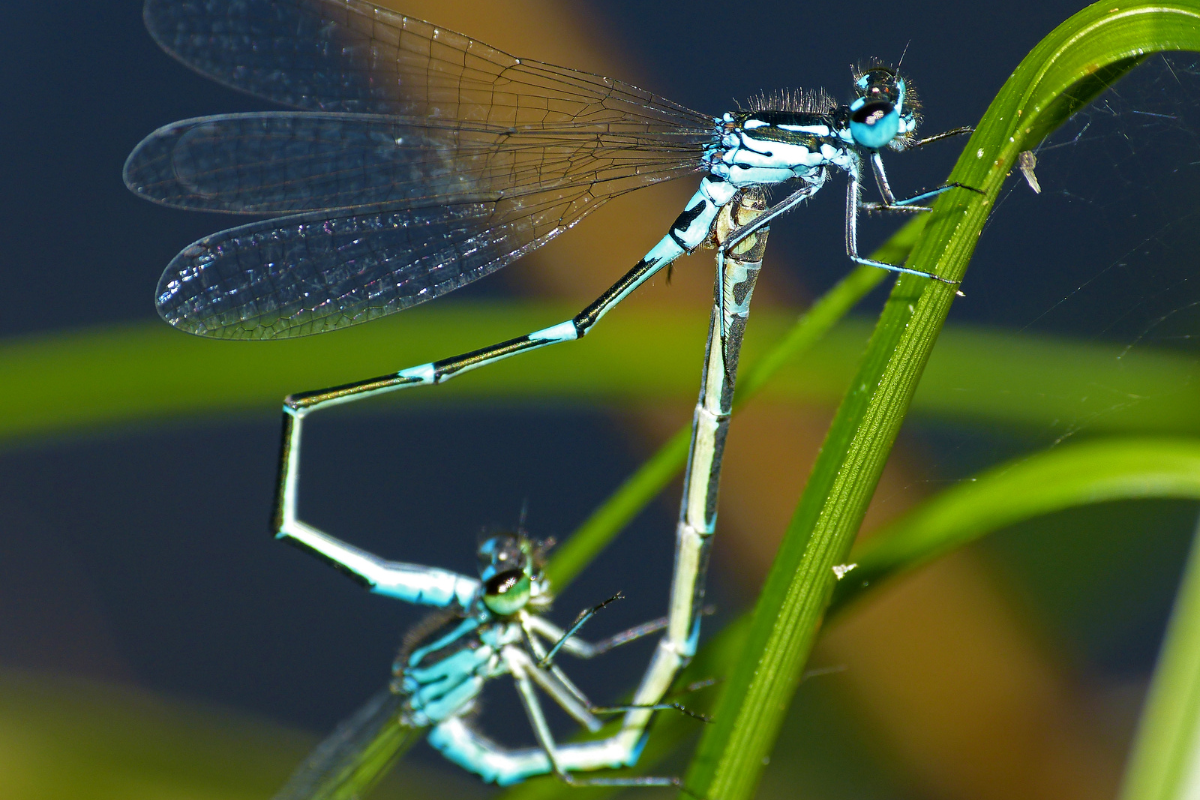
- And that tandem love flight, you see? A choreography worthy of an aerial ballet.
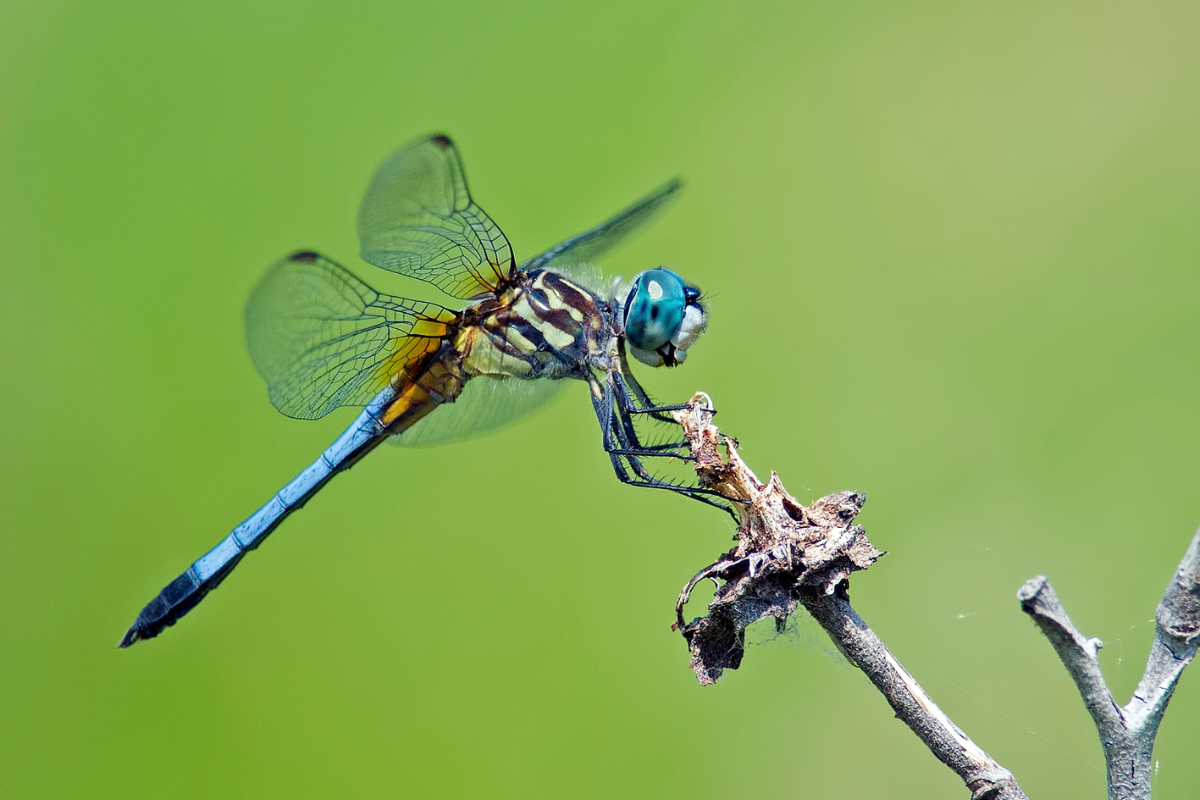
Flight Protocol — to be read while singing like @Orelsan: #Simple #Basic
- Fast, silent… with insolent stability.
- Hovering? Easy.
- Forward, backward, sideways, vertically upwards. Tom Cruise can go back to bed.
- Sudden change of direction. Basic.
- 4 independent wings, each with its own muscles. Simple.
- 1.5 m/s when gaining altitude, 60 km/h at peak speed. Okay?
- 360° vision thanks to its enormous eyes. Basic.
- Articulated head: it can move it or keep it still without disturbing its trajectory. Yeah.
And now… the somersault.
Imagine a dog shaking itself dry. The dragonfly would do the same… but in an aerial, vertical version, at 2000 revolutions/minute.
- The phenomenon is almost invisible to the naked eye, hence the ultra-fast video capture to dissect each movement.
- Every 10 minutes, the dragonfly dips its body into the water.
- It takes off vertically, then performs a looping at 2000 revolutions/minute. 👉 For comparison, a washing machine at max: 1600 rpm (thanks Dr. Alexandra Yarger).
- Objective: to cool down. Researchers used microprobes: yes, the somersault does serve to dissipate heat. Incessant flight heats the engine, and muscle overheating can be fatal.
- Why not just land in the shade? Because in 5 to 10 minutes, it would lose its territory. 👉 So it chooses the aerial stunt version rather than the nap in the shade version.
- 90 seconds of “Dunk and Spin” are enough to dry and cool down.
And let’s remember that dragonflies appeared before dinosaurs (300 million years ago). Suffice it to say that this behavior is well-honed.
Is this a phenomenon known to experts? In any case, we had to share the information with you!
Research Status
The results are not yet published but were officially presented at the Society for Integrative and Comparative Biology in 2025, and reported by Science Magazine.
Sources
- News Sciences Magazine (2025); Sciences et Avenir (2025); Museum of Natural History – France 06.
- SICB Abstract from Huai-Ti Lin’s team: https://doi.org/10.1093/icb/icaf004
- Video credit: Samuel Fabian, Alex Yarger, Huai-Ti Lin. General dragonfly behavior: Salamandre (2022).
- General behavior of the dragonfly; Salamandre 2022.
Inspiration
Thanks to Eric Englebert for this discovery and his request to PlantC to investigate further!