PlantC, in collaboration with Valbiom, PHITECH, and CIPF, offers €1000 and its expertise to a farmer to fund a hedge, coppice, or miscanthus strip project.
And the winner is….
The winner of the competition “Green Infrastructure for the Region and Agriculture” organized by PlantC, ValBiom, Phitech, and C.I.P.F. asbl has been announced!

Thanks to your support, Thierry Catteau wins the competition and will receive comprehensive support and financial assistance for the implementation of his #planting project of a hedge integrated into a vineyard in Ecaussinnes.
A diversified hedge for biodiversity in the Côteaux des deux tilleuls vineyard in Ecaussinnes

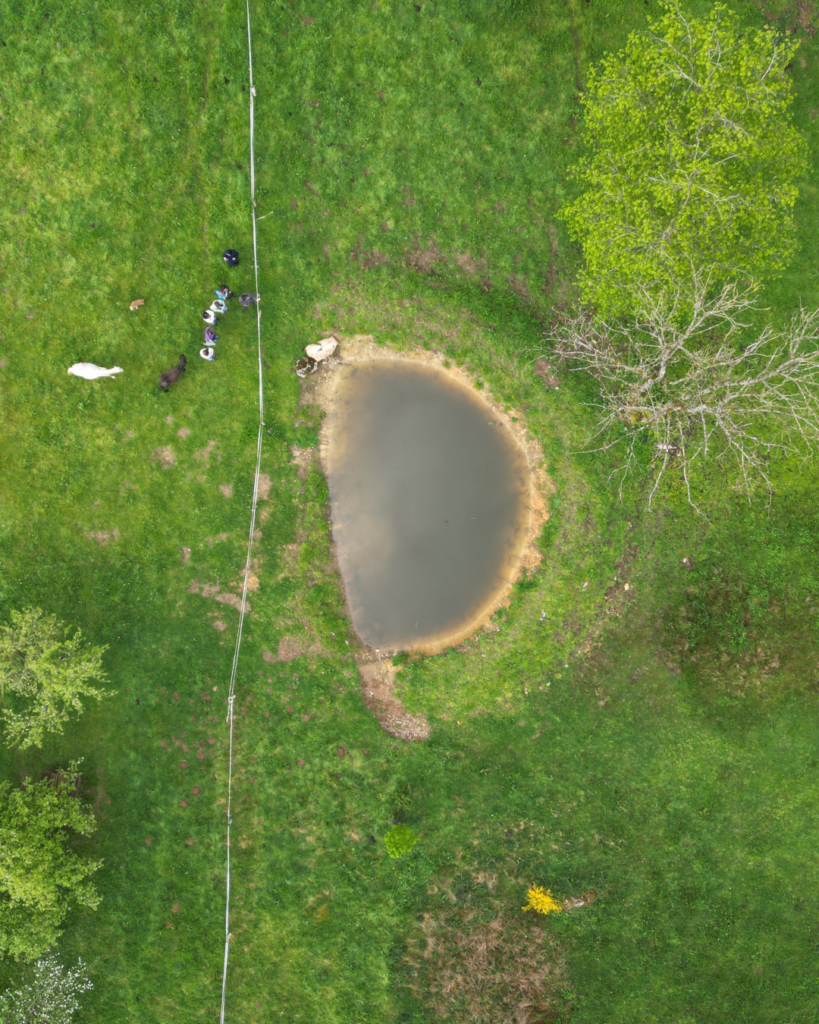
Thierry Catteau planted over 20,000 grapevines on 5.9 hectares in Ecaussinnes, integrating biodiversity from the very beginning of the project: creation of a pond, and insertion of fruit trees within the vine rows.
While awaiting its first sparkling wines, and to continue this great momentum, Thierry wishes to plant 400 meters of hedge around the vineyard. Attracting insects beneficial to vine cultivation is one of the objectives of this project. As the land is on a well-exposed slope, the hedge will also help limit water runoff and soil erosion, and protect the vines from northerly winds.
Uniting stakeholders around the vineyard project is an equally commendable objective. Since this year, the vineyard has joined a local producers’ circuit organized by the municipality. Thierry also wishes for his experience to benefit students, professors, or researchers interested in these developments and the results they will produce (biodiversity colonization, soil improvement, etc.). This competition also offers him an opportunity for visibility useful for building these future partnerships.
In essence, biodiversity for quality wine!

Congratulations to the other two finalists, Tanguy Van Outryve and InBW, for their excellent projects!
Thank you to the candidates who submitted their applications.
2. Objective: Energy Autonomy on a Farm in Dinant

Tanguy Van Outryve is a farmer in the village of Lisogne, and notably works with partners on the development of organic market gardening on his land.
Aware of the challenges related to global warming, he wishes to replace his oil boiler (15,000 liters per year) with a biomass boiler that would utilize locally produced biomass from his farm. To do this, Tanguy is ready to allocate 2 hectares to the planting of coppice, miscanthus, or hedges with the aim of producing renewable fuel.
As an additional benefit, the planting project could help mitigate water runoff during storms affecting the Leffe Valley. On a positive note, the farm has infrastructure that could store the biomass harvested throughout the year.
The challenge for Tanguy in this competition is the opportunity to receive technical support for the realization of this complex but meaningful project!
With Tanguy, the short supply chain is not only for food but also for energy!
3. A Farm to Accelerate the Relocation of Food Production in Mont Saint Guibert

A showcase project of 1.2 km of hedge.
The intermunicipal organization inBW recently acquired a farm and its 57 hectares to host and support project leaders wishing to contribute to the relocation of food production. Specifically, this structure will combine three functions:
- The Incubator: activity testing for agri-food producers and processors.
- The Nursery: an incubator, it provides project leaders with resources and services enabling them to implement their project while limiting personal investments.
- The Eco-Hub: provision of production workshops, land plots, offices, storage areas, cold rooms, etc.
Through this competition, the objective is to contribute to the planting of 1.2 km of hedge intended to develop biodiversity and to delineate organically farmed plots from neighboring plots. A walk is planned starting from the farm to highlight the producers as well as the biodiversity-friendly developments and the enhancement of the landscape.
As a reminder, applications were open from May 25 to June 23, 2022.
To participate, it was very simple:
- Submit your application via this form before May 31 to June 23: applications closed.
- The jury will select the most relevant project.
- The winner will receive €1000 for their project, as well as support and expertise from PlantC until its completion.
PlantC, ValBiom, CIPF, and Phitech are partnering to support and financially assist an exemplary planting project in an agricultural environment. The objective? To contribute, at its level, to the adaptation of rural areas to global warming.
The Potential of Vegetation in Adapting Rural Areas to Global Changes
One of the direct consequences of climate change is the increased frequency of extreme weather events (rain, winds, droughts). The news, still scarred by floods, would almost make us forget the scorching summers that preceded them.
Adapting our societies and territories to climate change is becoming as crucial as taking measures to mitigate climate change.
“Nature-based solutions” are often cited as relevant tools for land use planning, offering an efficient cost/benefit ratio:
- Windbreak hedge, to protect against drying winds or cold winds.
- Shade hedge and forage supplement for livestock.
- Miscanthus strip or willow coppice to combat mudslides and runoff floods
These developments provide a wide variety of environmental services: biodiversity support, carbon storage, soil quality improvement, water purification, landscape appeal, etc., and provide a local economic added value: biomass-based energy production or production of its own amendment.


© Diagram from the French Agroforestry Association presenting two agricultural landscapes with highly contrasting climate resilience potentials. The 1st figure shows an agricultural landscape vulnerable to extreme events. The 2nd figure, a resilient agricultural landscape due to the diversity of developments counteracting extreme climatic events (present root system, better water infiltration, sediment retention, diversification of plant and animal species, etc.).
Competition Objective
PlantC partners with ValBiom, the Independent Forage Promotion Center (CIPF), and Phitech to support an exemplary project involving one or more of the following vegetation developments:
- Single, double, or triple-row hedge.
- Short-rotation linear coppice.
- Miscanthus strip.
The project must incorporate consideration for the integration of this development at the plot or agricultural plain scale to maximize environmental services provided and minimize climatic risks.
The project is located in the Walloon or Brussels Region, on agricultural land.
The project is to be carried out in 2022 and/or 2023. The competition does not support projects already completed (development implemented or quote signed).
For Whom?
This competition is open to farmers, and generally to natural or legal persons, public or private, owning agricultural land located in the Walloon or Brussels Region. A farmer leasing agricultural land may participate in the competition by submitting jointly with the owner.
Submission, Selection, and Award
Each applicant is invited to complete a form briefly describing the project, before June 23, 2022, midnight.
A jury, composed of representatives from the organizing structures, will select the winner. If several projects attract the jury’s attention, a public vote will be proposed through a social media campaign.
The winner will receive end-to-end support for the successful completion of their project, and financial support of €1000 excl. VAT to be used for the implementation of their planting project by Phitech. They will also benefit from media visibility for their project, so that it serves as a source of inspiration and reflection for various stakeholders in the region.