Over the course of evolution, plants have developed many strategies for dispersing their seeds. Some rely on the wind (anemochory), others take advantage of animals (zoochory) to colonize new territories. But another actor has contributed greatly to the dispersal of plant species: human beings.
Through trade, transport, and landscaping, humans regularly introduce plants outside their natural range. Some of these species adapt to their new environment and, in certain cases, become invasive, with negative consequences for local biodiversity.
Among the introductions linked to human activity, one is particularly little known: polemoflora, also called obsidional flora.
What is polemoflora?
Polemoflora refers to plant species introduced, intentionally or accidentally, by armies during conflicts. Their presence today serves as genuine biological evidence of history and can sometimes help identify former battlefields, military camps, or routes taken by troops.
These introductions can have different origins:
- The transport of fodder for horses and draft animals;
- The cultivation of food or medicinal plants for soldiers;
- The accidental transport of seeds in clothing, boots, or military equipment;
- The movement of vehicles and equipment during troop deployments.
Not all introduced species become invasive. Some remain limited to a few specific sites and coexist with the local flora without causing any major ecological impact. Their interest is then as much historical as it is botanical.
Plants that tell a story
The presence of certain plant species can sometimes help trace events going back several centuries. Botanists thus work alongside historians to identify areas once occupied by armies or to track troop movements across a territory.
Military camps remain prime locations for observing this particular flora today. The frequent movement of equipment and vehicles indeed promotes the transport of seeds between different regions.
A few examples of polemoflora in Belgium
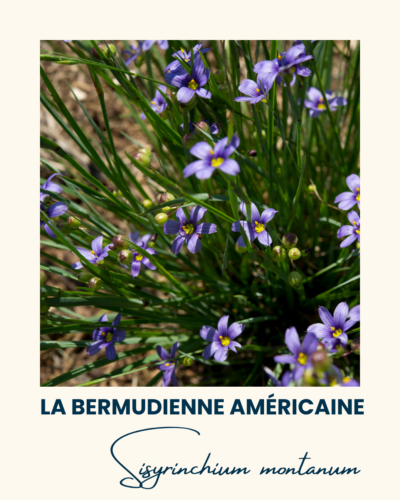
Native to North America, this small plant was introduced to Europe during the First World War. American troops imported hay from the United States to feed the horses and mules mobilized on the front. The seeds present in this fodder were thus scattered across several regions.
In Wallonia, the species is notably observed in greater abundance in certain military camps, such as the one in Marche-en-Famenne.
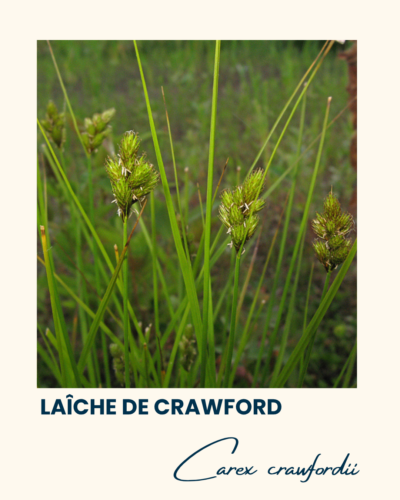
Crawford’s sedge (Carex crawfordii)
Coming from North America, Crawford’s sedge (or Carex crawfordii) travelled thousands of kilometres without the slightest travel plan. Probably transported unintentionally through human activity, it reminds us that every journey can also be that of a seed.
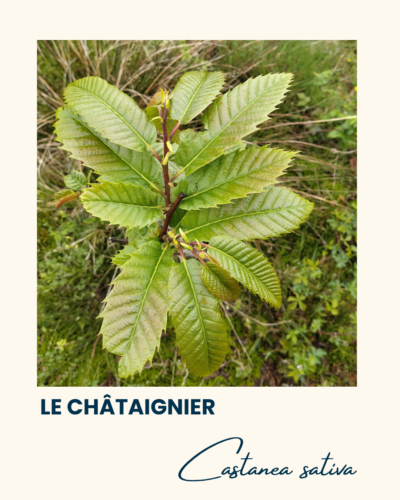
The sweet chestnut (Castanea sativa)
The sweet chestnut is an original example of polemoflora. Although the species is native to certain regions of southern Europe, its presence in parts of northeastern France may be linked to military movements. According to an article from Geo.fr, the sweet chestnut originates from Corsica but is now found in Meurthe-et-Moselle, where its presence is associated with troop movements and past military activities.
This example shows that polemoflora does not only involve exotic plants transported from distant continents. Species originating from other regions within the same country can also be spread by armies and, over time, become living witnesses to the history of these territories.
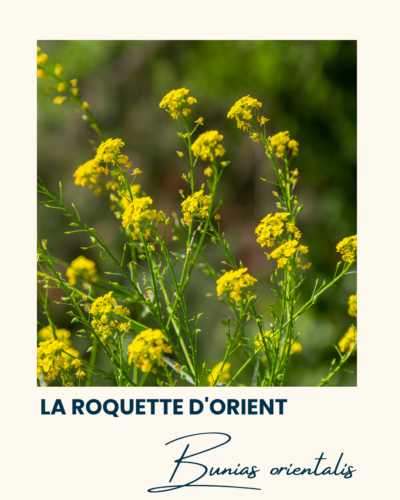
Oriental rocket (Bunias orientalis)
One of the best-known examples in Europe is that of the Oriental rocket. This plant is thought to have been introduced to France in 1814 during the importation of fodder intended for the horses of the Russian army’s Cossacks during the Napoleonic Wars.
Unlike the previous examples, this species has spread significantly and is now considered invasive in certain regions. Management campaigns have been necessary to limit its spread. The Oriental rocket is also present in Belgium.
Austrian spike-rush (Eleocharis mamillata subsp. austriaca)
The discovery of Eleocharis austriaca in Belgium was made in a tank track rut at the Elsenborn military camp, located in the Hautes Fagnes, near the German border. This plant from the sedge family (Cyperaceae) was previously unknown in the Belgian flora.
According to botanists Jacques Lambinon and R. Mause, its presence may be linked to military activities carried out at the camp. Seeds or other dispersal structures may have been unintentionally transported by military vehicles during maneuvers or cross-border movements. This hypothesis perfectly illustrates the role armies can play in dispersing certain plant species over long distances.
Biodiversity shaped by history
Polemoflora reminds us that human activities have long influenced the distribution of plant species. While some introductions can cause ecological problems, others today serve as genuine living archives of past events.
Observing these plants is also a way to discover another facet of our natural and historical heritage.
Behind an inconspicuous species encountered along a path may sometimes lie the memory of a conflict several centuries old.
—
Sources
- Geo.fr, Les plantes obsidionales ou polémoflore : quelles sont ces plantes de la guerre ?
- Lambinon J. & Mause R. (2010). Deux Eleocharis (Cyperaceae) nouveaux pour la flore belge : E. austriaca et E. obtusa au camp d’Elsenborn (Haute-Ardenne). Dumortiera, 98, pp. 1-5.