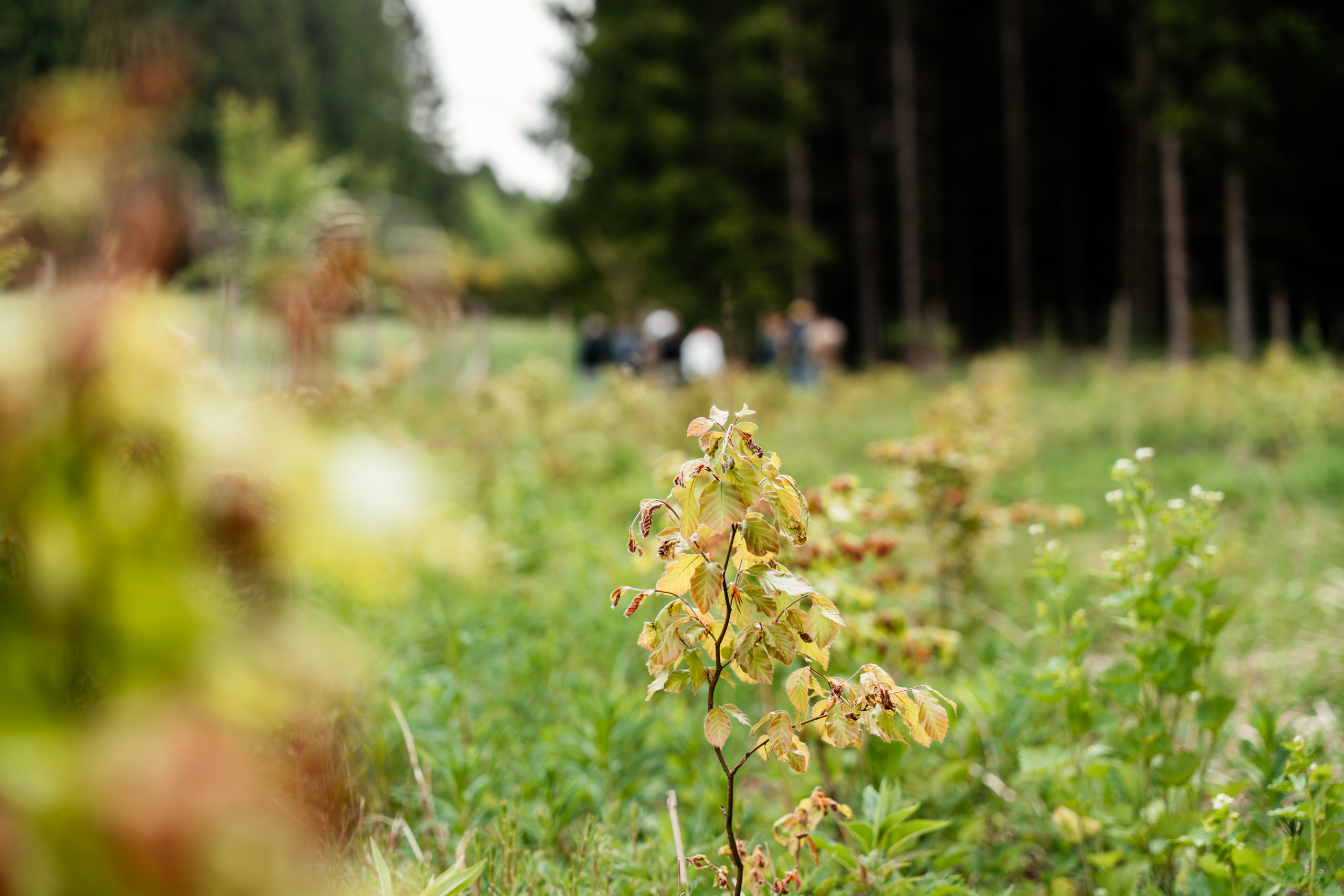
The reforestation project in Soumoy is presented below. A reforestation project like you’ve never seen! This program aimed to support the planting of 2,000 trees (14 species!).
A reforestation project like you’ve never seen!
The resilience of forests lies in the diversified forest, meaning the establishment of different tree species.
Many different species make up this project. This makes this reforestation a biodiversity laboratory with many biogenic species (downy oak, common alder, wild service tree) or light-canopy species (larch, Scots pine). Trees are thus hosts for fauna, flora, fungi, bacteria. Thus, they allow biodiversity to establish itself through their presence, but also through the organisms they host: birds, bees, butterflies, ladybugs, mammals, etc.
Let us tell you: a growing forest teems with life and one feels very small! It is a changing ecosystem that provides food and refuge areas, which will evolve over time!

Let us also not forget soil biodiversity. The complementary root systems will also play a role in soil quality, nutrient cycles, and of course, carbon sequestration. Furthermore, working with species diversity means involving a diversity of root systems. This plays an important role in soil stability, water percolation in the soil, etc. The root system is more robust and the afforestation can withstand extreme events (wind, drought, …) caused by global change.
The vertical growth of trees also allows for carbon sequestration. This continues beyond reforestation, depending on how the wood will be used.
-
14 species in SoumoyGet inspired
Visit to the Soumoy Plot
The PlantC team visited the site on May 16, 2023. We were welcomed by the forest owner. Come on, let’s take you along!
While walking along the forest paths to reach the plot, the forester explained that he had recently purchased the plot, but that for nearly 50 years, there had been no management. When it came time to consider which species to select, the objective of diversification was quickly put on the table. From an old coniferous plantation, the plot now hosts a beautiful diversified reforestation, indicating that to carry out such a project, the primary goal should not be profitability.
We can observe a good recovery of the seedlings, although some replanting was carried out for a few of them. Indeed, the long drought period of 2022 did not spare nearly 500 seedlings. Each listed species was verified during the visit!


Brambles are kept on the ground to protect the seedlings from herbivores. Indeed, the deer’s interest will be diverted to the bramble patch. Moreover, as the shrub is quite thorny, it is less pleasant to approach the tree seedling.
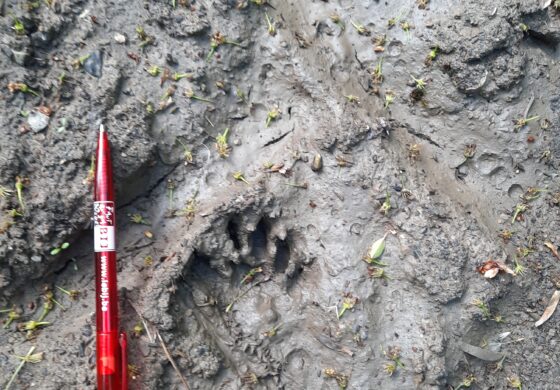
What a pleasant visit! During the walk between the two plots, we observed the footprints on the ground left by forest wildlife: deer, raccoon, … In fact, a deer passed right in front of us!
There will be no more maintenance with the flail mower; the planting is progressing. The birch trees that have spontaneously established themselves will be preserved because they “support” each other.
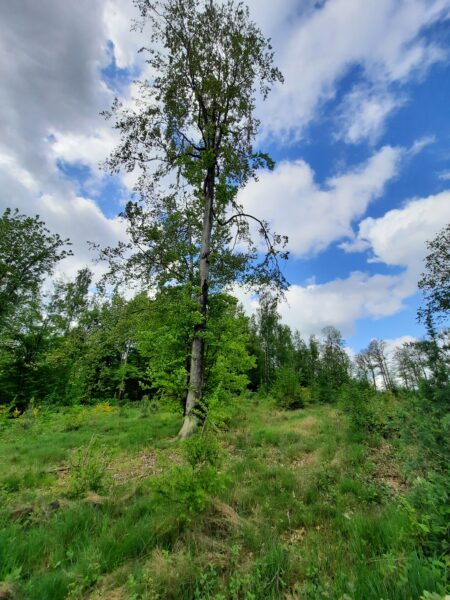
In the middle of the plot stands a majestic beech tree. It is left in place, “why not leave it so it can still provide shade for the smaller ones? Economically, it has no value. Biologically, yes!” explains the forester.
Protection or not?
The debate is: should the seedlings be protected or not?
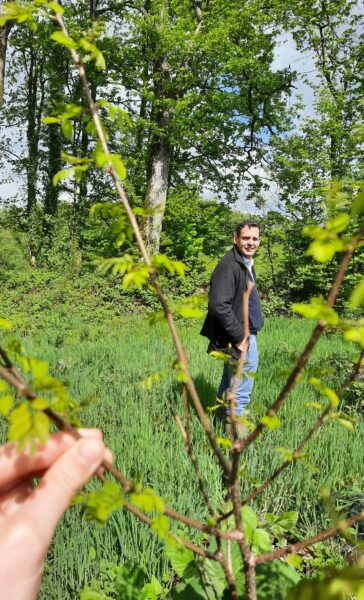
The choice has been made not to protect the larch plot, as they are planted densely. Deciduous trees, on the other hand, are more palatable and more expensive. Here, individual protection is necessary in this specific case. It is a compromise, but the forester would be tempted not to protect them in the future.
“Passion for the forest is a family affair! But to successfully carry out a planting today, vigilance remains essential. The major point is to receive seedlings early! And not in February, when we know that spring and summer are now very/too hot.”


We leave happy: happy to see that this project is closely monitored, happy for this moment of sharing and learning. Thank you for your contributions and thank you to the forester for his trust.
Forest
-
Planting / installation period2021
-
PEFCYes
-
Number of trees2 000
-
Area12 600 m²
-
Carbon171.48 T of carbon sequestered over 30 years
List of selected species
| Larch sp. – Larix sp | 751 |
|---|---|
| Larch sp. – Larix sp | 337 |
| Bornmüller's Fir – Abies bornmuelleriana | 84 |
| Black locust: Robinia pseudoacacia | 82 |
| Atlas Cedar – Cedrus atlantica | 211 |
| Lawson's Cypress – Chamaecyparis lawsoniana | 48 |
| Corsican Pine – Pinus nigra subsp. Laricio Maire | 53 |
| Walnut – Juglans regia | 38 |
| Norway Spruce – Picea abies | 177 |
| Douglas Fir – Pseudotsuga menziesii | 6 |
| Downy Oak – Quercus pubescens | 96 |
| Common Alder – Alnus glutinosa | 42 |
| Purple Beech – Fagus sylvatica purpurea | 13 |
| Wild Service Tree – Sorbus torminalis | 62 |