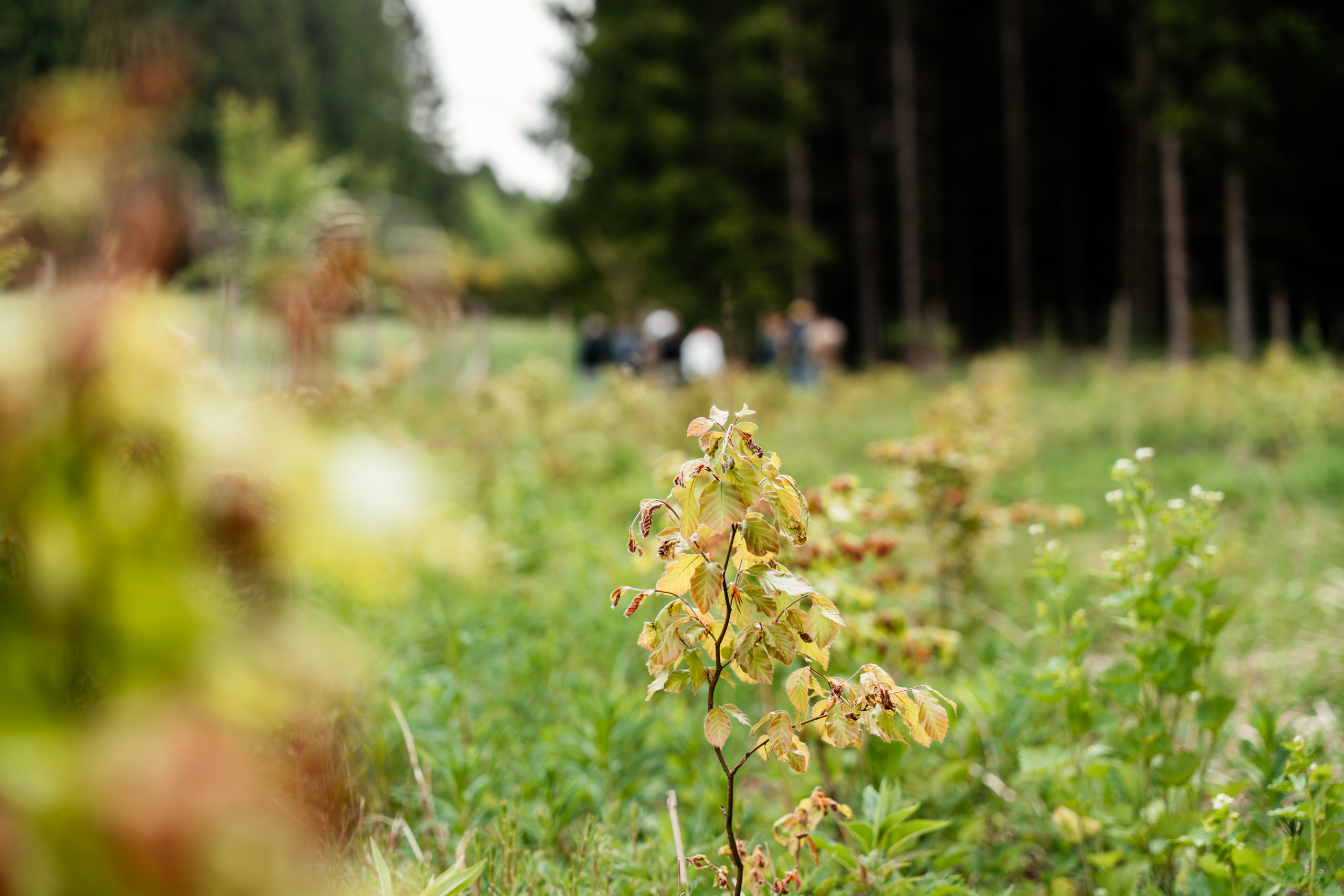
In Anthisnes, this is a reforestation project where PlantC supports the planting of 2,000 trees over nearly 1.73 ha. There are five species: Hybrid Larch, Koekelaere Pine, Atlas Cedar, Sessile Oak, and Northern Red Oak.

This combination of deciduous and coniferous species is part of a reforestation of a coniferous plot post-bark beetle infestation.
Using a diversity of species is beneficial for avifauna (flowers, fruits, and acorns, food sources for birds, insects, and small mammals, for example). Consequently, when leaves fall, humus is generated, and root systems are complementary. This will also impact the recycling of deep elements, the biological activity of the soil, the fixation and structuring of the soil.
- Planting Period: February 2023.
- Survival Rate: 85%
- 279.69 tonnes of CO2 sequestered over 30 years.
Project conducted in partnership with the Royal Forestry Society of Belgium.
-
5 Species in AnthisnesGet inspired
Visit to the Anthisnes Plot in 2024
On Thursday, April 25, 2024, on a beautiful spring afternoon, we visited a forest plot near Anthisnes.
After a bark beetle infestation affected part of the stand, the owner chose to enlist SRFB and PlantC to replant on his plot.
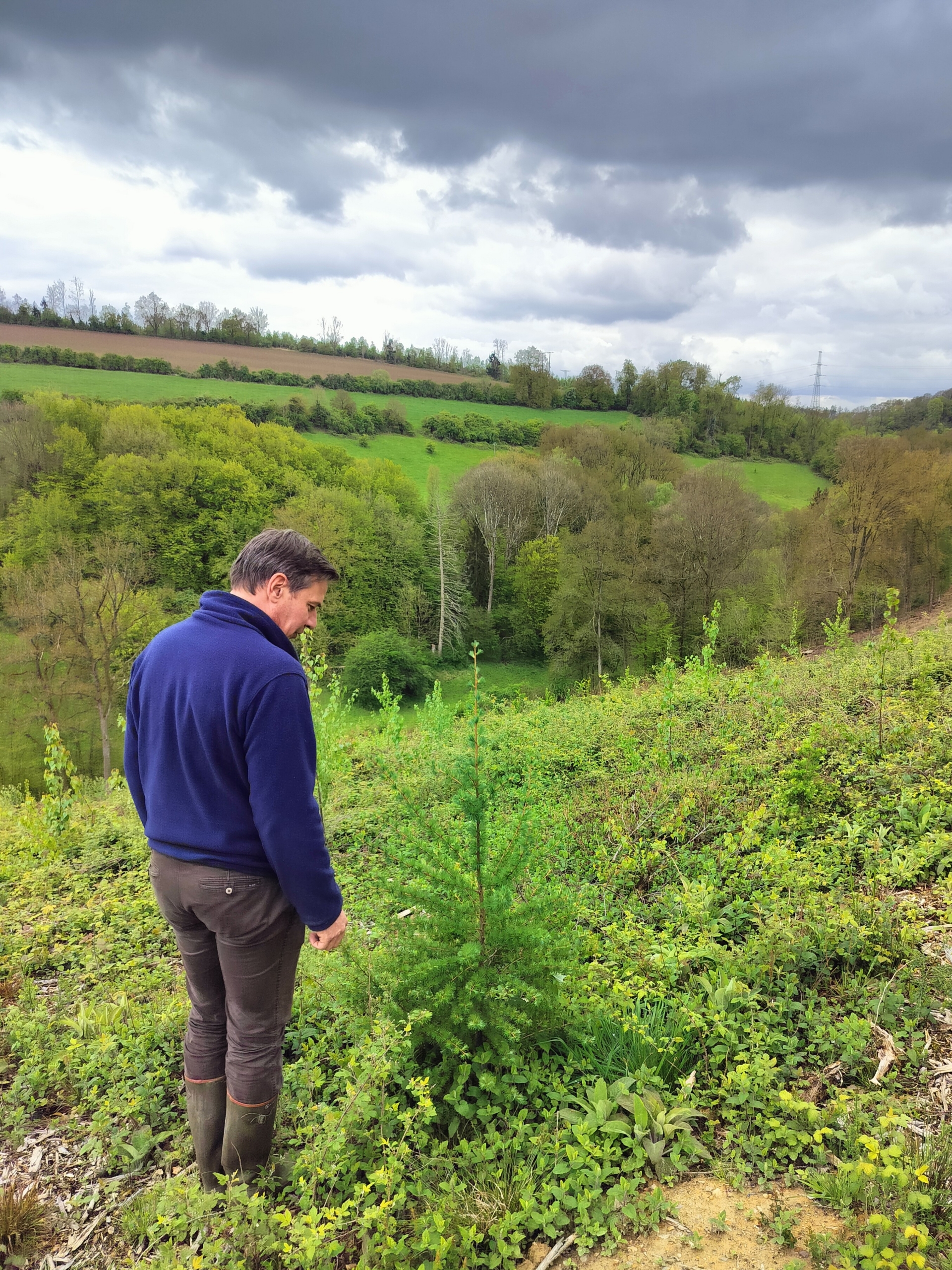


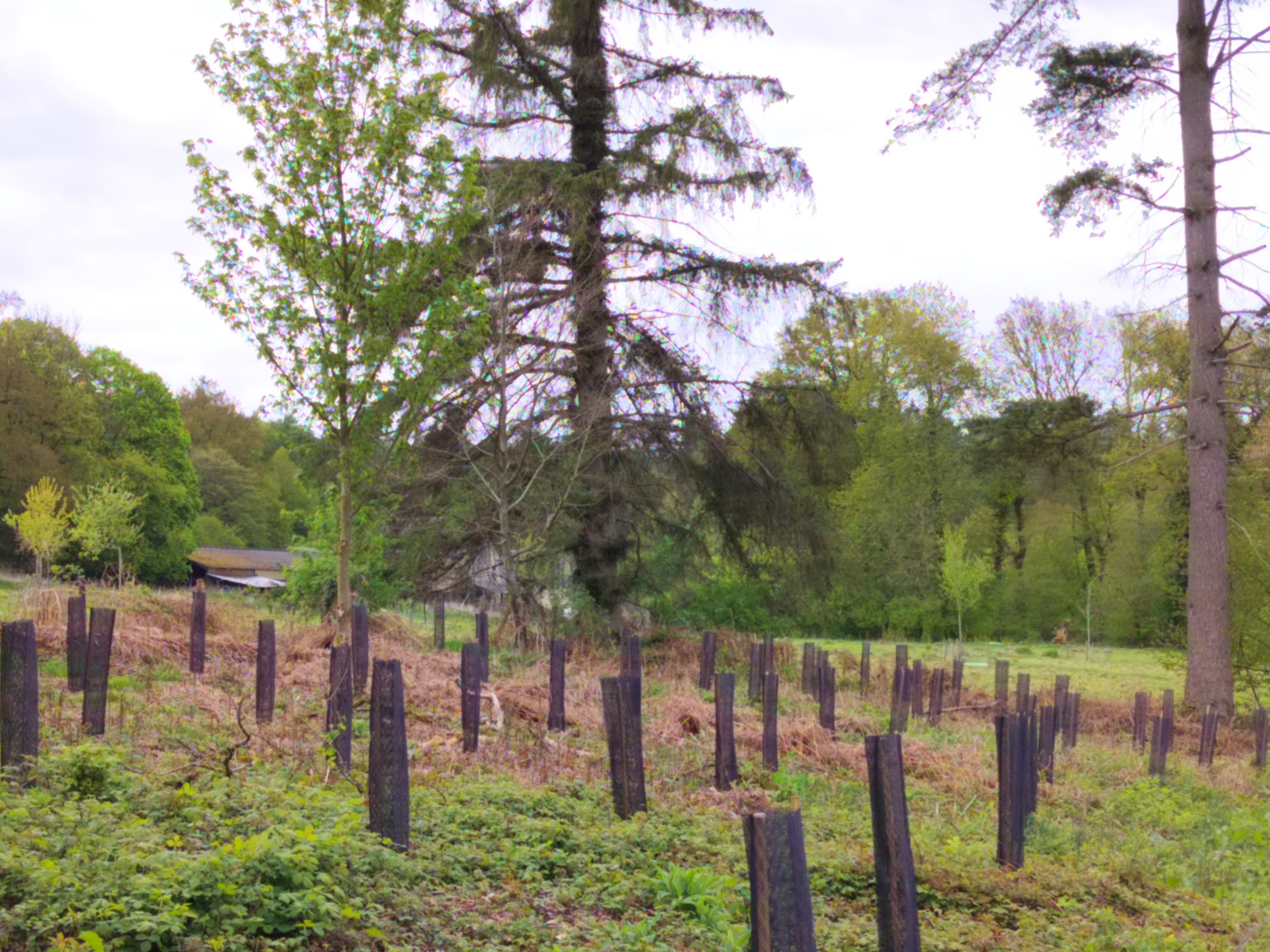
At first glance, we observed that the terrain was very steep and south-facing, ideal conditions to venture and test uncommon species mixtures.
The owner chose to plant a mixture of Koekelaere pines with Atlas cedars on the slope, following a pattern of three pines for one cedar on a planting line.
On the top, Sessile Oak saplings and Northern Red Oaks are planted.
During the visit, we noticed that some oaks had suffered greatly from late frosts, as some young leaves were completely blackened.
At this stage, a 2-3 year old sapling is very vulnerable and could perish in overly intense weather conditions. Fortunately, the saplings are solidly protected by sheaths, which already help to mitigate these effects.
Beyond the planting supported by PlantC, the owner chose to plant a mixture of spruces and Douglas firs, as well as placing chestnut trees in a few spots.
So, ready for a little focus on the Atlas Cedar?

The Atlas Cedar is mainly used in silviculture because it has good future potential in the face of climate change, offers quality wood, and is insensitive to soil nutrient conditions. However, this species needs close monitoring because it is very sensitive to frost, tolerates competition very poorly, and can become very branched, making the wood less interesting for sawyers.
Forest
-
Planting / installation period2023
-
Number of trees2 000
-
Area17 300 m²
-
Carbon279.69 T of carbon sequestered over 30 years
List of selected species
| Koekelaere Pine | 723 |
|---|---|
| Atlas Cedar | 253 |
| Hybrid Larch | 904 |
| Sessile Oak | 60 |
| Northern Red Oak | 60 |
Since 2021, VO Group has partnered with PlantC. We cannot speak highly enough of this company: their purpose, the professionalism of their team, and their genuine interest in the living world are all truly positive.