


14 July 2021
In the Vesdre Valley, if there is one date that will remain painfully etched in collective memory, it is this one. On that day, among many other hardships, one of Corman’s two production sites was completely destroyed. More than €60 million in damage—excluding production losses—a tragedy that also affected 450 employees. Beyond the determination to rebuild, it would take three years of work for operations to return to normal.
A statistically “improbable” event, serving as a reminder of the uncertainty that global changes impose on the economic sector.
A sustainability initiative embraced by a group of employees
In such a context—where reconstruction absorbs massive investments and the full commitment of employees—one group still found the energy to form a Green Team, a laboratory for sustainability-focused ideas. Among the many proposals that emerged was the development of biodiversity on a still relatively untouched slope of the site, through the creation of a pond and several surrounding features.
At its own scale, this biodiversity-oriented development became an adaptation solution to global change, contributing to slowing down the water cycle.
The team set out to secure external funding, despite the challenging circumstances. A “Biodiversity & Businesses” call for projects from the Public Service of Wallonia came at just the right moment, turning their intentions into reality.
-
Corman: a symbolic act with particular significance…Get inspired

Two ponds created
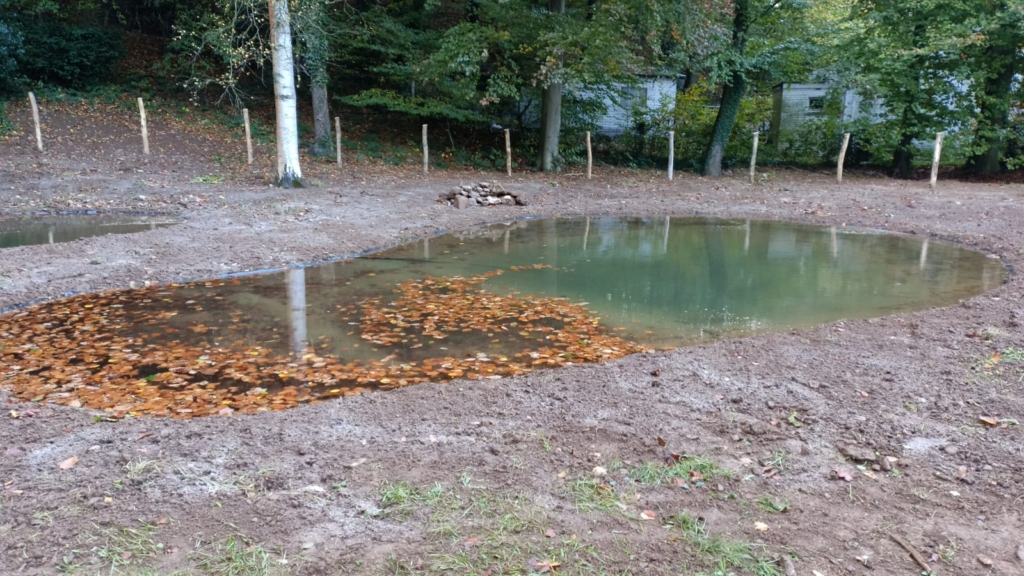
At the foot of a forested slope, and 200 metres from the Vesdre River, the idea of creating ponds gradually took shape.
Corman was supported by Adalia and Natagora’s local branch in designing a space composed of two ponds, complemented by several features: peripheral flower sowings and stone piles. The two ponds differ in size and volume, fostering distinct biological dynamics: one will warm up more quickly in spring, while the other will cool down more slowly in winter, providing a wintering habitat for certain species.
In the long term, the site is intended to be accessible to employees seeking a restorative break.
In record time
For implementation, the industrial group turned to PlantC, under a very tight deadline dictated by the project call timeline. Less than a month later, the ponds had emerged from the ground.
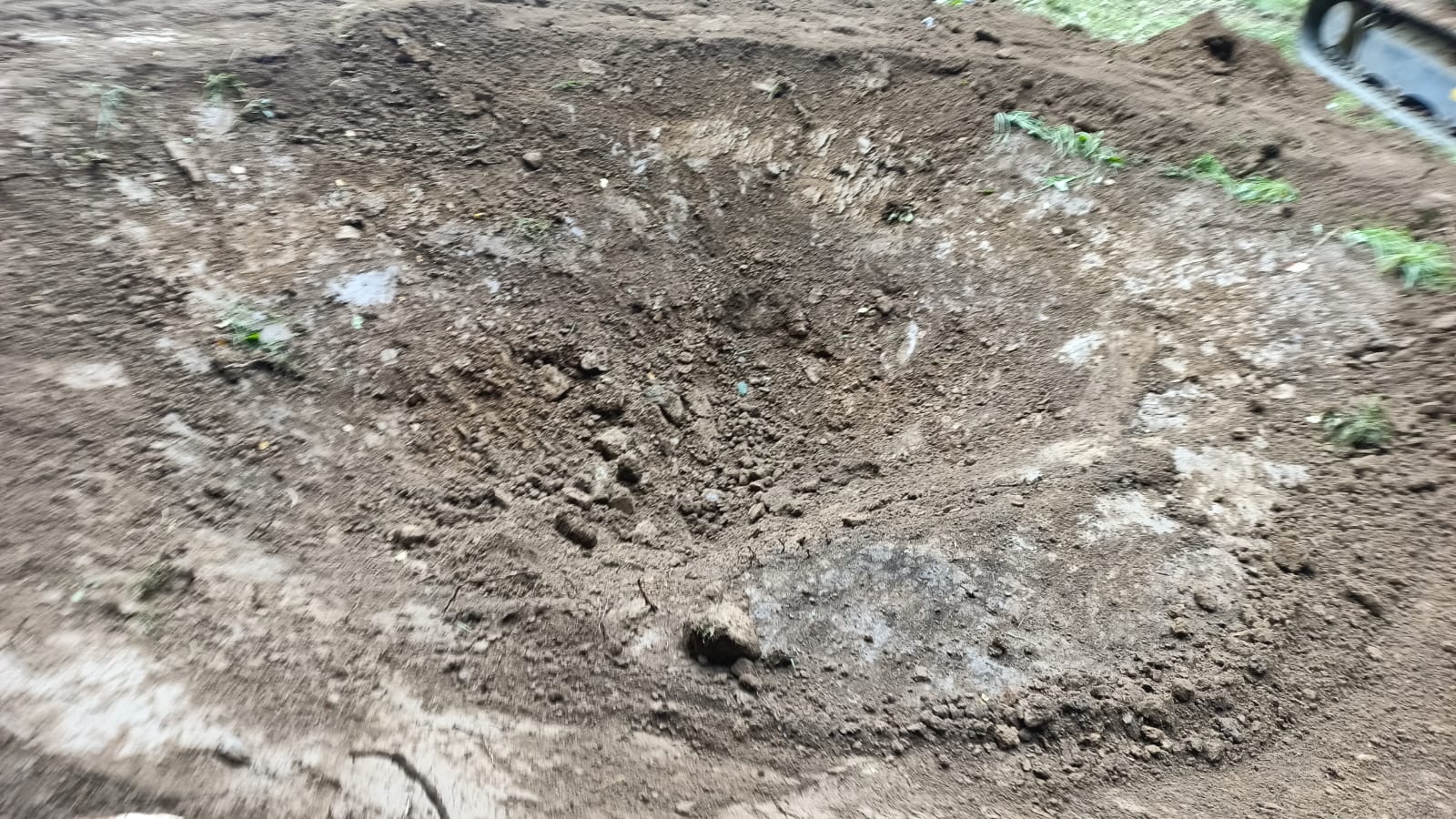


The stone piles were created using stones extracted during earthworks, with no external material added. A sowing of native wildflowers was carried out. Finally, a chestnut post-and-rail fence was installed to reduce the risk of drowning on this site visible from the public road, while still allowing small wildlife to move freely thanks to the spacing between the posts.
Now all that remains is to wait for the warmer weather of 2027, to see the wildflower meadow unfold and amphibians and odonates slowly but surely colonise the site.
“Just a symbolic action”, “Not a priority”, some naysayers might still claim. Yet it is sometimes the acts that seem the most symbolic that carry within them the seeds of profound change.

” “Having an idea is an essential first step, but being supported—as we were—by Wallonia, Natagora, Adalia, and PLANTC was the X factor that allowed us to turn our energy into a concrete achievement. Long live the frogs!” 🐸 ” .
Olivier ROISEUX – Business developper chez Corman
Pond
-
Planting / installation period2025
-
Number of ponds2
-
Area100 m²
-
Natural / artificialArtificial