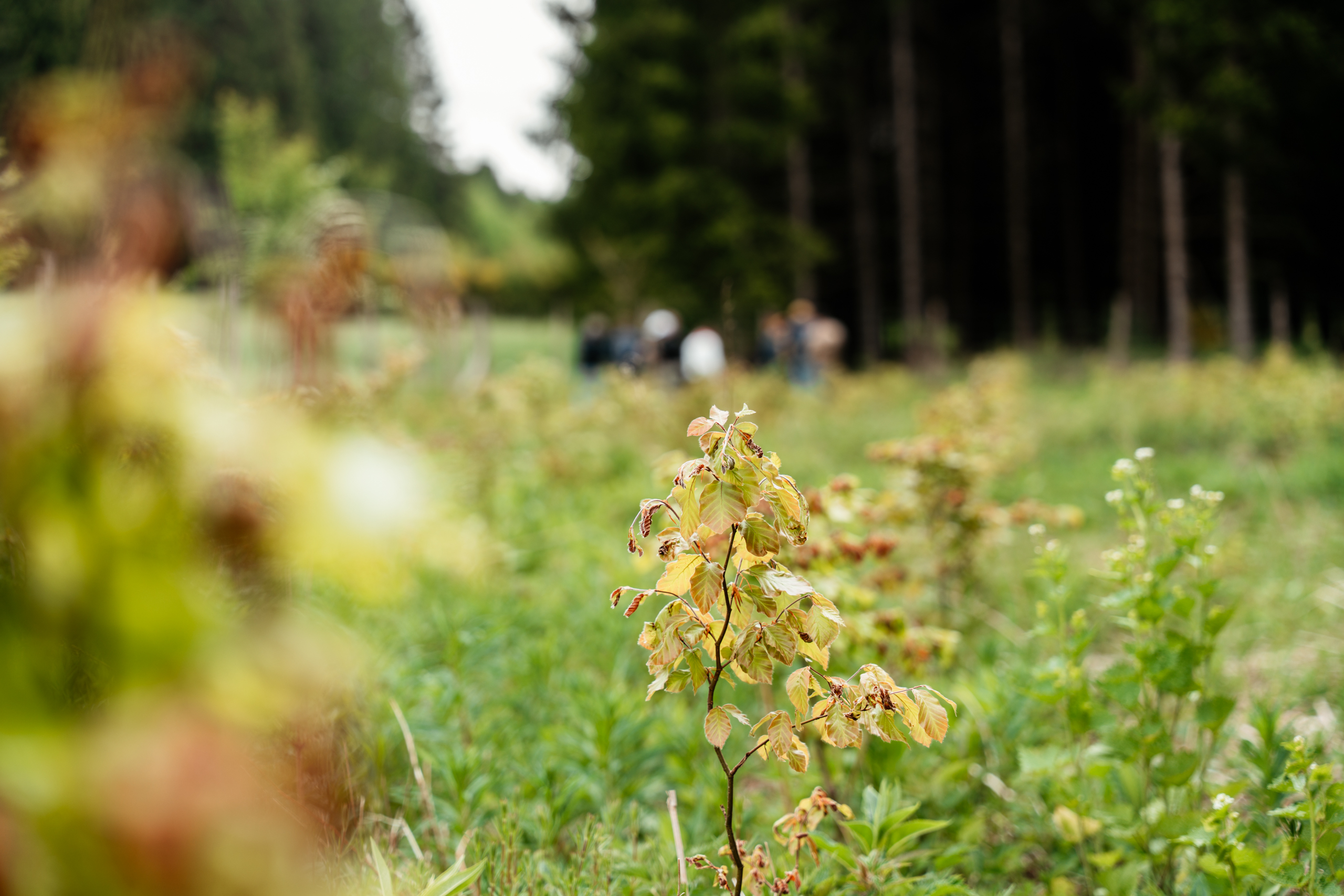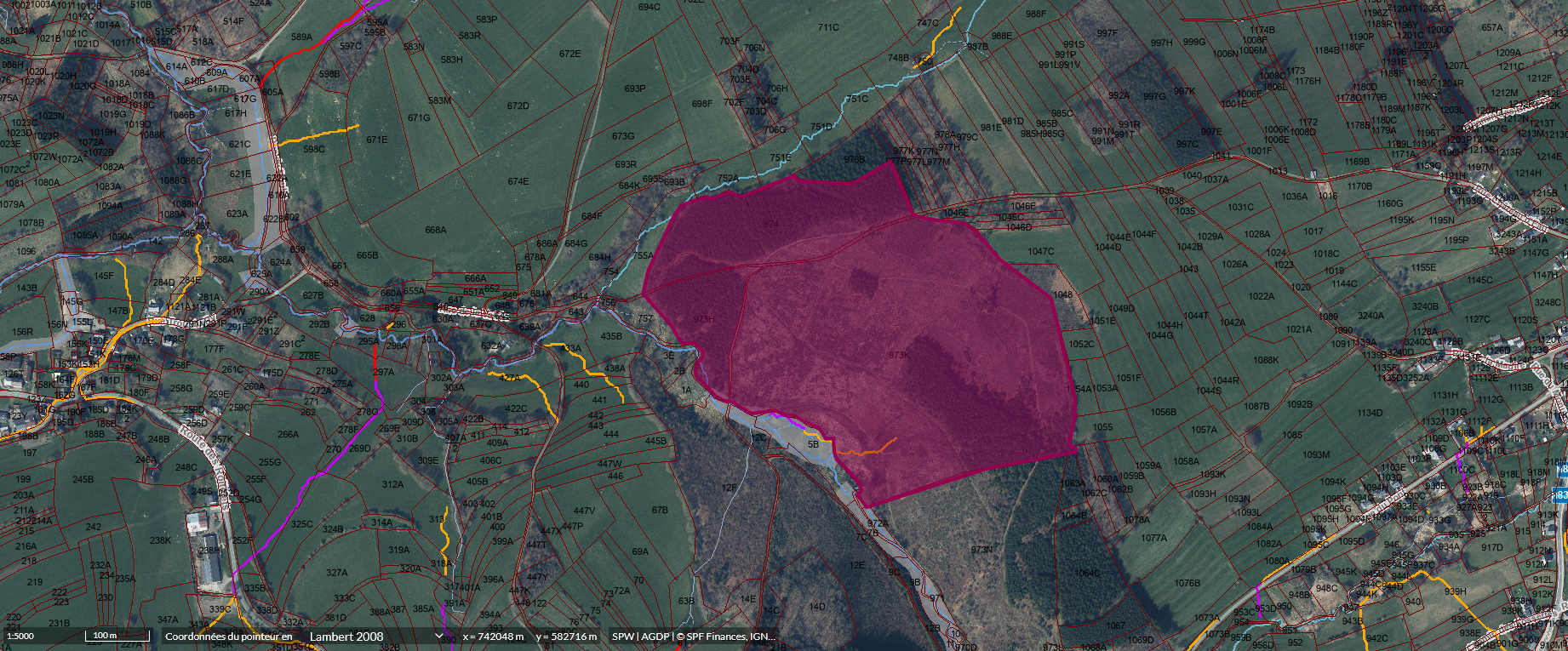

This reforestation project was initiated following the dieback of a large spruce stand located in Bastogne.
Attacks by bark beetles, combined with the spread of Armillaria and red rot, led to a clearcut of approximately 8 hectares.
A specific derogation from the Nature and Forest Department (DNF) was obtained to authorize a clearcut exceeding 5 hectares.
Designing a more resilient forest
In response to this situation, the objective was not merely to re-establish canopy cover, but to design a forest better adapted to future conditions. The project relies on extensive species diversification to mitigate risks associated with pests, disease, and climate events.
The technical approach is based in particular on combining several oak species capable of hybridizing naturally. This approach aims to maintain high genetic diversity and to foster, over the very long term, the emergence of individuals better adapted to local conditions.
Planting carried out
The project also incorporates species studied under assisted migration programs, such as the Turkish hazel (Corylus colurna) and the Bornmüller’s fir (Abies bornmuelleriana), to evaluate their potential to help forests adapt to climate change.
Plantings were carried out across the entire area at a spacing of 2 x 2 meters.
A graduated forest edge composed notably of wild apple and wild pear trees was also established to improve the transition between the forest and open habitats, while increasing resources available to wildlife.
PlantC is supporting the planting of 4,000 trees out of the 13,314 planted by the landowner.
-
Diversified Reforestation of 8.7 ha Following Spruce Dieback in BastogneParticipate in this project
Forest
-
Planting / installation period2025
-
PEFCNo
-
Number of trees4 000
-
Area26 000 m²
-
Carbon363.2 T of carbon sequestered over 30 years
List of selected species
| Sessile Oak | 1551 |
|---|---|
| Northern Red Oak | 661 |
| Downy oak | 300 |
| Pedunculate Oak | 278 |
| Beech | 477 |
| European Larch | 462 |
| Turkish fir | 60 |
| Maple | 195 |
| Turkish Hazel | 15 |