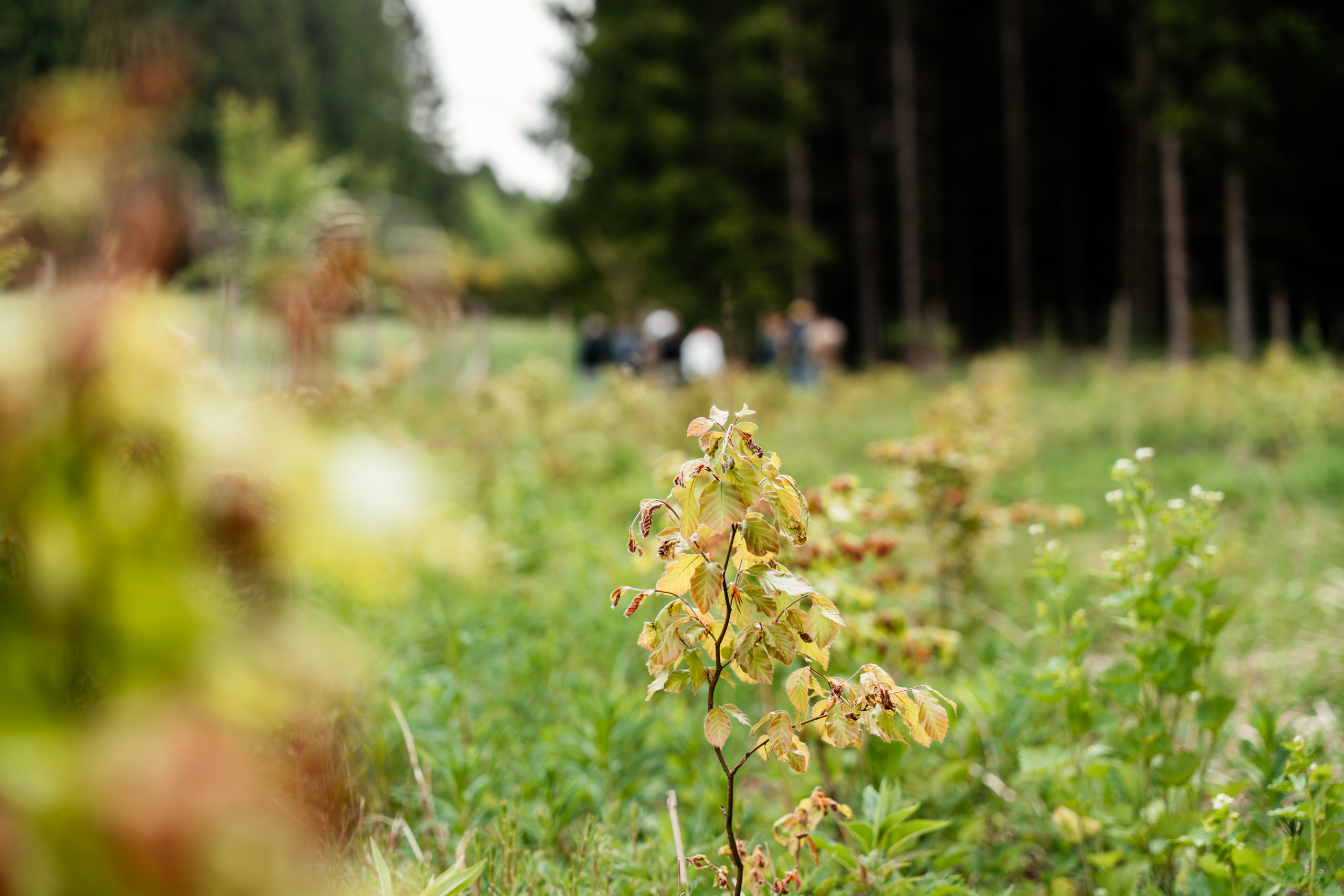
The Ouffet Reforestation in Detail
In Ouffet, this is a reforestation project where PlantC supports 1,620 trees over nearly 1 ha. There are three species: Atlas Cedar, Sessile Oak, American Red Oak.
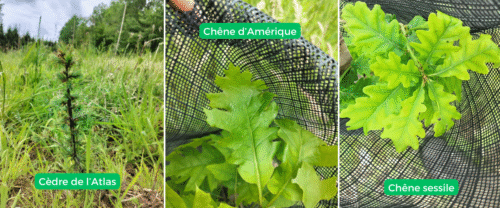
This combination of deciduous and coniferous species is part of a reforestation of a coniferous plot post-bark beetle infestation.
Using a diversity of species is beneficial for avifauna (flowers, fruits, and acorns, food sources for birds, insects, and small mammals, for example). Consequently, when leaves fall, humus is generated, and root systems are complementary. This will also impact the recycling of deep elements, the biological activity of the soil, the fixation and structuring of the soil.
- Planting Period: Winter 2022-2023.
- Survival rate: 90% EXCEPT for the cedars, which are suffering greatly!
- The management of the forest plot is PEFC certified.
- 188.95 tonnes of CO2 sequestered over 30 years.
Project conducted in partnership with the Royal Forestry Society of Belgium.
-
Future-Proof Species in OuffetGet inspired
Visit to the Ouffet Plot in 2024
We visited the site on May 22, 2024, on a beautiful afternoon!
After an episode of bark beetle infestation that affected part of the stand, the owner chose to call upon SRFB and PlantC to replant on her plot.

The Condroz is a region still strongly marked by the presence of ash trees. So, although the ash tree population is declining due to ash dieback, a microscopic fungus affecting the leaves and then the roots, it is still not uncommon to encounter many ash trees in the region.

The owner took a gamble on three different species. In the context of climate change, it is important not to put all one’s eggs in one basket. Indeed, as diseases and insect attacks are becoming more prevalent, certain species are ideal targets.
That is why, on this plot, we find a mix of conifers and hardwoods.
For conifers, we find Atlas Cedar, and among hardwoods, we find American Red Oak and Sessile Oak.
The species were planted in several cells of the same species. The hardwoods have recovered well, but the Atlas Cedar much less so… This species is relatively fragile (sensitive to frost) and grows very slowly. One must therefore arm oneself with patience to see these cedars emerge…

Forest
-
Planting / installation period2023
-
PEFCYes
-
Number of trees1 620
-
Area10 000 m²
-
Carbon188.95 T of carbon sequestered over 30 years
List of selected species
| Cedrus atlantica - Atlas Cedar | 750 |
|---|---|
| Quercus rubra - American Red Oak | 750 |
| Quercus petraea - Sessile Oak | 120 |