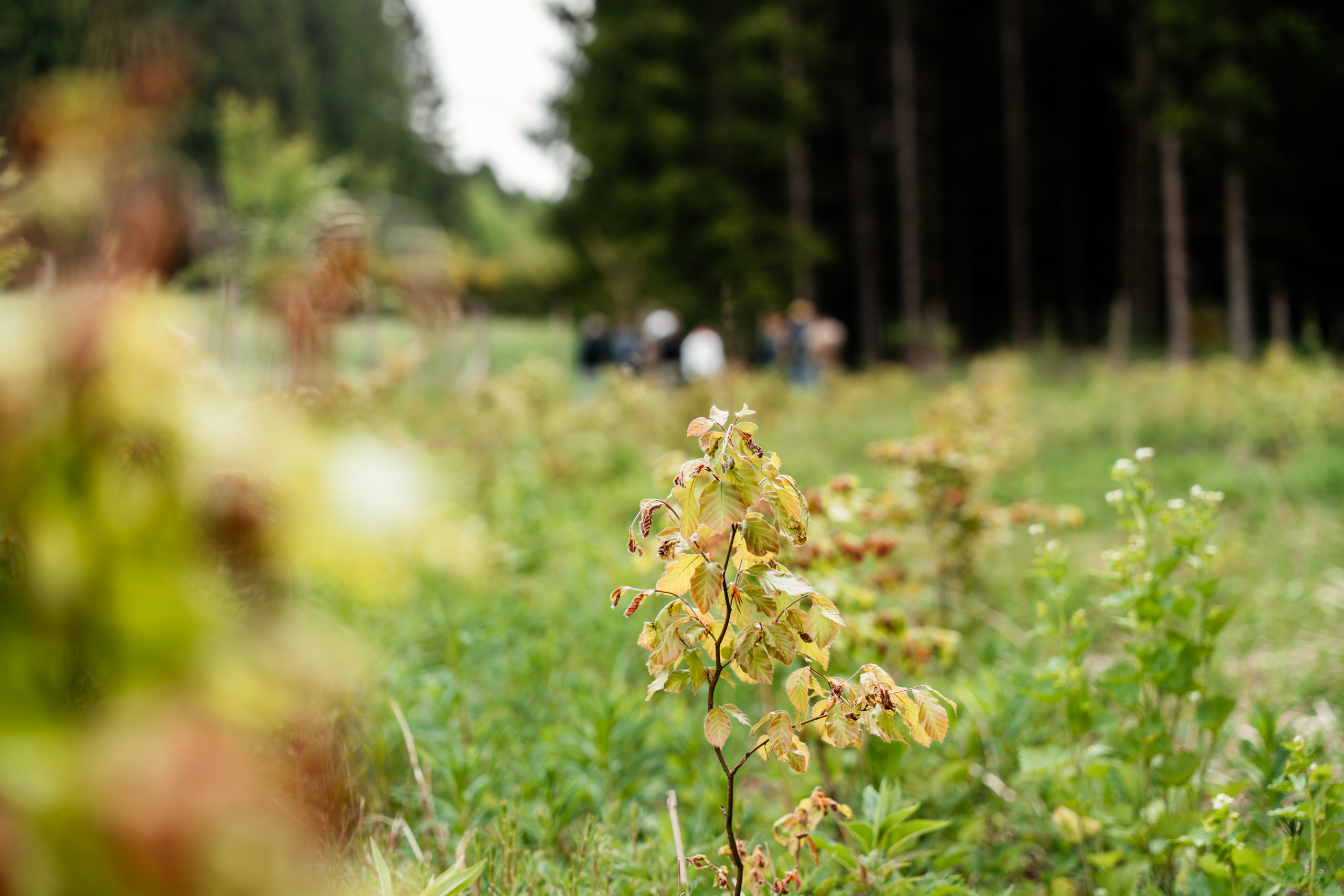
The aim here was to support a miscanthus plantation in Perwez for the ecological network of the agricultural plains of Hesbaye, while also assisting a research initiative of local interest.
A unique 2.7-hectare development for the ecological network


Benoit Lempereur’s cherished project was to implement a system that combines various developments over a total area of 2.7 hectares :
- Two miscanthus strips of 42 ares each, which notably offer a refuge for wildlife throughout the winter.
- A ‘wildlife strip’ that promotes small wildlife in agricultural plains and field birds such as the corn bunting or grey partridge.
- A ‘forager strip’ that offers nectar and pollen to pollinating insects such as bees and bumblebees.
- A ‘landscape strip’ that beautifies our agricultural landscape with wildflowers such as poppies or cornflowers.
Miscanthus is a hardy plant that establishes itself for about twenty years. It is harvested annually starting from the second year. It thrives in “complicated” lands where food crops struggle: areas prone to mudslides, poorly shaped plots, etc., which usually give farmers a hard time.
Research and Innovation
The Research and Innovation aspect consisted of the supply of Walloon seedlings from the Walloon Agricultural Research Centre as well as coupling miscanthus cultivation with the sowing of dwarf white clover as mulch.
Miscanthus is not a ‘nourishing’ plant for agricultural plain wildlife; it constitutes a refuge habitat. When it is adjacent to flower strips, it provides shelter for wildlife, while the latter provide food. Benoit promotes miscanthus as horticultural mulch through a short supply chain. He designed an installation from recycled materials that sorts, dedusts, and bags the miscanthus, which is then resold to independent garden centers.
Furthermore, miscanthus strips play a predominant role in limiting soil erosion and muddy runoff during significant rain events. Additionally, it contributes to a significant carbon sequestration in the plant and in the soil.
The planting was carried out in spring 2021 and closely monitored throughout summer 2021 (checking the recovery rate). The planting has since been validated. The miscanthus growth is progressing.
PlantC supported the planting of 2,000 seedlings and the sowing of dwarf clover, representing 140 tonnes of CO2 sequestered over 20 years.
In early 2022, PlantC was able to see what was happening there at the end of winter 2022!
-
Miscanthus in PerwezGet inspired


Project monitoring in 2022
When our clients commit to planting projects, they see them through to the end! In early 2022, we visited the project at the end of winter with the project contributors. The idea behind visiting the project at this time of year is to make everyone understand the importance of such cover during a more challenging season.
The team from Parallaxe Cabinet d’Avocats, Training Institute for Parental Burnout, Walloon Brabant, and Manitou came to the site on April 1, 2022, to visit Thibaut’s project, as well as Benoit Lempereur’s, just a few kilometers away!
These visits are also an opportunity to meet Thibaut and Benoît, two committed farmers who, with the help of PlantC, citizens, and businesses, were able to implement developments favorable to biodiversity and animal welfare.
Concrete actions that embed in the landscape the involvement of stakeholders eager to act locally 🇧🇪 to improve their ecological footprint.
We were able to inform and raise awareness among these companies about the importance of planting. The functions of a hedge, a flower strip, miscanthus.
To illustrate the externalities of these plantations, we were able to rely on Natagriwal’s educational panels.
Forest
-
Planting / installation period2021
-
Number of trees2 000
-
Area27 000 m²
-
Carbon140 T of carbon sequestered over 20 years
Agroforestry
-
Planting / installation period2021
-
Number of trees2 000
List of selected species
| Miscanthus giganteus | 2000 |
|---|