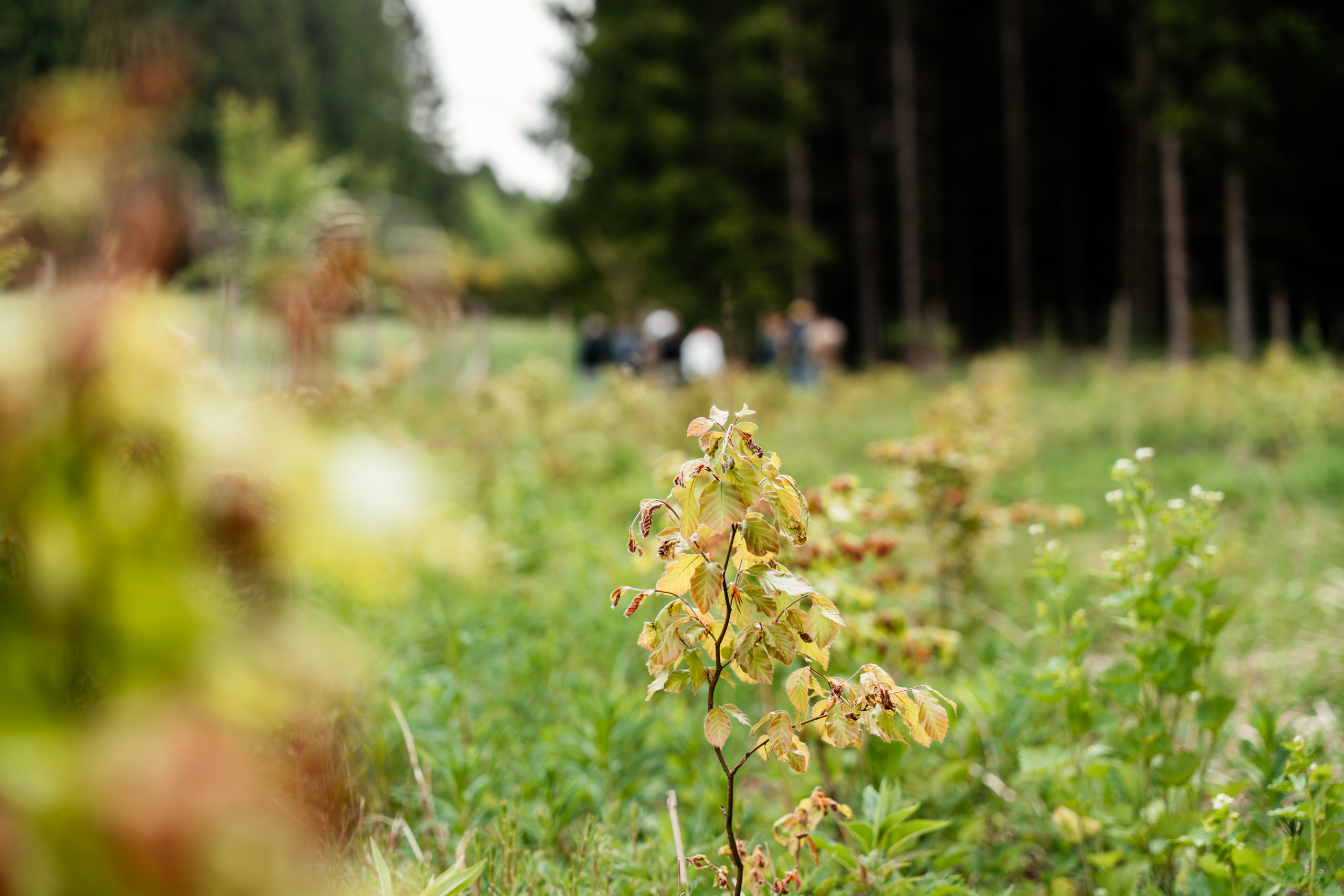
In Aubange, this is an afforestation project where PlantC is involved in supporting 600 trees across 0.5 hectares. Four species are planted: European Larch, Small-leaved Lime, Wild Service Tree, and Chestnut.
This combination of deciduous and coniferous species is part of a new afforestation project.
Project Details

Using a diversity of species is beneficial for avifauna (flowers, fruits, and acorns, food sources for birds, insects, and small mammals, for example). Consequently, when leaves fall, humus is generated, and root systems are complementary. This will also impact the recycling of deep elements, the biological activity of the soil, the fixation and structuring of the soil.
- Planting period: February 2023.
- PEFC Project
- Survival rate: over 80%. The owner had to replant due to rubbing by roe deer.
- 53.90 tonnes of CO2 sequestered over 30 years.
Project conducted in partnership with the Royal Forestry Society of Belgium.
-
New Afforestation in AubangeGet inspired
Visit to the Aubange Plot in 2025
This half-hectare plot was planted in winter 2023. We highlight the care the owner has given to its planting. Very regularly, he maintained it by passing between the planting rows with his tractor equipped with a flail mower to limit weed pressure on the saplings. This also demonstrates the owner’s keen knowledge of silvicultural management, as larch absolutely cannot tolerate lateral competition.
The selection of species is resolutely future-oriented. Indeed, we have species that will adapt well to the future climate, such as small-leaved lime and wild service tree. Chestnut and European larch are more demanding in terms of water supply, which the terrain here allows.
A brief overview of the species:


The Species
European larch is particularly valued for its rapid growth, productivity, and quality timber. It is, however, quite sensitive to drought, wind, and competitive effects. It is therefore always necessary to monitor brambles, ferns, or other vegetation that could prevent it from growing as it wishes!
Wild service tree measures 15-20 m in height; it can reach 30 meters tall in forests. It is melliferous and entomophilous; its fruits are appreciated by birds and other animals like badgers, which help disseminate the tree’s seeds by eating them.
Chestnut, a true biodiversity hotspot, this tree can grow up to 30-35 meters in height. It quickly provides quality timber, provided it is well-managed. Its yellow catkins are visible during June and illuminate the forest.
Small-leaved lime. This tree can grow up to 30-35 meters tall and is a true ally for foresters in the context of climate change. Although it is generally shunned in industry because its wood is not durable, lime can be perfectly suitable for furniture, interior fittings, or wooden toys.

The owner is committed to developing silviculture aimed at mixing species so that his forest is more resilient to the climate changes we are currently experiencing. In his various plots, there are sometimes mixtures between stands and between species within the stands.


Forest
-
Planting / installation period2023
-
PEFCYes
-
Number of trees600
-
Area5 000 m²
-
Carbon53.90 T of carbon sequestered over 30 years
List of selected species
| European Larch | 450 |
|---|---|
| Small-leaved Lime | 50 |
| Chestnut tree | 50 |
| Wild Service Tree | 49 |