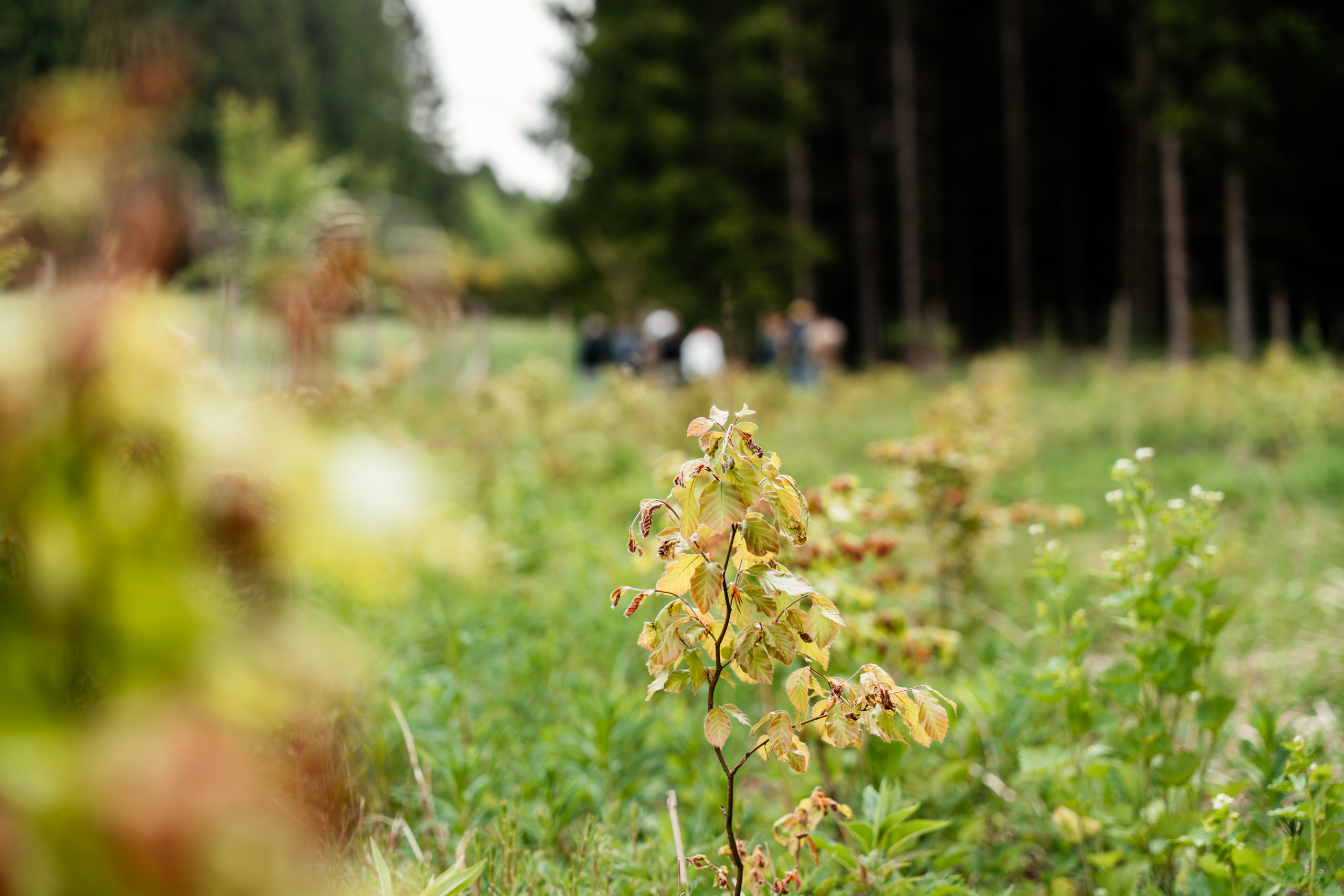
The Reforestation in Assesse in Detail
In Assesse, this is a reforestation project where PlantC supports 2,000 trees over nearly 2.67 ha. There are nine species: European and hybrid larch, chestnut, sycamore maple, Norway maple, sessile oak, red oak, Turkish hazel, and wild service tree.

This combination, consisting of deciduous and coniferous species, is part of the reforestation of an ash plot affected by ash dieback.
Using a diversity of species is beneficial for avifauna (flowers, fruits, and acorns, food sources for birds, insects, and small mammals, for example). Consequently, when leaves fall, humus is generated, and root systems are complementary. This will also impact the recycling of deep elements, the biological activity of the soil, the fixation and structuring of the soil.
- Planting Period: Winter 2022-2023.
- Survival Rate: 90% (larches will receive special attention)
- 309.53 tonnes of CO2 sequestered over 30 years.
Project conducted in partnership with the Royal Forestry Society of Belgium.
-
Post-Ash Dieback Reforestation in AssesseGet inspired
Visit to the Assesse Plot in 2024
We visited the site on May 17, 2024. The plot, located in the province of Namur, was primarily covered with ash trees. Unfortunately, like most ash trees in Wallonia, they were affected by ash dieback.
Ash dieback is a disease transmitted by a microscopic fungus that attacks the leaves and collar of ash trees. Gradually, the ash leaves wilt and then dry out, preventing the tree from functioning properly.

The problem with ash dieback is that it affects both young and adult trees. Consequently, we are gradually seeing ash trees disappear from our Belgian forests.
The economic consequences are catastrophic, as this wood is valued for its mechanical qualities (hard and flexible) and also for its calorific value when used as firewood.
In terms of biodiversity, it is also a great loss, as its light foliage allows natural regeneration to grow, offers numerous hiding places for insects, and provides shelter for birds.
The Planting
The good news is that 5% of ash trees are reportedly resistant to ash dieback! This would prevent the species from completely disappearing from our forests. However, they must obviously be preserved, which is not always easy when these trees are mixed with diseased ones…
The owner took a gamble on nine different species, and he is right! In the context of climate change, it is important not to put all one’s eggs in one basket. Indeed, with diseases and insect attacks becoming increasingly prevalent, certain species are ideal targets.


We are firmly convinced that in the future, the species we have will shape the timber market, so it is wise to diversify one’s forest!
Focus on a Planting Method… Klump Planting
The Klump planting method is a silvicultural technique that involves planting trees in small, dense groups, rather than in regular rows or uniformly. This mimics natural formations, promotes better biodiversity, and creates microhabitats that can protect young plants against harsh climatic conditions, such as wind or direct sun exposure.

This approach also improves the resilience of forests against diseases and pests by varying species and limiting their spread.
Stay tuned for more forest adventures!
Forest
-
Planting / installation period2023
-
Number of trees2 000
-
Area26 700 m²
-
Carbon309.53 T of carbon sequestered over 30 years
List of selected species
| Hybrid Larch | 637 |
|---|---|
| Chestnut | 114 |
| Sessile Oak | 124 |
| Red Oak | 124 |
| Sycamore Maple | 157 |
| Norway Maple | 157 |
| Wild Service Tree | 25 |
| Turkish Hazel | 25 |
| European Larch | 637 |