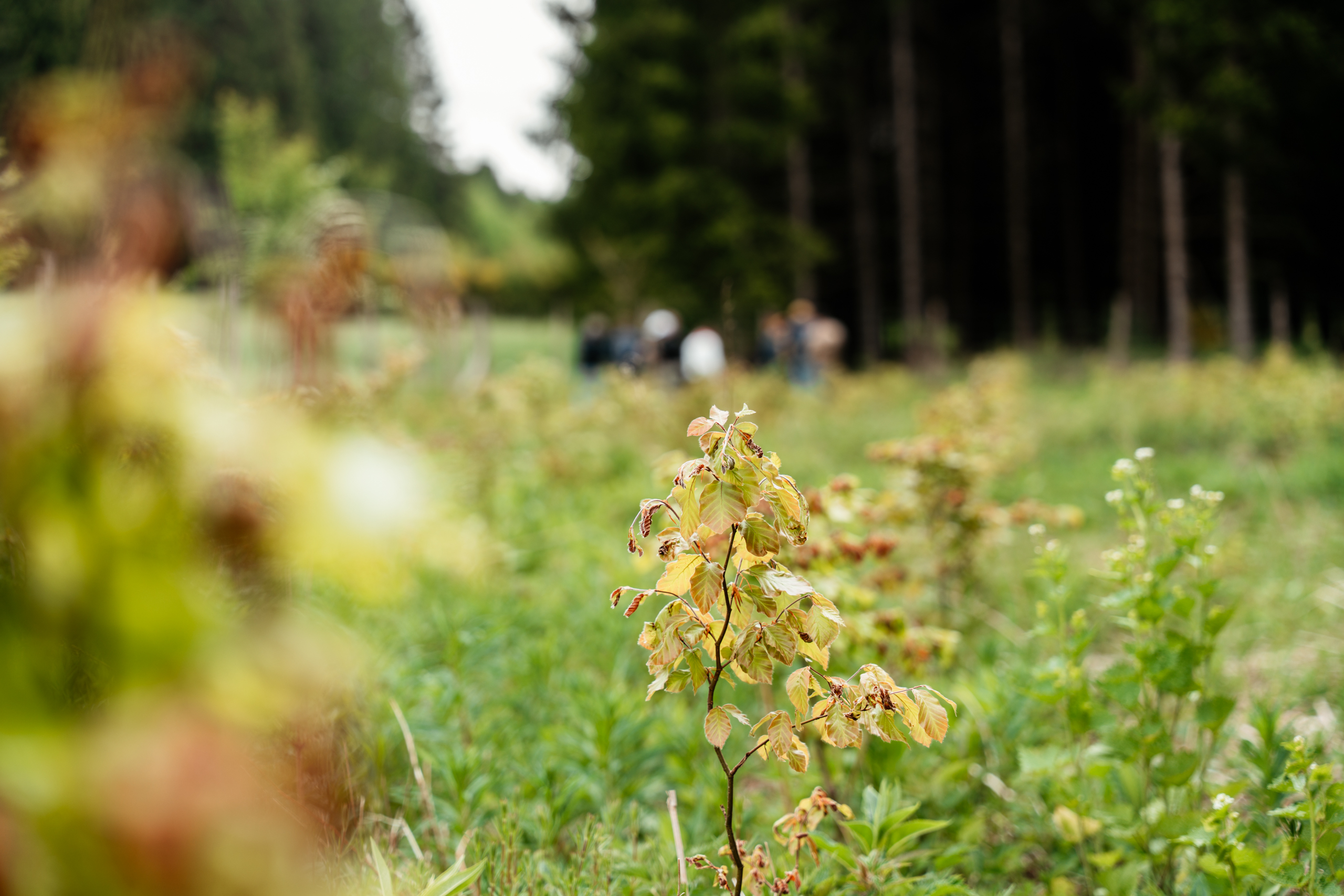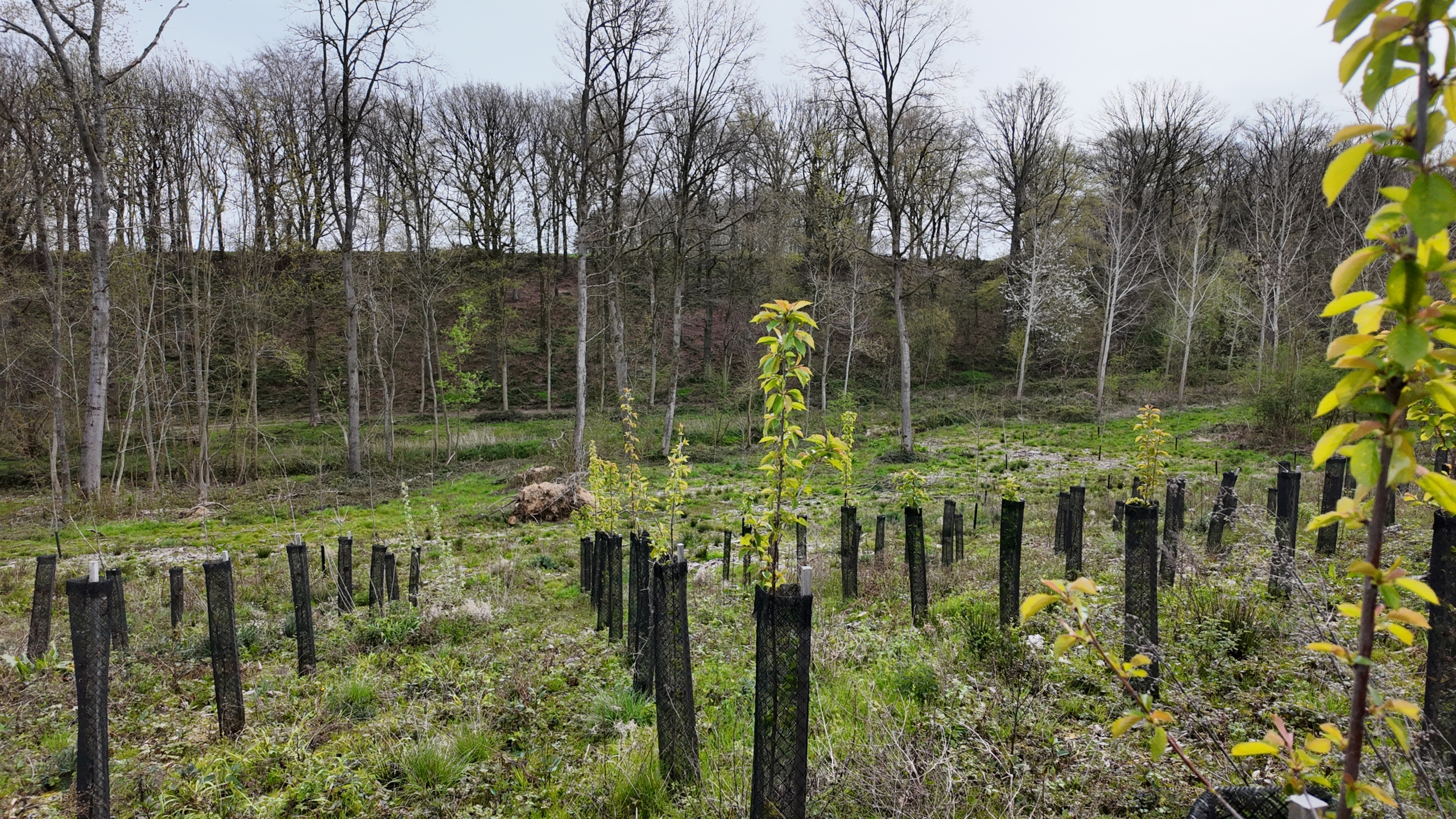



A forest affected by the 2023 storm
In 2023, a local storm caused damage to several forest plots on the property located in Chaumont-Gistoux. The fallen trees were cleared during the summer of 2024 to prepare for the return of a forest cover suited to the site’s conditions.
Reforestation adapted to the Natura 2000 context
The project takes place in a particular context, as the plots are located within a Natura 2000 area.
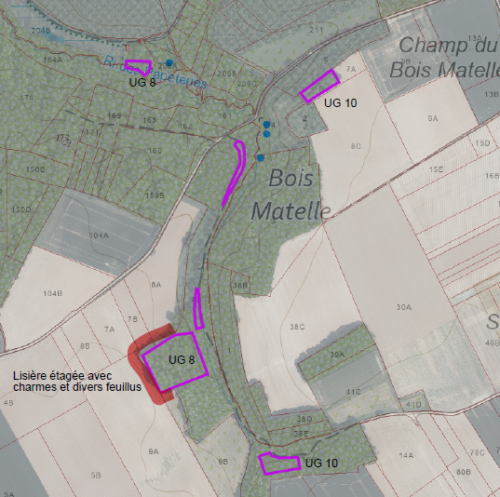
The choice of species was therefore made taking into account forest production objectives, local ecological constraints, and the management units (MUs) defined on the site.
In the plots classified as MU 10, species selected for their productive potential were chosen, notably maritime pine, red oak, and sweet chestnut. In the other management units, reforestation relies mainly on native species to strengthen the ecological resilience of the forest and promote the development of diverse forest habitats.
Creating a woodland edge that benefits biodiversity
Beyond simply replacing lost trees, the project also includes the development of a tiered woodland edge between agricultural and forest land. This gradual transition is made up mainly of hornbeam and various broadleaf species. It aims to improve the quality of ecological interfaces, provide more resources for wildlife, and strengthen connectivity between habitats.
PlantC supported the reforestation of 2,000 trees on these plots, where the forest manager carefully selected the species and integrated the ecological objectives related to the Natura 2000 context.
-
Post-storm reforestation and forest diversification in Chaumont-GistouxGet inspired
Results of the planting project
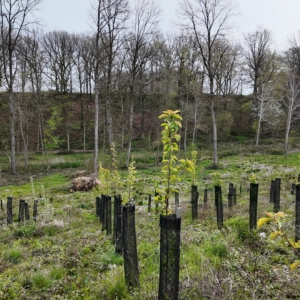
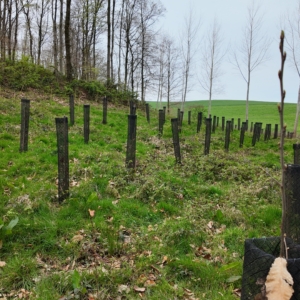
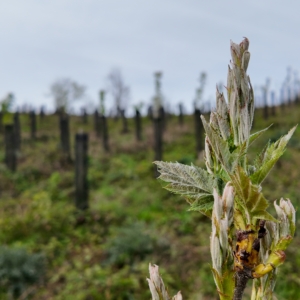
The reforestation work was carried out between December 2024 and January 2025 over a total area of approximately 1.5 hectares.
A total of 3,020 plants were installed, of which PlantC supported 2,000.
On April 10, 2026, we visited the plot to confirm the survival rate.
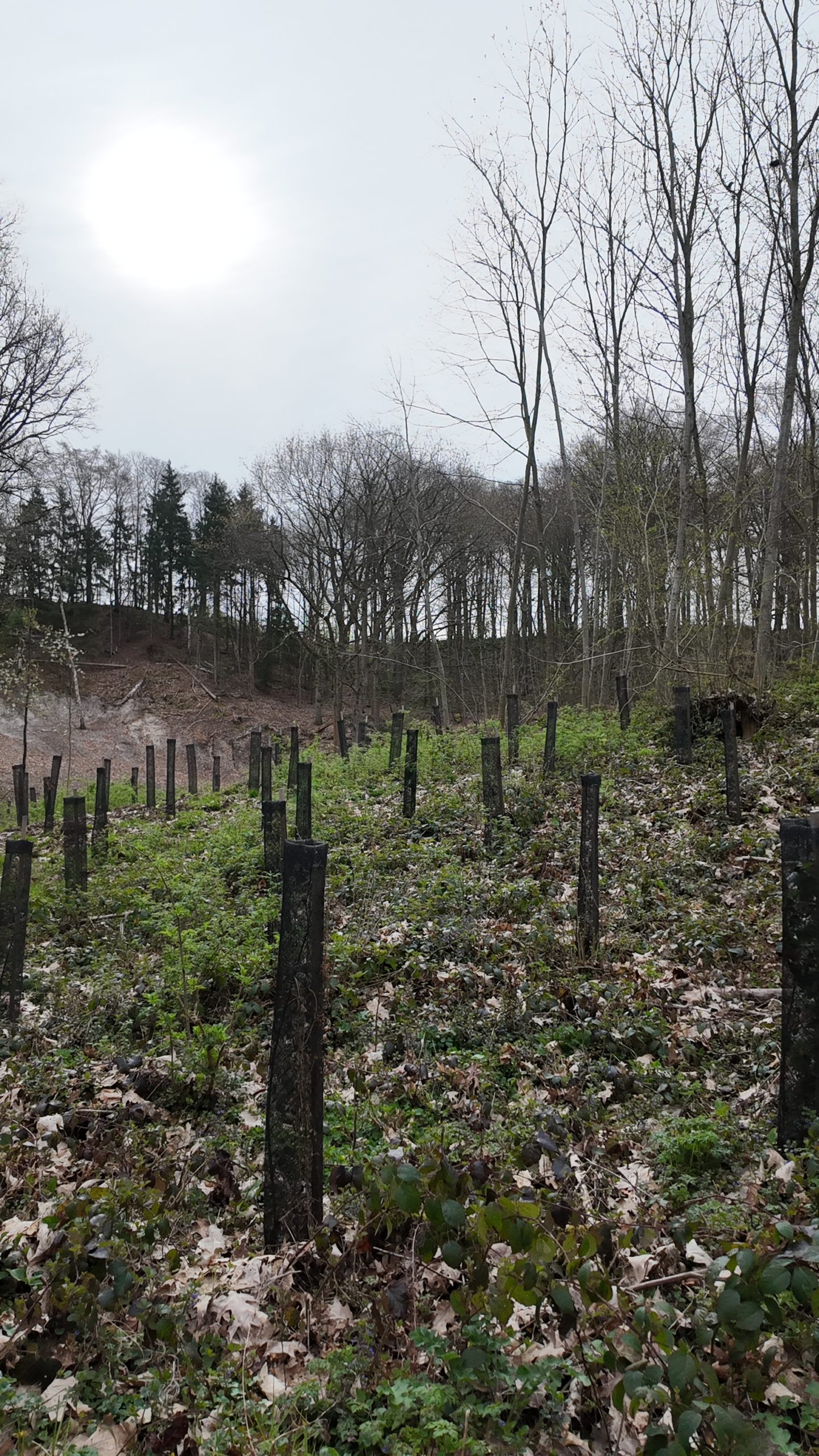
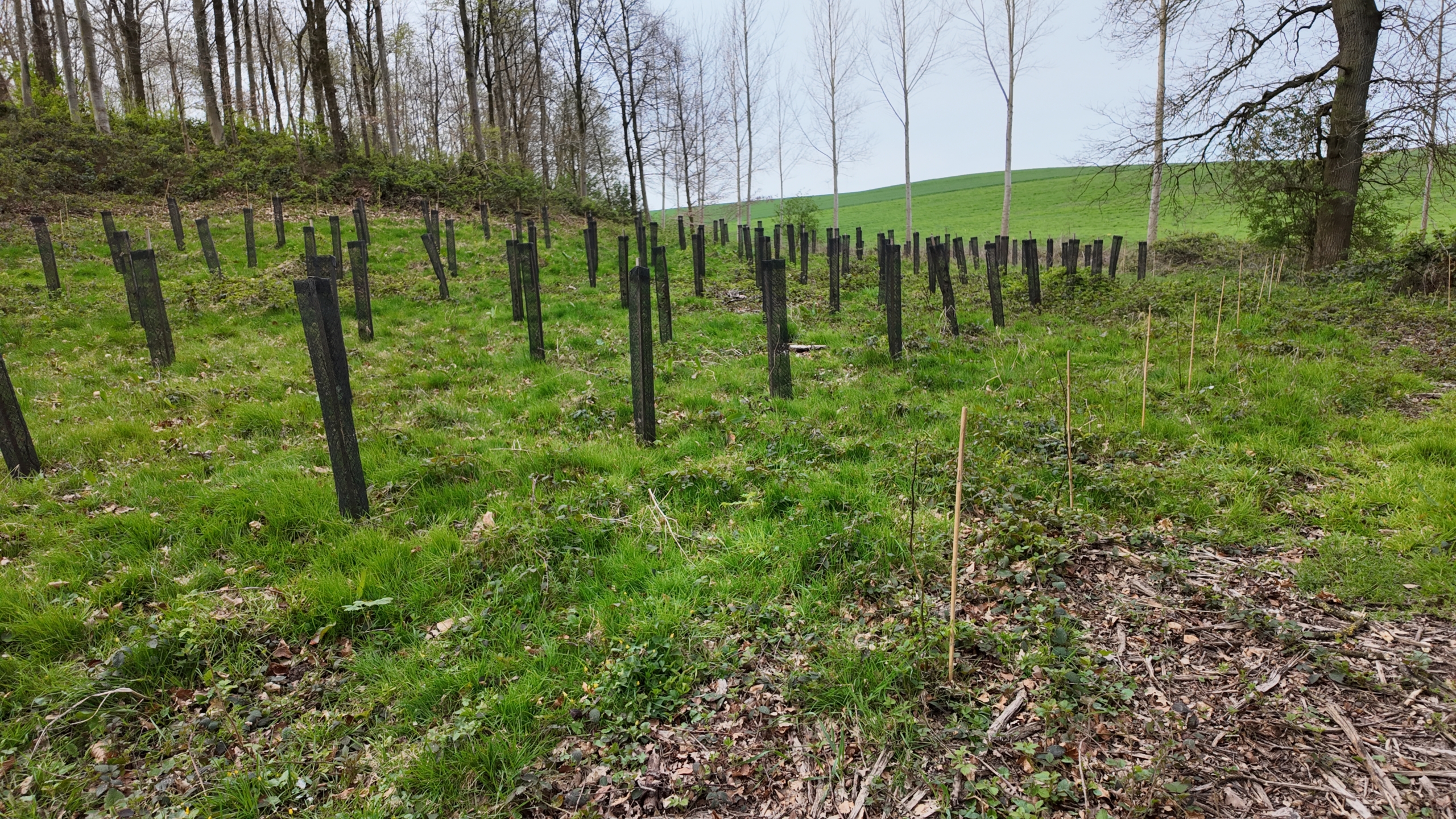
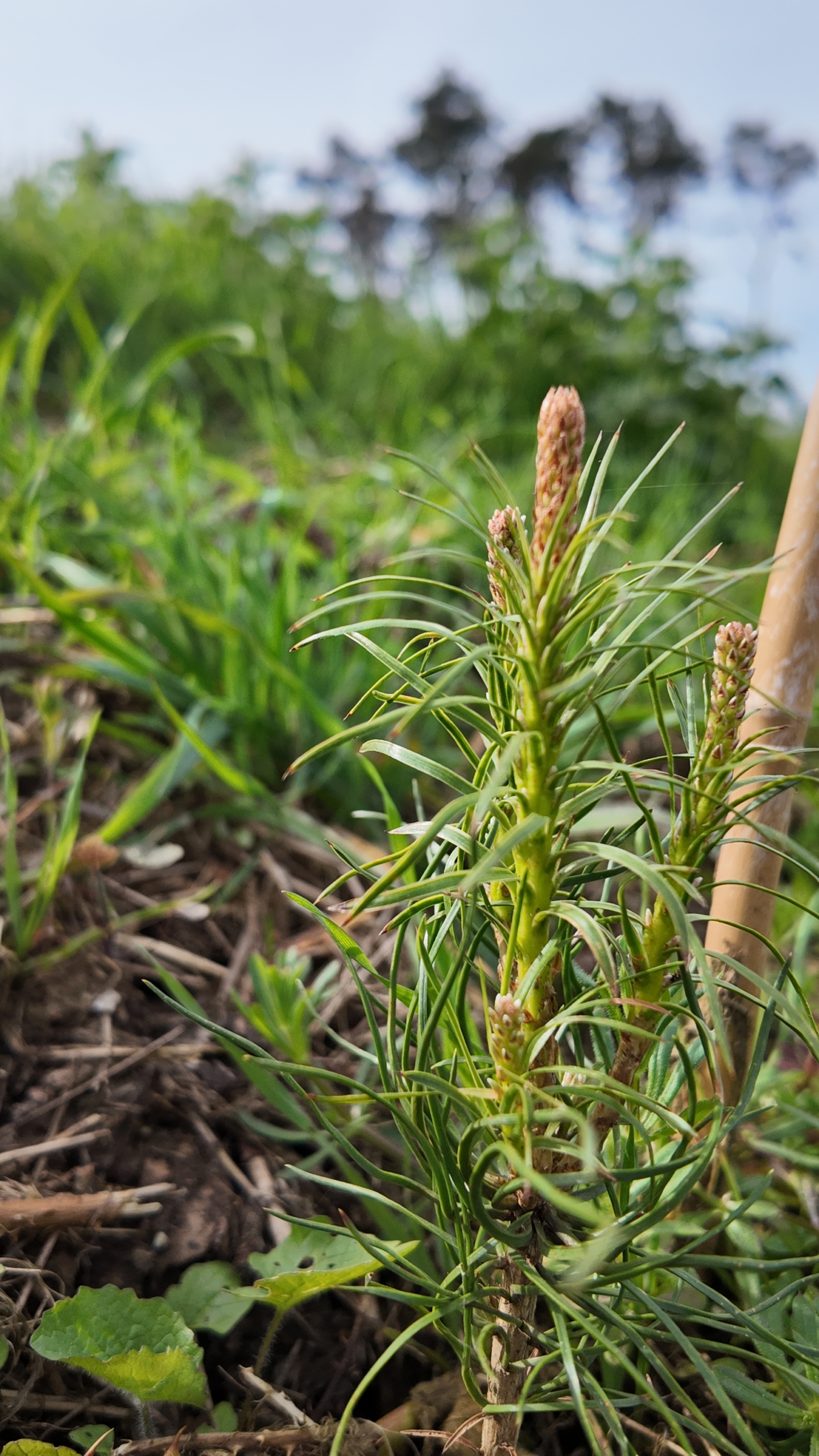
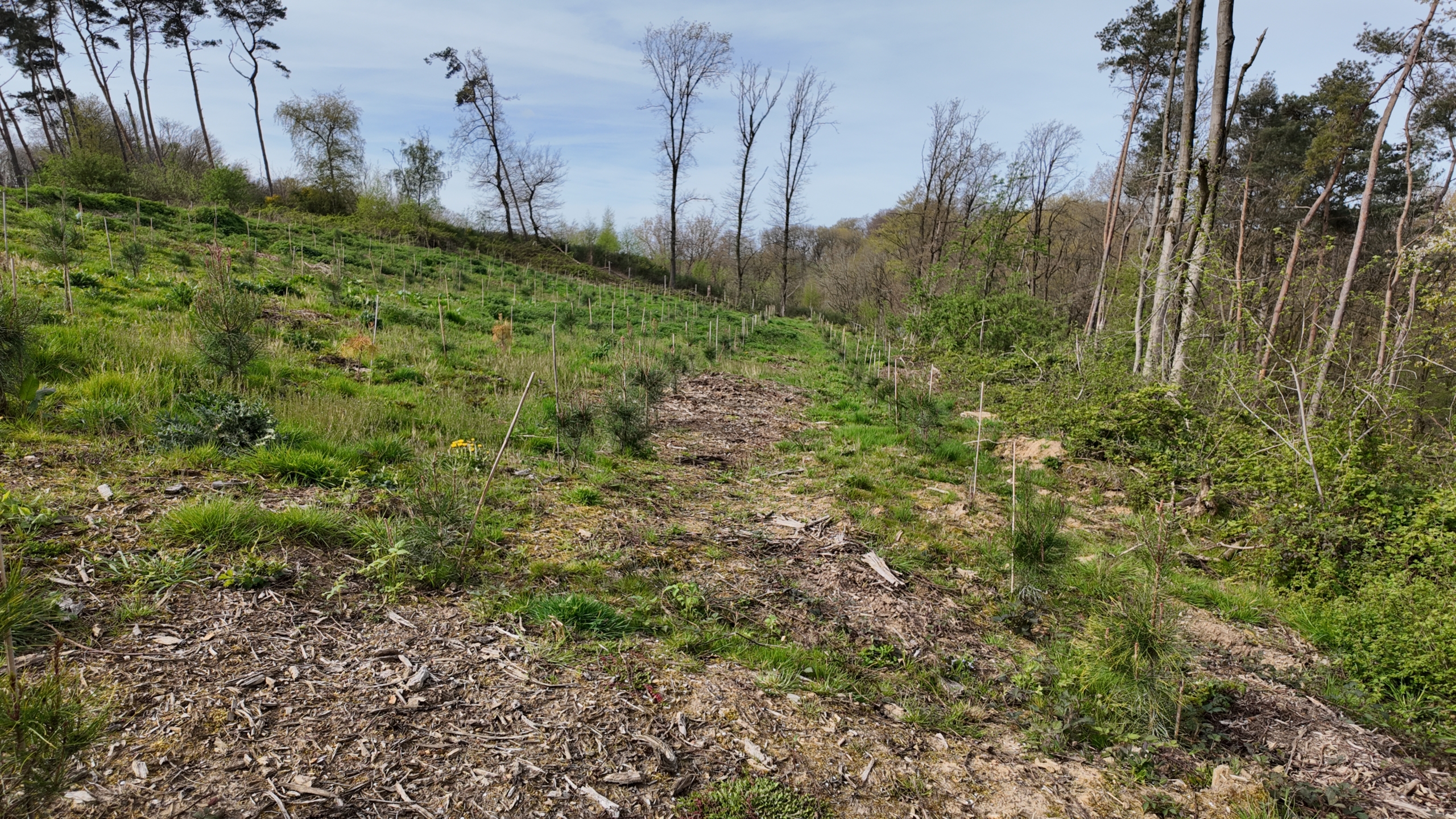
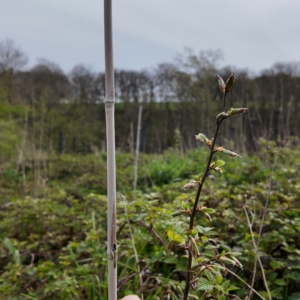
After visiting all the plots with the forest manager, we observed a survival rate of over 90% for all the plants.
Biodiversity and habitats
The planting density and species diversity aim to quickly restore a functional forest cover while limiting the risks associated with single-species stands.
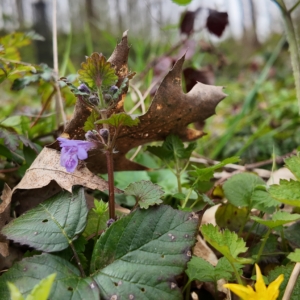
Species diversification increases the variety of future forest structures and the resources available for wildlife and plant life. The creation of a tiered woodland edge establishes a gradient favorable to numerous species of birds, pollinating insects, and small mammals.
Economy, uses, and landscape
The combination of productive and native species helps preserve future economic potential while strengthening the stand’s resilience to climate, health, and economic challenges. The project also enhances the landscape quality of the interfaces between forest and agricultural land.
Forest
-
Planting / installation period2025
-
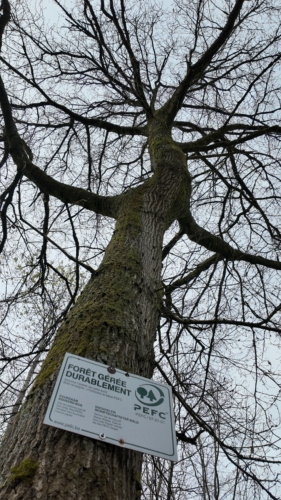
PEFCYes
-
Number of trees2 000
-
Area15 000 m²
-
Carbon200 T of carbon sequestered over 30 years
List of selected species
| Sessile Oak | 397 |
|---|---|
| Pedunculate oak | 265 |
| Red oak | 245 |
| Wild service tree | 66 |
| Wild cherry | 66 |
| Sweet chestnut | 348 |
| Hornbeam | 331 |
| Maritime pine | 281 |