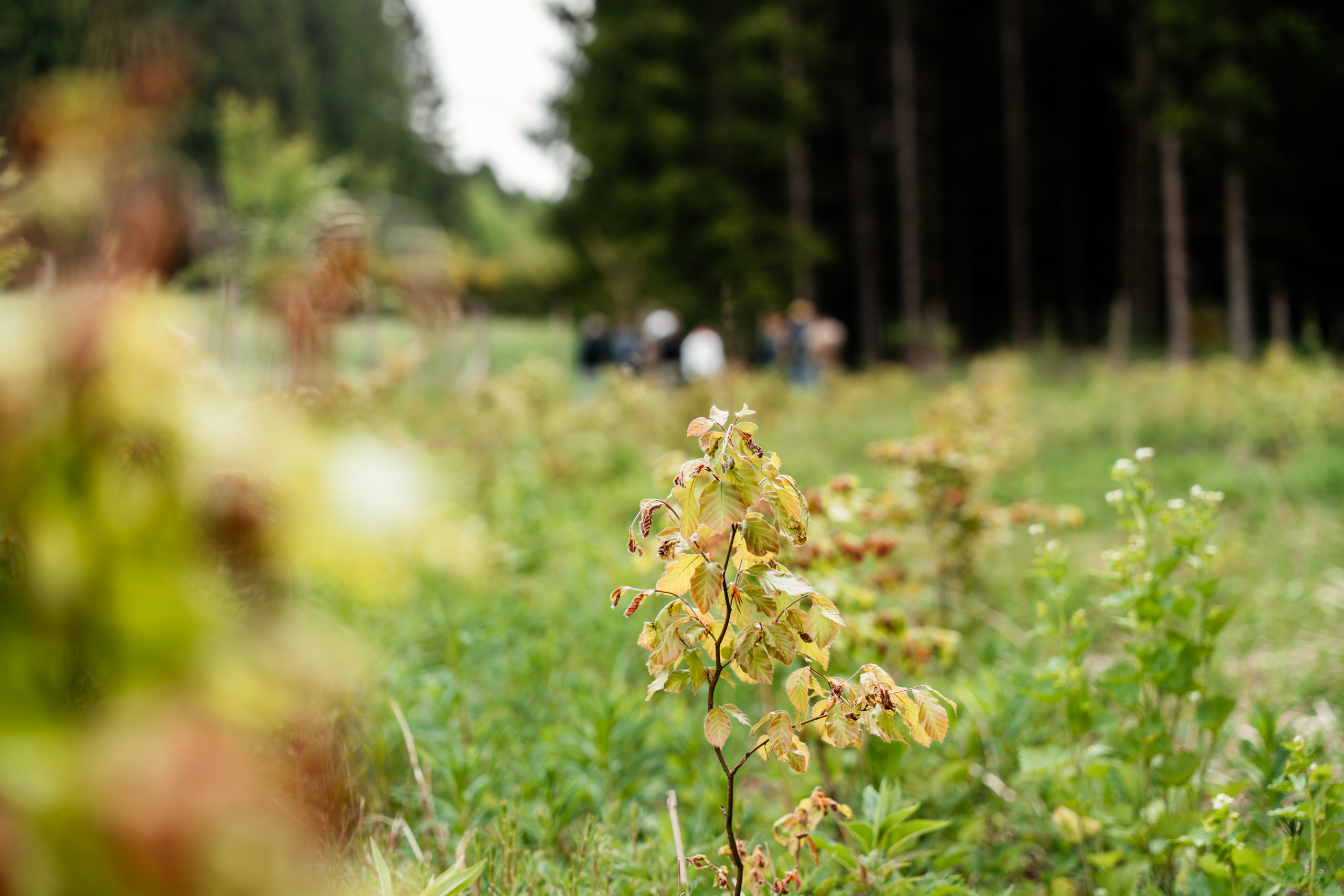
In Hardigny, PlantC supported the reforestation of 2,000 trees! In total, four species were planted.
The Hardigny Reforestation in Detail
In Hardigny, this is a reforestation project where PlantC is involved in supporting 2,000 trees across nearly 4.12 hectares. Four species are planted: Hybrid and Japanese larches, sessile oaks, and spruces.
This combination of deciduous and coniferous species is part of a reforestation of a coniferous plot post-bark beetle infestation.
Using a diversity of species is beneficial for avifauna (flowers, fruits, and acorns, food sources for birds, insects, and small mammals, for example). Consequently, when leaves fall, humus is generated, and root systems are complementary. This will also impact the recycling of deep elements, the biological activity of the soil, the fixation and structuring of the soil.
- Planting period: February 2023.
- Survival Rate: 90%
- 748.22 tons of CO2 sequestered over 30 years.
Project conducted in partnership with the Royal Forestry Society of Belgium.
-
Reforestation in HardignyGet inspired
Visit to the Hardigny Plot in 2024
This plot, measuring 4.12 ha, was planted in spring 2023, and to the owner’s delight, we observed that the number of surviving plants reached at least 90%.
This is an excellent result that highlights the owner’s good knowledge of silvicultural management, as the species are clearly well-suited to the site. Among the species, we find:

Spruce:
Everyone has already seen a spruce, as it is the most common conifer in Wallonia. Although it has been a victim of bark beetle attacks, some foresters are still trying their luck with this species. As long as it is well-situated and at a sufficient altitude, there is a good chance it can grow properly.
Japanese Larch:
It is particularly valued for its rapid growth, productivity, and quality wood. It is, however, quite sensitive to drought, wind, and competitive effects. It is therefore always necessary to monitor brambles, ferns, or other vegetation that could prevent it from growing as it wishes!
Hybrid Larch:
It is a true powerhouse compared to the European and Japanese larches from which it originates. Endowed with canker resistance and remarkable trophic amplitude, it is a tree increasingly planted in Belgium. Furthermore, like other larches, its needles are deciduous, which promotes natural regeneration beneath its canopy. And we love that (or at least biodiversity does)!
Sessile Oak:
A true biodiversity hotspot, it is the flagship among its cousins for its resilience and adaptation to climate change. This primarily heliophilous species requires less water than other oaks.

However, on the ground, we can already observe some invasive plants like bramble and elderberry that could hinder the proper growth of the species. Fortunately, for our future trees, the owners are very conscientious and carefully monitor the management of their forest! 😉
Visit with Our Partners
On June 28, 2024, we, as usual, invited our partners to visit the plot in the presence of the plot owners.
An opportunity to discuss the challenges facing our forests: Which species to choose based on the site and climate change? How to maintain the plantation, etc.


Conclusion: Planting is a long-term endeavor…
Forest
-
Planting / installation period2023
-
PEFCNo
-
Number of trees1 999
-
Area41 200 m²
-
Carbon748.22 T of carbon sequestered over 30 years
List of selected species
| Hybrid Larch | 443 |
|---|---|
| Japanese Larch | 400 |
| Spruce | 852 |
| Sessile Oak | 305 |