Jalhay Reforestation in Detail
This is a reforestation project where PlantC supports 2,000 trees. Ten species are planted on 2.53 hectares.
This combination consists of deciduous and coniferous species and is part of a reforestation of a coniferous plot post-bark beetle.
Using a diversity of species is beneficial for avifauna (flowers, fruits, and acorns, food sources for birds, insects, and small mammals, for example). When leaves fall, humus is generated, and root systems are complementary. This will impact the recycling of deep elements, the biological activity of the soil, the fixation and structuring of the soil.
- Planting period: Winter 2021-2022.
- Survival rate verified.
- 258.47 tons of CO2 sequestered over 30 years.
Project conducted in partnership with the Royal Forestry Society of Belgium.
-
Reforestation in JalhayGet inspired
Visit to the Jalhay Plot in 2024
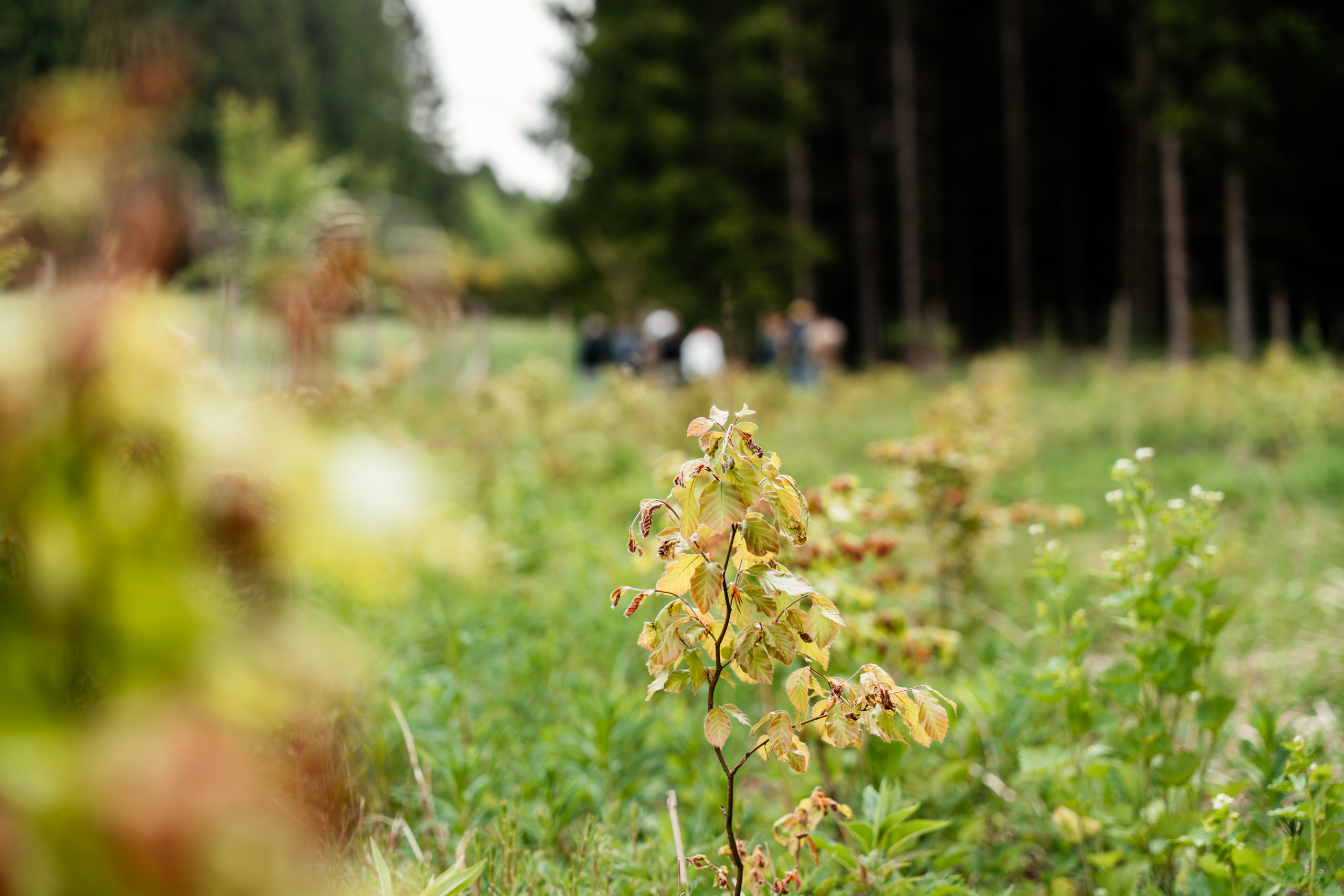
This plot, measuring 2.53 ha, was planted in winter 2021 following a bark beetle infestation. Below the plot is a small stream, which allows for the planting of black alders, a species that thrives in waterlogged conditions.


Forest soil is of paramount importance and dictates which species are suitable. We observed this on the plot. The owner wanted to try planting some sequoias in the same spot as the alder, and they ALL died. Indeed, the tree needs rich, deep, and fresh soil, but the constant humidity in the area may have caused problems.
For the rest of the planting, the deciduous trees are doing well. Indeed, the owner, accompanied by a forestry expert, chose to plant sessile oak and to place beech trees between each oak to protect it. A winning bet? We’ll know in a few years!
What worked less well was the planting of Douglas firs in the area. Indeed, the pressure from game, particularly roe deer and red deer, is so significant in the area that all the trees are browsed or rubbed.
What worked very well was the planting of Scots pines and Koekelaere pines. They are reaching an extraordinary size for their age, and most specimens are healthy! There is even natural regeneration of Scots pine among the deciduous trees, isn’t that wonderful?


In short, a survival rate exceeding 80% for a diversified planting in a wetland area. What more could one ask for?
Forest
-
Planting / installation period2022
-
PEFCNo
-
Number of trees2 000
-
Area25 300 m²
-
Carbon258.47 T of carbon sequestered over 30 years
List of selected species
| Alnus glutinosa | 452 |
|---|---|
| Pinus nigra koekelaere | 87 |
| Pinus sylvestris | 87 |
| Quercus petraea | 40 |
| Fagus sylvatica | 95 |
| Larix decidua | 183 |
| Pinus nigra corsicana | 317 |
| Cedrus atlantica | 262 |
| Pseudotsuga menziesii | 238 |
| Picea abies | 238 |