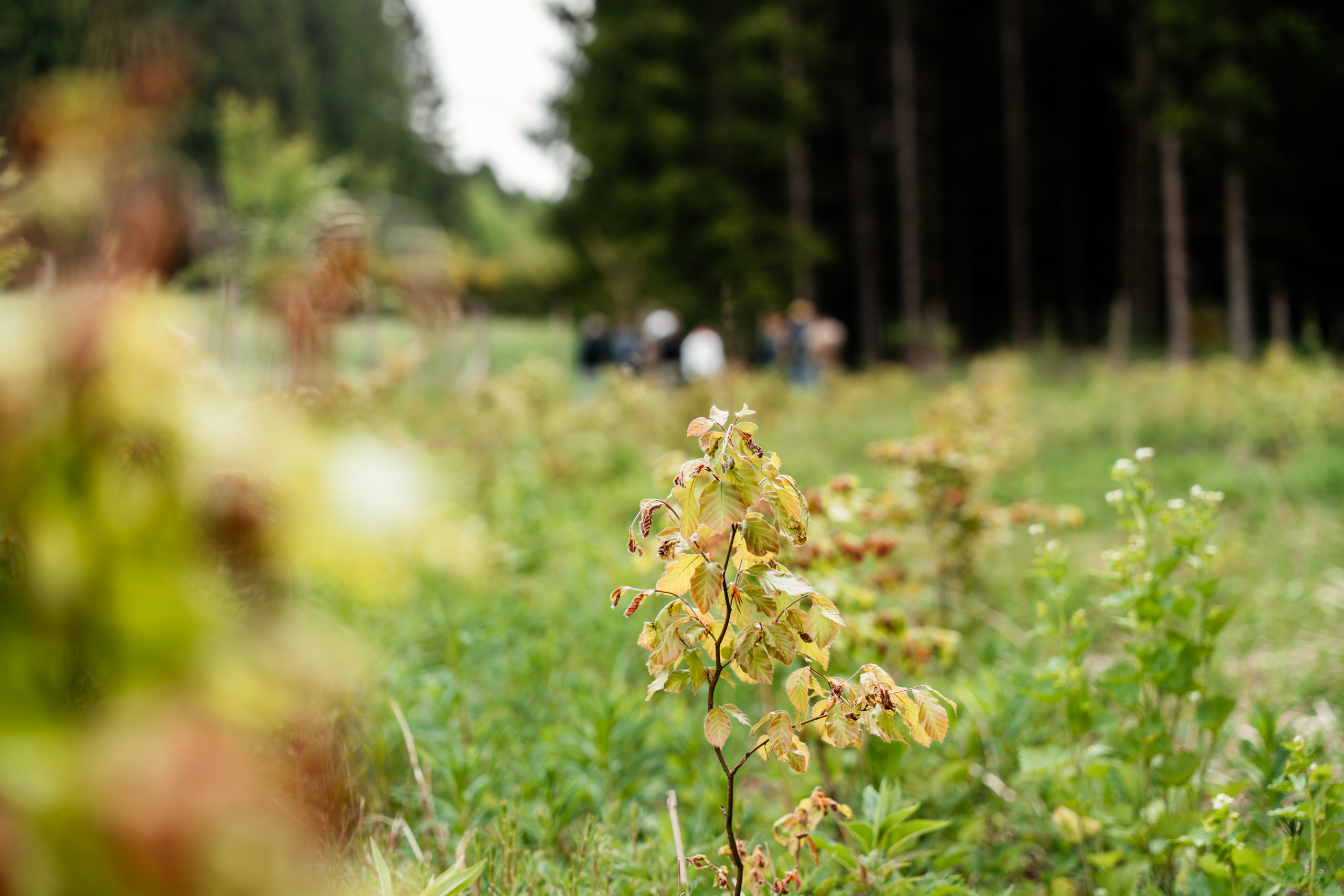
Sanitary reforestation in Saint-Vith, following targeted management due to bark beetle attacks. 2,000 trees planted.
Project Details
This is a sanitary reforestation following targeted felling due to bark beetle attacks. This program aimed to support the planting of 2,000 trees over 0.98 hectare.
Two species are present: 240 pedunculate oaks (Quercus robur), and 1,760 hybrid larches (Larix x eurolepis).
- Planting period: Spring 2021
- The survival rate was verified in autumn 2022. A follow-up check will be performed on the larches in autumn 2023.
- 223.5 tonnes of CO2 sequestered over 30 years.
The forester is involved in the sustainable management of his plots. He chose to integrate 250 Corsican pines into this reforestation ( Pinus nigra subsp. Laricio Maire ). A few hundred meters away, he participated in the “Resilient Forest” program to approach management differently, regenerate the forest, and guide it towards a forest more resilient to climate change.
Project carried out in partnership with the Royal Forestry Society of Belgium.
-
Reforestation in Saint-VithGet inspired
Visit to the plot in 2022
The forester welcomes us to the plot on October 21, 2022. He explains the context in which his plot was damaged by the bark beetle. Following the sanitary felling, a reforestation project was initiated.
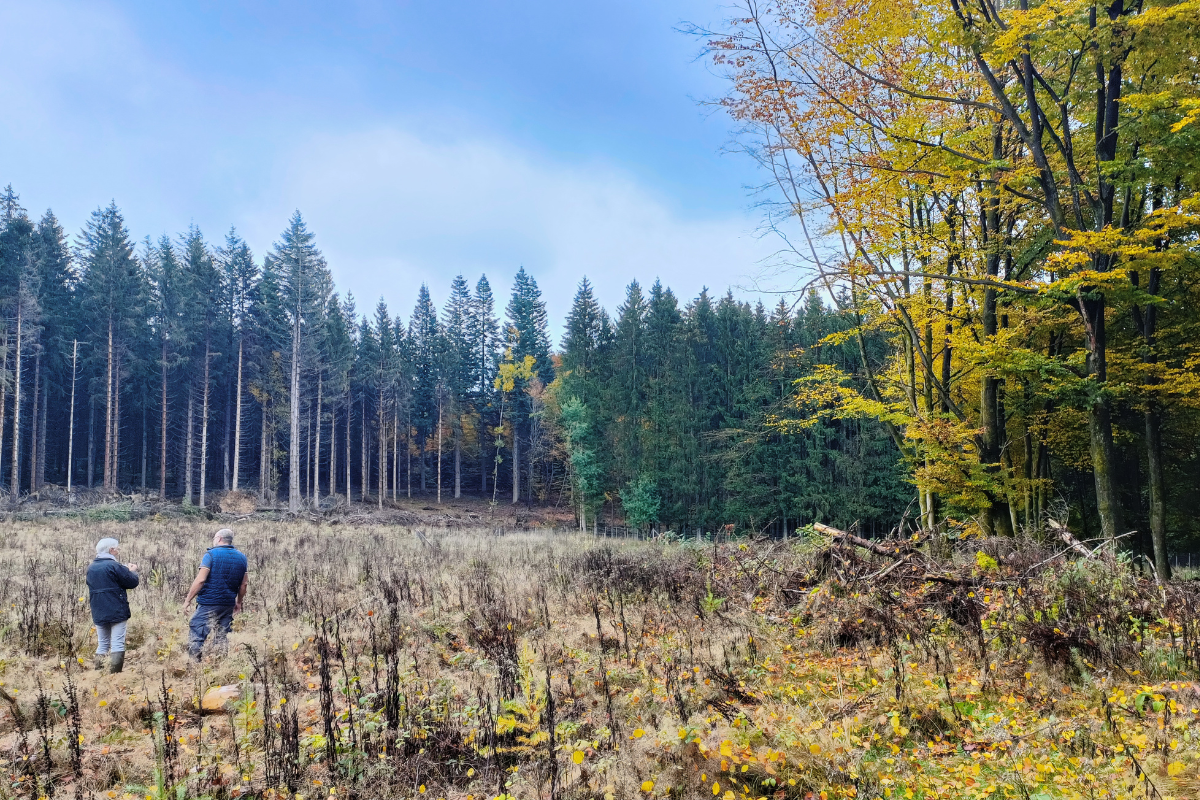
Thanks to its growth rate and its well-decomposing foliage, the larch plays a significant role in the diversification of flora and fauna. Indeed, the larch allows for the development, under its light canopy, of a herbaceous and shrubby layer. This is highly beneficial for the soil, fungi, plants, and animals. The larch also plays a protective role for subsequent understory planting of a slower-growing species.
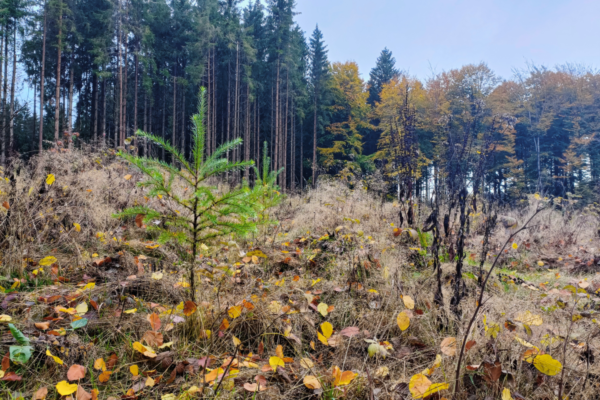
Drought and Pest Alert: A Plantation Under Close Monitoring!
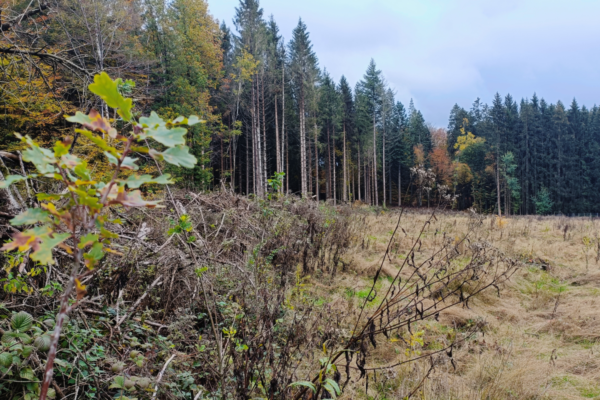
The plantation suffered the ravages of the summer 2022 drought. Following the visit to the plot in October, we observed that the oaks are preserved (they are sheltered by the windrow). However, the larches, especially those most exposed in the center of the plot, are affected by the heat and the pine weevil.
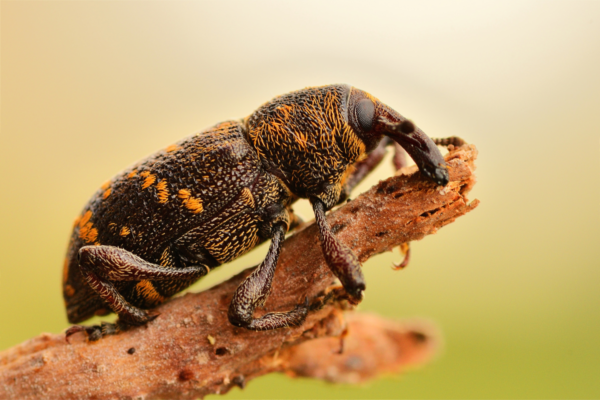
The pine weevil, a beetle, curculionid, is the most significant pest of coniferous reforestations in their early years. It can destroy a plantation in a few days through the bites it makes on the bark of the stems of young plants.
(source: agriculture.gouv.fr )
2023: Replanting Adapted to Climatic Constraints
The pedunculate oaks have recovered well and are established.
The larches (in the center of the plot), affected by drought and pine weevil, suffered a loss of approximately 40% (observed in autumn 2022), hence this spring’s replanting.
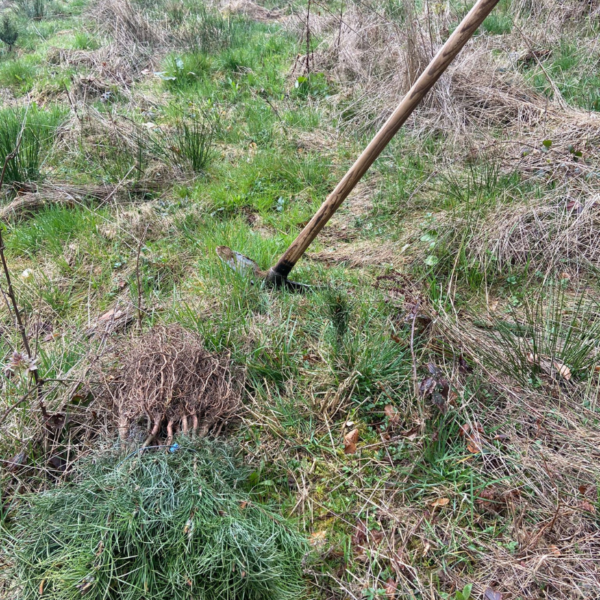
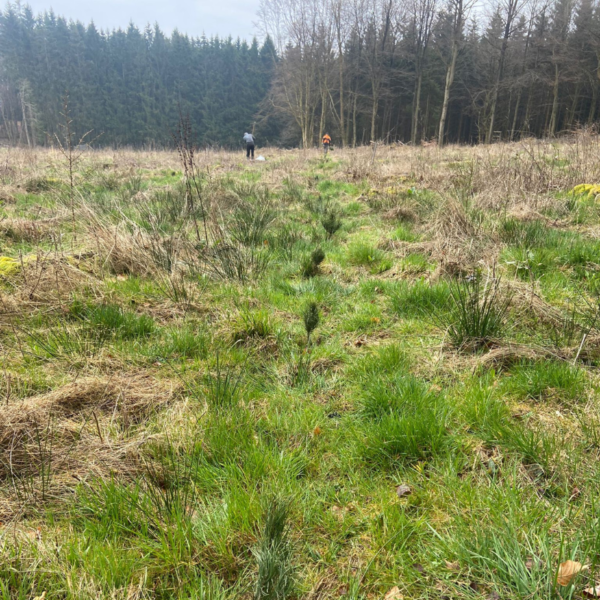
Given the resistance to water stress last summer, the forester chose to replant the plot with 1,000 Corsican pines and 100 Scots pines to mitigate the risk of drought.. Climate change increasingly requires adaptation in forest stands.
Forest
-
Planting / installation period2021
-
PEFCNo
-
Number of trees2 000
-
Area1 m²
-
Carbon223.5 T of carbon sequestered over 30 years
List of selected species
| pedunculate oaks (Quercus robur) | 240 |
|---|---|
| Hybrid larch (Larix × marschlinsii) | 1760 |
At Fabribois, we choose to plant tree species used in our company to support the mission of PlantC, making our forests more resilient to drought and disease.
Ariane and Philippe Justin