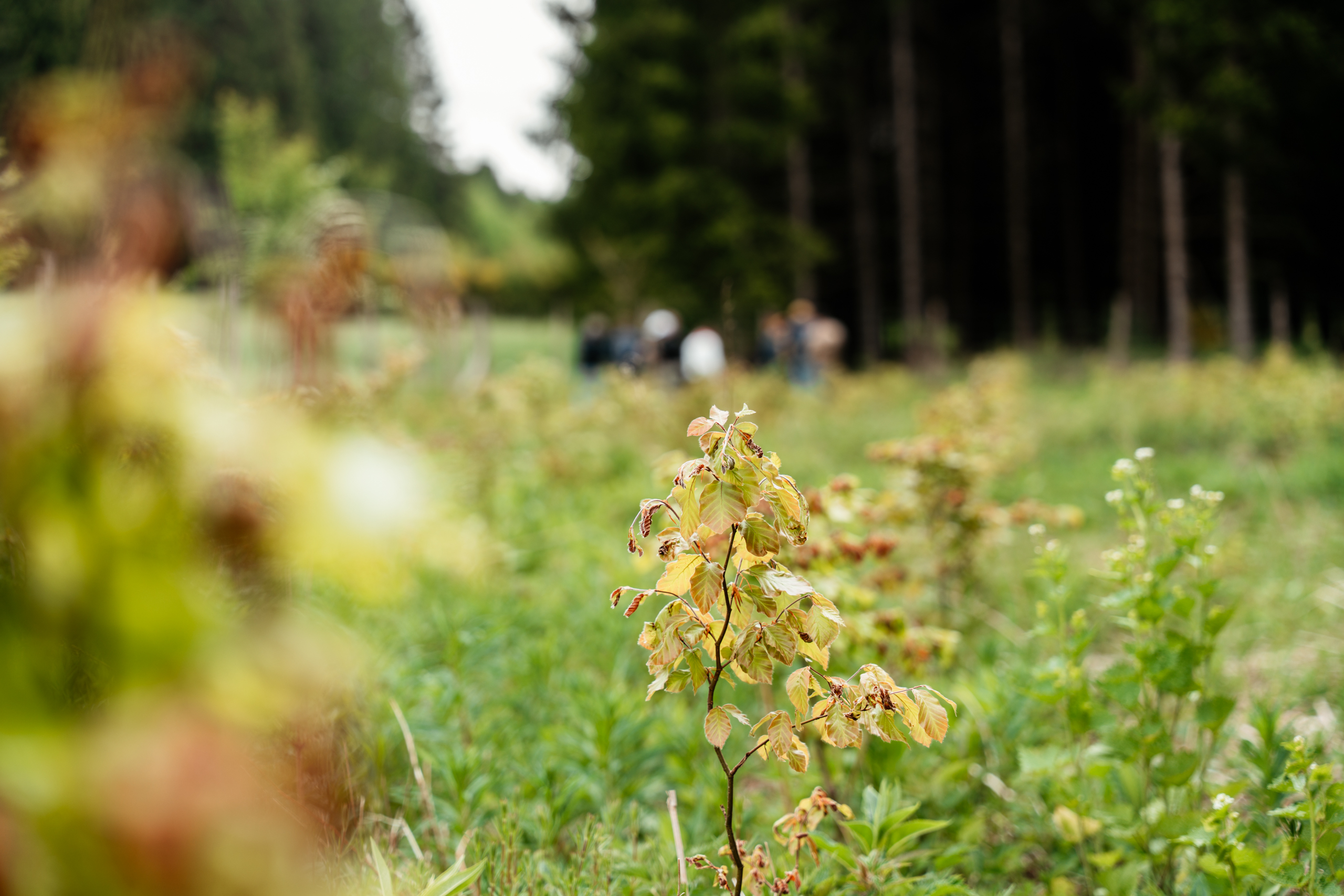
Rows of trees, pollard willows, fruit trees and a diverse hedge to enrich the agricultural landscape and support biodiversity.
The context
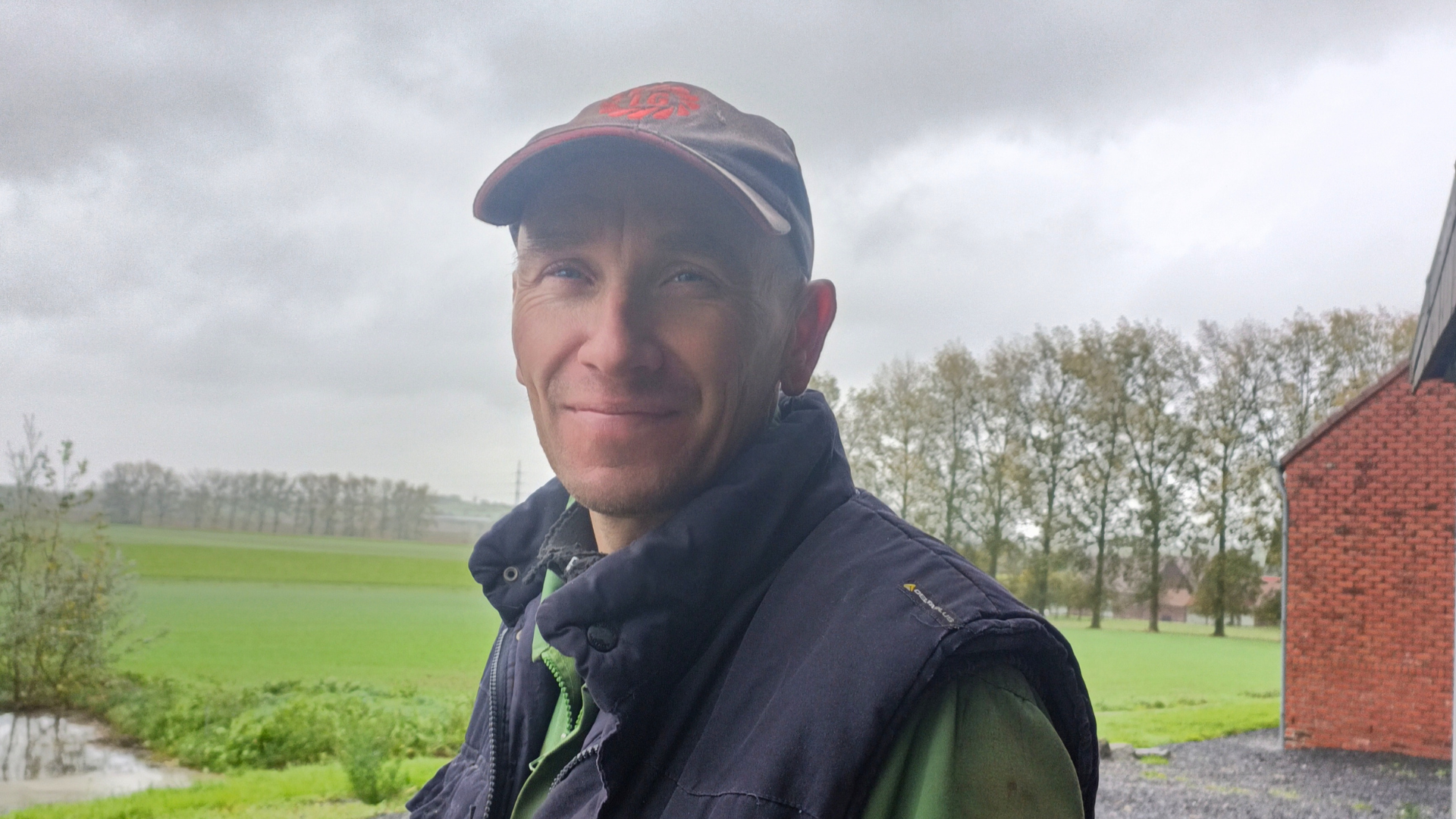
In Béclers, Dominique and Aurélie Moulin have been developing their dairy farm using an agroecological approach for several years. Having established the farm in 1997, they have gradually adapted their practices to increase its feed self-sufficiency, improve herd health and encourage grazing.
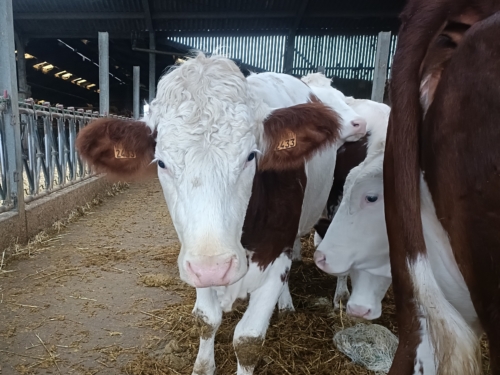
Their farm covers approximately 60 hectares, a substantial proportion of which is grassland. The Montbéliarde cows are fed mainly on produce from their own farm and neighboring farms. Since 2021, the milk produced on the farm has been certified organic and carries the “Haymilk – Traditional Speciality Guaranteed” label.
Building on this progress, Dominique also wants to strengthen the ecological network across the farm’s fields and introduce more trees into the agricultural landscape.
The project
The project involves improvements to two fields on the farm, with 159 trees and plants to be planted in different configurations.
First field: rows of trees suited to their surroundings
Three types of planting are planned:
- 20 willows managed as pollards, planted in a row in a wetter area near a watercourse. Over time, this traditional management method will produce trees with cavities and structures that support a range of species.
- 14 lime trees, planted in a row along rue de Liberchies. Their blossoms will provide a source of food for pollinating insects, among other species.
- 15 standard fruit trees, which will help diversify food sources and enrich the farm landscape.
Second field: enhancing resources and ecological connectivity
Two complementary improvements are planned:
- 20 standard fruit trees, to increase tree cover within the field.
- 90 plants for a diverse single-row hedge, intended to create a new element of the farm’s ecological network.
Benefits for biodiversity
These improvements will help diversify the habitats and resources available within the farm’s fields.
The rows of lime trees and the fruit trees will provide floral resources and food sources, while the diverse hedge will offer refuge, feeding areas and routes for wildlife to move through the landscape.
The pollard willows are of particular long-term value: their evolving structure and the cavities that may form as they age can provide shelter for a range of species, particularly birds and insects.
By combining several types of improvements in different settings, the project helps strengthen ecological connectivity across the farm.
A farm where biodiversity grows
Beyond their ecological benefits, these improvements are part of a holistic vision for the farm: producing food while caring for the natural resources on which farming depends.
By gradually developing the farm’s ecological infrastructure, Dominique and Aurélie are continuing their commitment to a more diverse and resilient farming system.
-
Strengthening the ecological network of a dairy farm in BéclersParticipate in this project
Planting planned for 2027…
Agroforestry
-
Planting / installation period2026-27
-
Number of trees559
-
Meters of hedge240 m
List of selected species
| Cherry trees (Burlat / Castor) | 2 |
|---|---|
| Walnut tree | 1 |
| Apple trees (Gueule de Moutin / Van Divoet / Coxybelle / Transparente de Lesdain / Reine des reinettes | 21 |
| Pear trees | 4 |
| Plum trees (Mirabelle de Nancy / Anna Spath / Reine Claude crottée) | 6 |
| Small-leaved lime trees | 24 |
| White willows | 20 |
| Hedge composition to be confirmed |