Miscanthus to combat mudslides in Jodoigne


Following joint work with the Independent Forage Promotion Centre (CIPF asbl), an expert in miscanthus cultivation, PlantC and ValBiom: 1.2 hectares of miscanthus were planted at Bernard Calbert’s farm, a farmer. Thanks to you and the committed companies, the purchase of 10,871 rhizomes was able to be financed (50% PlantC support). Over 20 years, nearly 144 tonnes of CO2 will be sequestered and avoided due to the replacement of a fossil fuel (natural gas) with a biomass fuel.
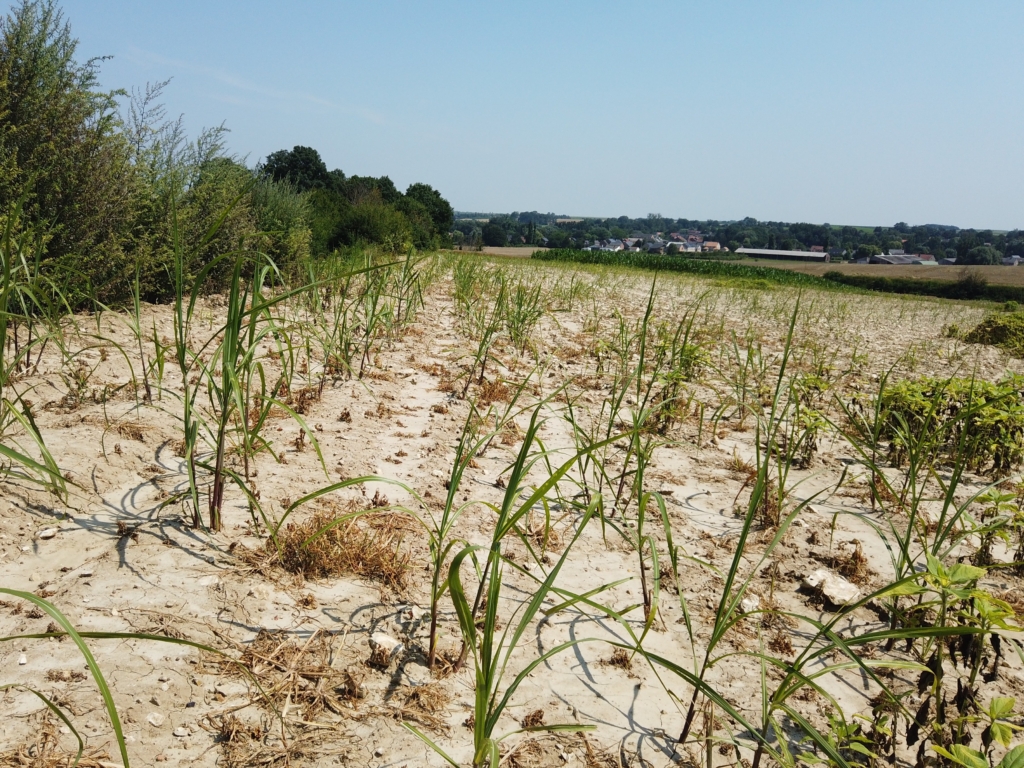
Bernard Calbert cultivates arable land in Jodoigne, in an agricultural plain. In Walloon Brabant, the increasingly frequent occurrence of extreme rainy episodes in a plain with limited ecological connectivity leads to mudslides. This erosion impoverishes the soils and can cause damage to infrastructure.
The farm has a plot with a slope greater than 10% susceptible to erosion risks. A fascine, a linear device composed of bundles of branches or straw designed to filter muddy water, was installed downstream of this plot in 2012. To go further, miscanthus, an anti-erosion crop, was planted on 1.2 hectares.
Synergy with the biomass boiler project for the future Plaine de la Gadale sports centre
The Municipality of Jodoigne will operate a biomass boiler to heat the future Plaine de la Gadale sports centre. This project was intended from the outset to be exemplary by opting for entirely renewable heating energy. Part of the supply for this boiler will be provided by miscanthus produced by the municipality’s farmers. In addition to the ecosystem services provided by the crop, it will contribute to producing renewable energy for the community!
-
1.2 hectares of miscanthus in JodoigneGet inspired

An ideal plant for enhancing challenging soils
Miscanthus is a hardy plant that establishes itself for about twenty years. It is harvested annually starting from the second year. It thrives in “complicated” lands where food crops struggle: areas prone to mudslides, poorly shaped plots, etc., which usually give farmers a hard time.

Numerous environmental benefits
The added value is primarily climatic! The crop stores carbon in the soil, and annually produces the equivalent of 5,000 to 8,000 litres of fuel oil per hectare!
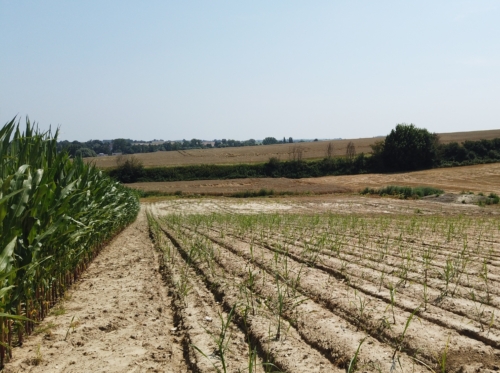
With its high stem density and leaves that cover the soil each winter, it is an excellent measure to combat mudslides. Various projects have also proven their effectiveness in the region and in Europe.
Once weeded in the first year, the crop no longer requires any pesticides and is therefore an ally for water quality!
Finally, the crop remains in place all winter, offering a refuge for agricultural plain wildlife at a time when they are desperately lacking. For this project, small plots are favored to enhance challenging lands. This planting design contributes to diversifying agricultural landscapes, which is entirely beneficial for biodiversity.
A source of diversification for agriculture
Farmers must contend with highly fluctuating and often unfavorable agricultural raw material costs in recent years. These prices are primarily determined by global markets.
Miscanthus represents a small source of diversification for farmers. Its price is not dependent on a global market. Being low-density, it cannot be transported more than 30 km without becoming unprofitable. Its price changes little, which guarantees a stable income for farmers. Its planting remains costly, as it involves planting 20,000 rhizomes per hectare, which requires significant labor. In the first year, there is no harvest that can be valorized. A boost to launch the project is therefore welcome!
CIPF asbl, expert partner in miscanthus cultivation
The Independent Forage Promotion Centre is a non-profit organization (asbl) active for over 50 years in agricultural experimentation. Since 2007, the CIPF has been dedicated to developing miscanthus cultivation through ambitious projects. In partnership for many years with the Province of Walloon Brabant, the CIPF has been planting miscanthus strips with an anti-erosion purpose. The objective is to prevent mudslide phenomena while offering a sustainable agricultural solution. As part of this project, the CIPF was commissioned by the Province to identify volunteer farmers who will participate in the supply process for the future sports centre.
Agroforestry
-
Planting / installation period2021
-
Number of seedlings10871
-
Area12 000 m²
-
Carbon144 T of carbon sequestered over 20 years
List of selected species
| Miscanthus giganteus seedlings | 10871 |
|---|