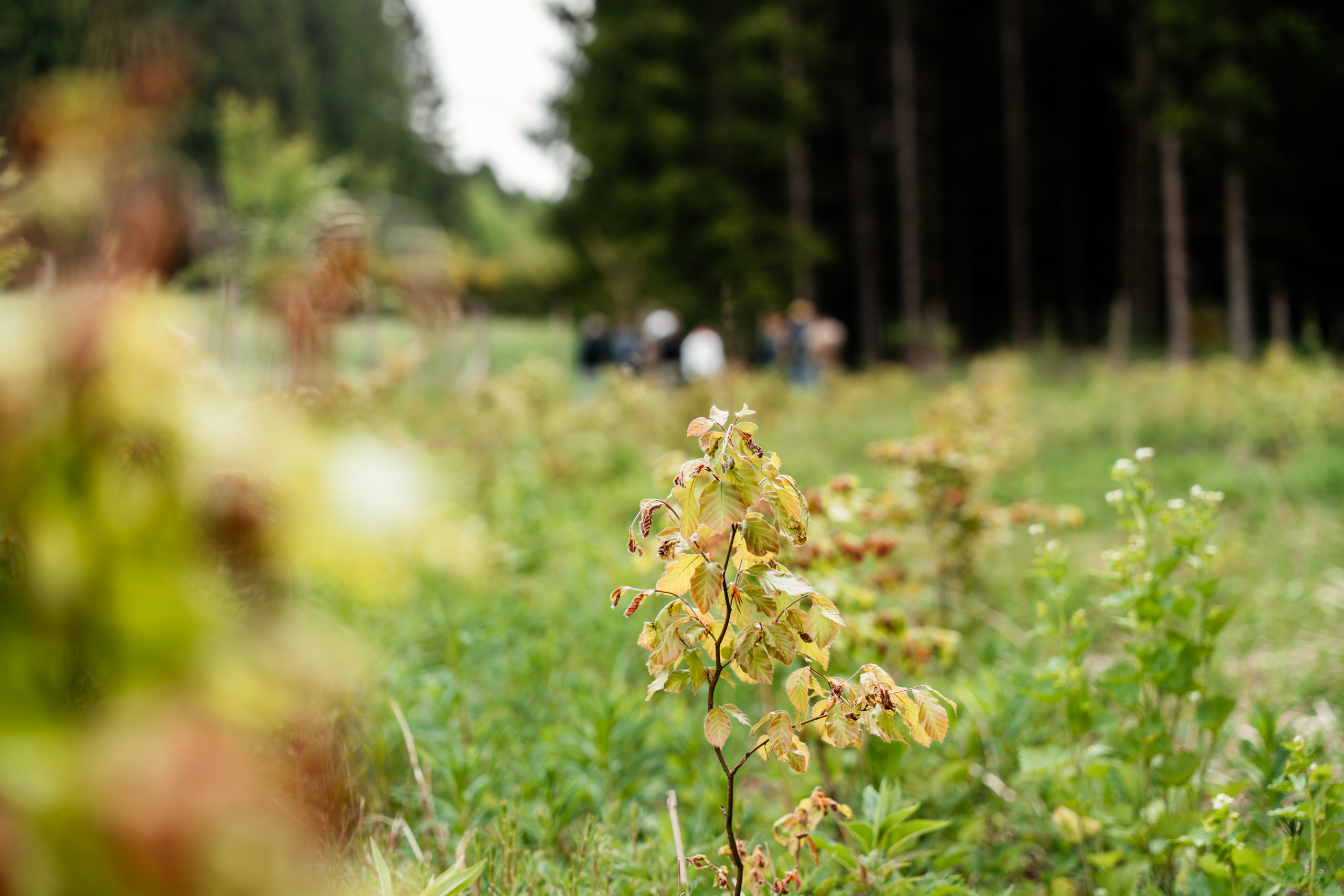

What is happening in Gouvy?
This is a reforestation project where PlantC is involved in supporting 7,420 trees across 3.94 hectares. Ten species make up the reforestation in Gouvy:
- Spruce: 1,770 individuals
- European Larch: 2,360 individuals
- Scots Pine: 1,575 individuals
- Douglas Fir: 590 individuals
- Beech: 385 individuals
- Sycamore Maple: 180 individuals
- Sessile Oak: 80 individuals
- Atlas Cedar: 320 individuals
- Red Oak: 100 individuals
- Chestnut: 60 individuals
This combination consists of deciduous and coniferous species and is part of a long-term reforestation (phase every 5 years). This is a diverse planting in open ground (a mix of conifers and broadleaves) with the creation of forest edges.
Using a diversity of species is beneficial for avifauna (flowers, fruits, and acorns, food sources for birds, insects, and small mammals, for example). When leaves fall, humus is generated, and root systems are complementary. This will impact the recycling of deep elements, the biological activity of the soil, the fixation and structuring of the soil.
- Planting period: January 2024.
- Survival rate: verified and higher than 80%
- 626.46 tonnes of CO2 sequestered over 30 years.
Project conducted in partnership with the Royal Forestry Society of Belgium.
-
10 Tree Species for Reforestation in GouvyGet inspired
Forest visit on May 19, 2026
The visit took place under weather typical of the High Ardennes in mid-May: cool, slightly damp, with variable light but favorable conditions for observing the plot.
The manager recalled the site’s history: 40 to 50 years ago, the plot was occupied by a spruce block. Management is carried out through 5-hectare cuts every three years, with the idea of gradually diversifying the species. The reforestation project thus began in 2007.
Plantation structure
Diversification remains focused on conifers, as soil and altitude conditions (500–600 m) significantly limit the possibilities of introducing broadleaves in the heart of the plot. The planting was carried out in strips of 5 to 6 rows, one species per strip, with a sequence of:
- Larch,
- Spruce,
- Douglas fir, and between these strips, rows of pines intended to facilitate future thinning.
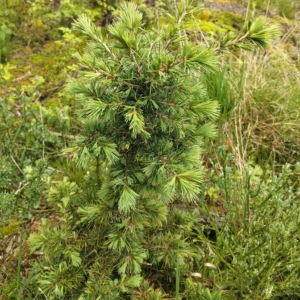
The cedars, planted very young (about 10 cm), are still discreet but well established.


Growth and species dynamics
- The pine grows rapidly during the first 30 years, with effective apical dominance management.
- The hybrid larch shows very rapid but sometimes disorderly growth, unlike the European larch, which is more regular.
- Once the larch overtakes the broom, which is very present on the plot, it can be left to develop without intervention.

Pressures and hazards
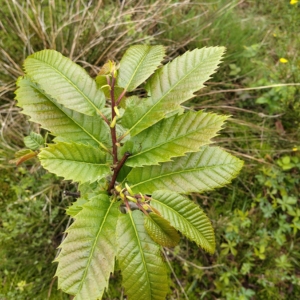
Despite a late frost on the periphery of the plot, the survival rate is excellent. Some damage is visible:
- fraying from roe deer,
- hinds coming to feed.
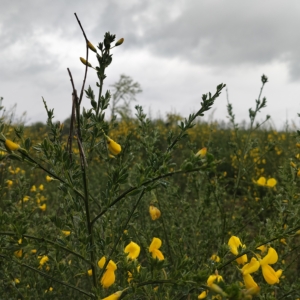
The broom, which is very abundant, must be contained to prevent it from competing with the young plants.
Ecological context
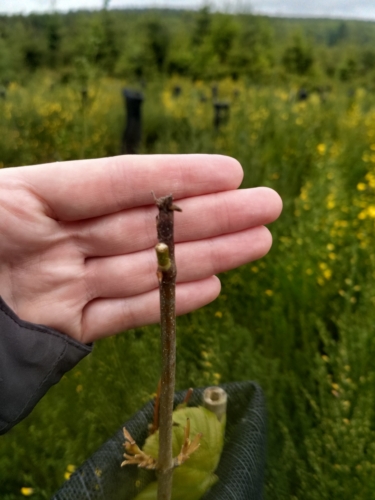
The visit took place with the cuckoo and the wood warbler in the background, testifying to the ornithological richness of the area. The plot was formerly agricultural, which explains the soil quality from which the young trees still benefit.
The broadleaves are present on the periphery and in occasional rows, for reasons of diversity and natural heritage.


Focus on the Northern Red Oak
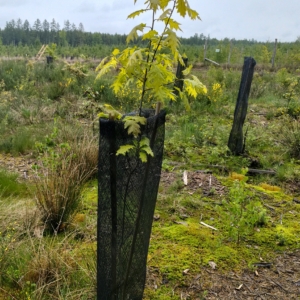
The manager points out that the American red oak, present for about 150 years in Wallonia, often survives better than native oaks. Here, the plot is sufficiently diversified to avoid problematic spreading. In the event of stump sprouts, simply cutting them is enough to stop regeneration. As a heliophilic species, it self-regulates: if the seedlings are too dense, the young plants choke each other out.

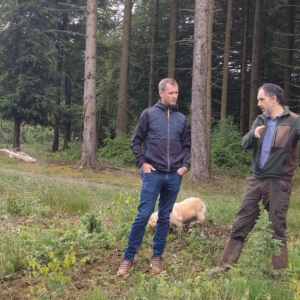
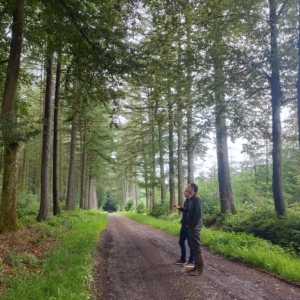
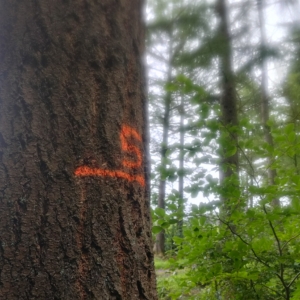
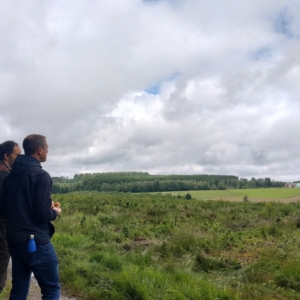
Visit with Smart2Circle in June 2026
Forest
-
Planting / installation period2024
-
PEFCNo
-
Number of trees7 420
-
Area34 900 m²
-
Carbon626.46 T of carbon sequestered over 30 years
List of selected species
| Spruce - Picea abies | 1770 |
|---|---|
| European Larch - Larix decidua | 2360 |
| Scots Pine - Pinus sylvestris | 1575 |
| Douglas Fir - Pseudotsuga menziesii | 590 |
| Beech - Fagus Sylvatica | 385 |
| Sycamore Maple - Acer pseudoplatanus | 180 |
| Sessile Oak - Quercus petraea | 80 |
| Atlas Cedar - Cedrus atlantica | 320 |
| Red Oak - Quercus rubra | 100 |
| Chestnut - Castanea sativa | 60 |