

The Reforestation of Suxy in Detail
In Suxy, this is a reforestation project where PlantC supports 1,448 trees across nearly 0.7 ha. There are eight species.

This combination, consisting of deciduous and coniferous species, is part of a reforestation of a bark beetle-affected plot.
Using a diversity of species is beneficial for avifauna (flowers, fruits, and acorns, food sources for birds, insects, and small mammals, for example). Consequently, when leaves fall, humus is generated, and root systems are complementary. This will also impact the recycling of deep elements, the biological activity of the soil, the fixation and structuring of the soil.
- Planting Period: Winter 2022-2023.
- Survival rate: approximately 90%, and 100% for Turkey oak, which was quite a challenge!
- 116.28 tonnes of CO2 sequestered over 30 years.
Project conducted in partnership with the Royal Forestry Society of Belgium.
-
8 Tree Species Planted in SuxyGet inspired
Visit to the Suxy Plot in 2024
We visited the site on May 31, 2024. The plot located in the province of Luxembourg was primarily covered with spruce trees. Unfortunately, like the majority of spruce trees in Wallonia, they were affected by bark beetles.
The bark beetle is a small beetle of the order Coleoptera that slips between the bark and the sapwood. Generally, it attacks trees that are already in poor condition, experiencing water stress or a nutrient deficiency due to poor soil, but it can spread very quickly and decimate entire stands.

The economic consequences are catastrophic since this wood is valued for its mechanical qualities (hard and flexible), and the losses are therefore immense!
The Planting
Here, we are looking at a true arboretum! Indeed, the owner has planted several different species, some of which are rarely seen in Wallonia at the moment, such as the Turkey oak or the Bornmüller’s fir.
The plantation is spread across 2 plots: the first is located at the bottom of the valley and faces North. The second is located 2 km away and benefits from good exposure.


The owner opted to rely on eight different species, and he is right! In the context of climate change, it is important not to put all one’s eggs in one basket. Indeed, with diseases and insect attacks becoming increasingly prevalent, certain species are ideal targets.
We are deeply convinced that in the future, the species we have will shape the timber market, so it’s worth diversifying your forest!
Focus on a Planting Method… Enclosure Planting
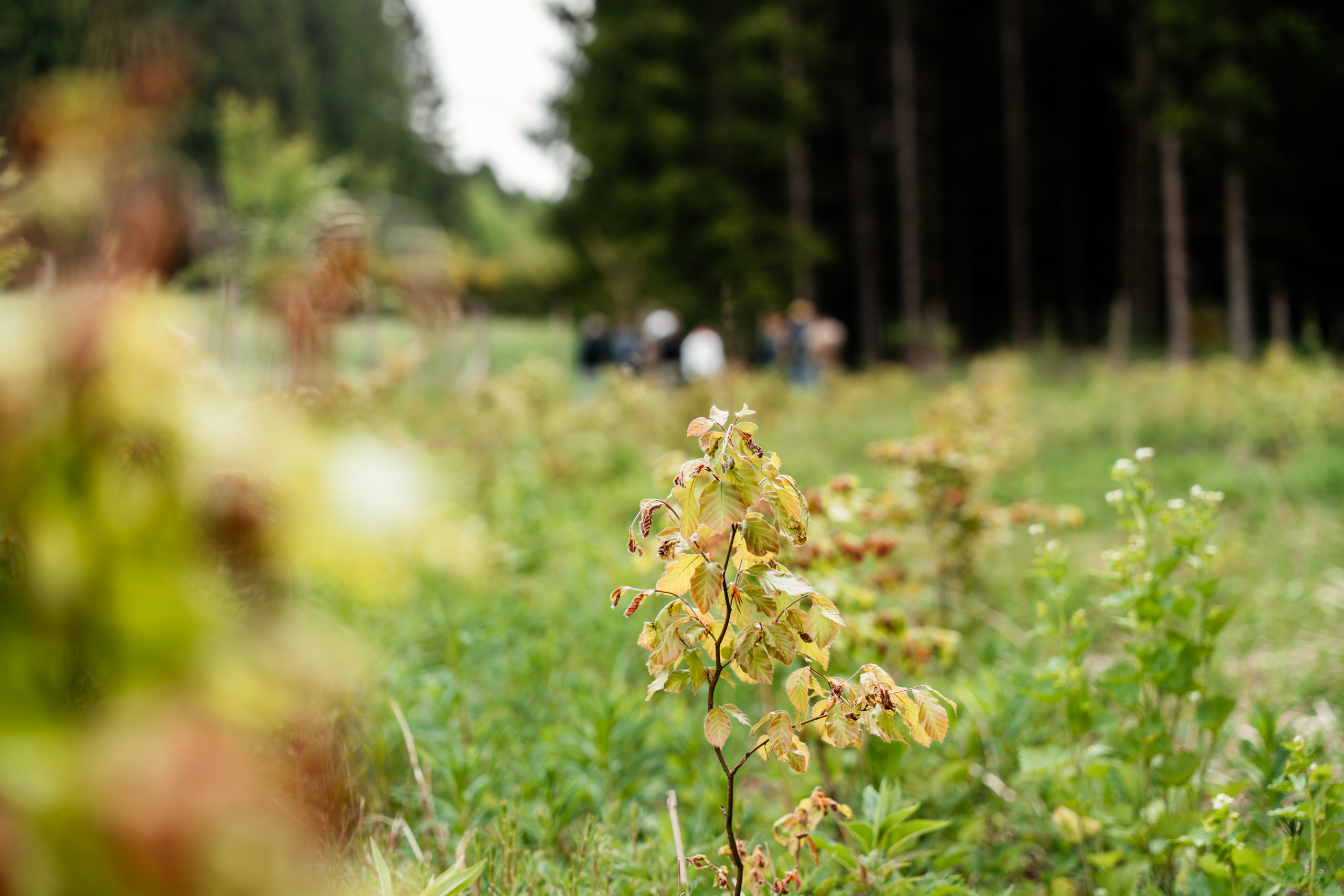
On another plot, the owner decided to plant beech trees while creating, along the young plantation, a forest edge composed of shrubs bordering the farmer’s field.
Planting Beech Exclusively, a Risky Gamble? At a time when all expert opinions converge to say that beech trees have very little future in our latitudes given climate change, this owner nevertheless planted this species… and the idea is a good one! Indeed, beech is sensitive to drought and sciaphilous (meaning it thrives in shade). In this case, the conditions are met since the plot is north-facing and benefits from water supply from the spring adjacent to the plot. It is therefore likely that this plantation can grow under good conditions.
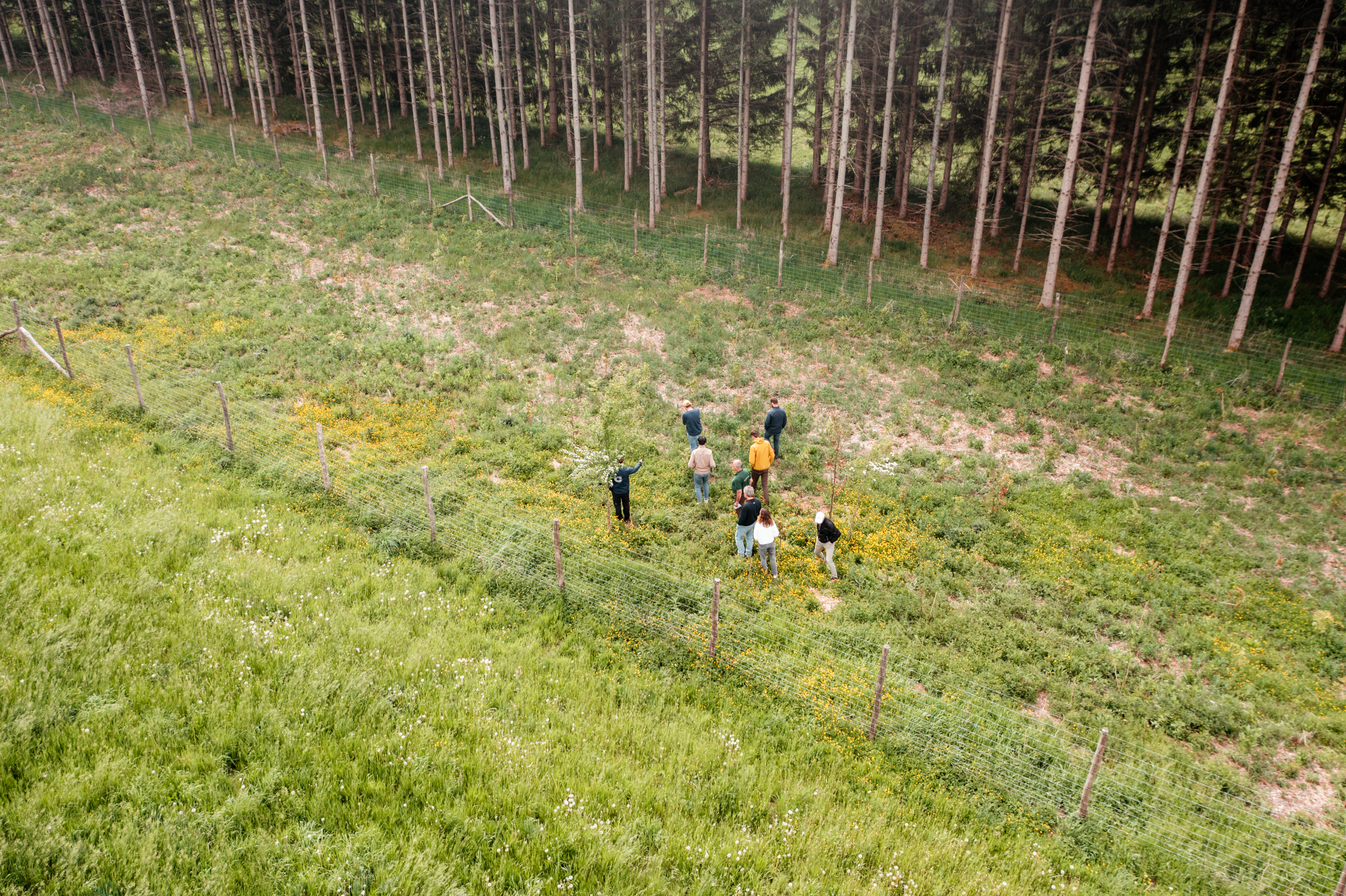
The choice of enclosure is made due to the game pressure which is so strong in this region of Belgium that the owner chose to fully protect his plantation. This prevents game from browsing the young trees and thus promotes the growth of the plantation. However, he left small openings for foxes to hunt voles.

An Enriching Visit
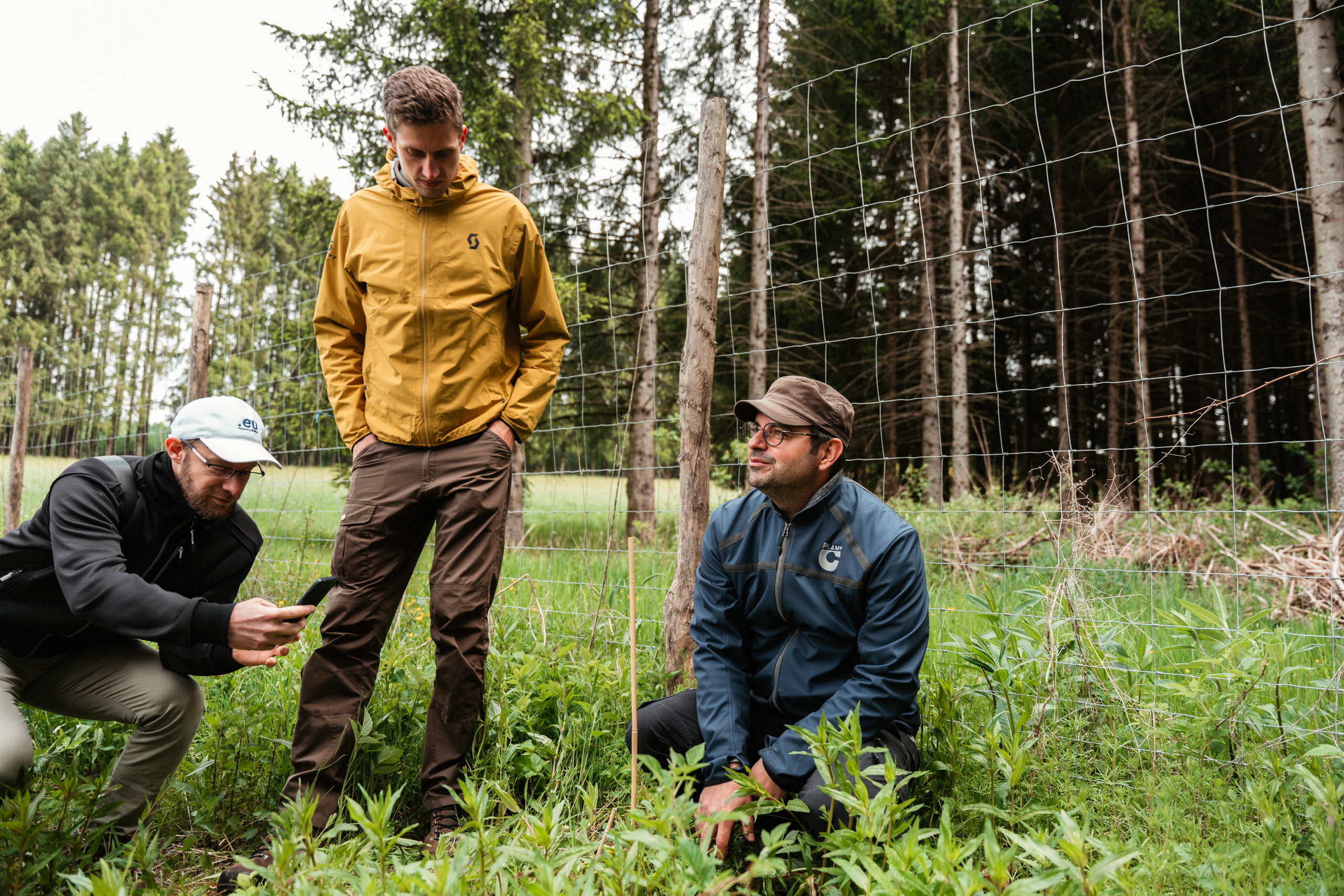
On May 20, 2025, we welcomed the companies that supported Pierre Lebrun’s project. We extend our gratitude to Eurid and BEA Sensors for their attendance. During the visit, we shared insights on the challenges facing our forests (climate warming, adaptation, biodiversity, carbon, etc.).
We had the opportunity to visit the owner’s two plots:
- The first is fenced to limit damage caused by game. It primarily consists of beech trees accompanied by melliferous species (rowan, hawthorn, elder, raspberry bushes, etc.)
- The second mainly consists of oak trees (Turkey oak and sessile oak) with individual protections.
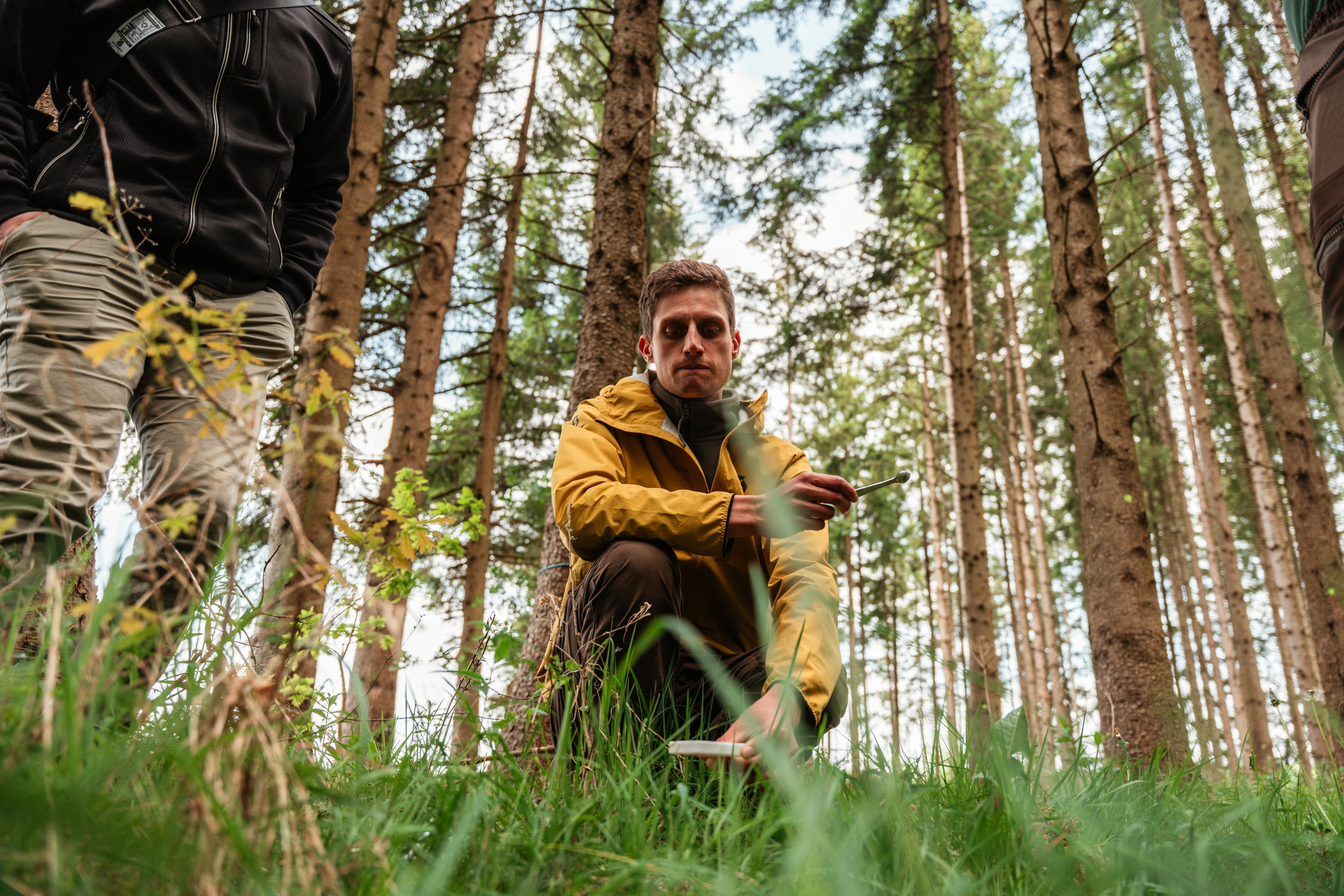
This highly educational visit was a unique opportunity to visit two plots showcasing two very different silvicultural management approaches. Both were designed considering pedological, edaphic, hydric, and also climatic constraints, allowing the owner’s creativity to flourish, as he designed the space optimally for future generations who may reap the fruits of his labor.
It was also an opportunity to draw companies’ attention to the specificities of silviculture, a discipline that requires time, patience, and a good deal of humility. Unlike other sectors where results are visible in the short term, decisions made today in forestry bear fruit several decades later.
For example, a beech tree can take up to 100 years before being harvested, depending on the soil conditions and the site where it grows. This timescale makes silviculture particularly vulnerable to uncertainties related to climate change, which alters ecological balances and increases health risks for trees.
In light of this, it becomes essential to adopt a proactive approach, by integrating a better understanding of soils, natural dynamics, and probable climatic changes to guide the choice of species to plant. The challenge is not only to produce wood, but to build resilient forests today, capable of adapting to tomorrow’s conditions.




Forest
-
Planting / installation period2023
-
PEFCNo
-
Number of trees1 448
-
Area6 999 m²
-
Carbon116.28 T of carbon sequestered over 30 years
List of selected species
| Beech | 500 |
|---|---|
| Bornmüller's Fir | 187 |
| Atlas Cedar | 51 |
| Sessile Oak | 125 |
| Hornbeam | 125 |
| Turkey Oak | 100 |
| Scots Pine | 150 |
| European Larch | 210 |