
La Croisette Farm – Meyer Family
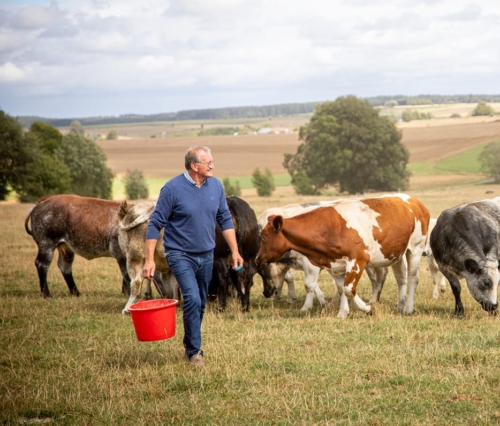
The La Croisette Farm is a family-run farm located in Libramont-Chevigny. In 1992, Bernard Meyer took over half of the farm (35 hectares), then the second part in 1997 with Isabelle, his wife. The livestock is focused on Belgian Blue (BBB).
Today, the farm covers around 70 hectares. All calves are raised at the udder with their mother and on pasture. Grass production is prioritized to limit purchases of external feed.
Since 2021, their son Olivier has opened an on-farm butcher shop: an animal is offered in packages or sold in the shop once or twice a month. Olivier is expected to take over part of the farm in 2027. His wish is to keep the livestock operation in the same spirit as his parents: make the most of grass (permanent pasture), keep crossbreeding between breeds, and keep the calf close to its mother. In addition, the young butcher plans to offer more farm products and increase the shop’s opening hours.
The farm is certified C’Durable, a Belgian label guaranteeing environmentally friendly and socially responsible production, including:
- Animal welfare,
- Feed self-sufficiency,
- Preserving biodiversity,
- Reducing chemical inputs,
- Product traceability.
The Meyer family wants to develop an agricultural hedgerow project across several plots to protect the grasslands, structure the space, and strengthen the ecological network. They explain: planting trees and hedges is first and foremost to naturally protect our animals from the sun and heat, but also from bad weather. Such green infrastructure would also help limit the drying effect of the wind while also hosting predators of pests (beneficial insects).
“Biodiversity is important to me because it’s the only way to keep a livable world for future generations.”
Site Conditions
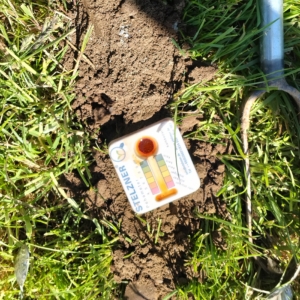
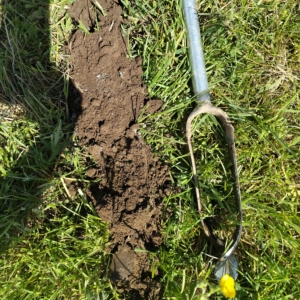
The soil observations carried out on site confirmed the presence of silty to silty-clay soils, slightly stony, with favorable natural drainage depending on the plot. The pH ranges between 4 and 5, and some soils have a schist structure. These conditions are suitable for hedgerow development across all lengths.
During the visit, we noted the presence of cows, game and voles depending on the plot, which means protection will be needed for young plantings.
All these observations made it possible to identify the suitable species for each hedgerow length and to pinpoint constraints linked to shared boundaries and permanent pasture.

Project Description
The project involves planting and gap-filling several hedgerow sections across different plots of the farm. The lengths were defined with the Meyer family, based on field observations, taking into account the constraints specific to each site and, above all, the family’s wishes. Planting is planned between November 1, 2026 and the end of February 2027.
A Multi-Site Project!
Several planting areas have been defined:
- H1 – Triple-row hedgerow (40 m).
- H2 – Single-row hedgerows (120 m).
- H3 – Single-row hedgerow to be gap-filled (105 m) and a new 327 m length.
- H4 – Single-row hedgerow (±103 m).
- H6 – Double-row hedgerow of around 68 m.
That’s a total of 911 m of hedgerows combined!
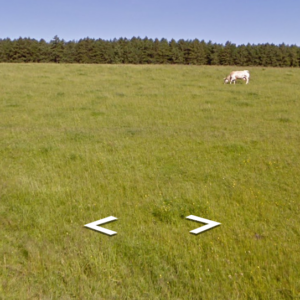
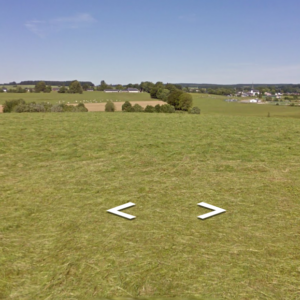
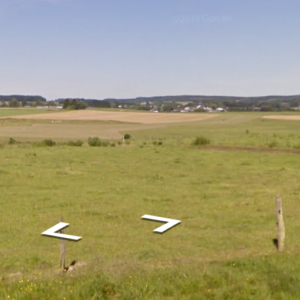
View of the areas that will host the plantings


-
Multiple Hedges in LibramontGet inspired
Hedge
-
Planting / installation period2026-11-01 - end of February 2027 (excluding frost periods)
-
Number of trees1 434
-
Meters of hedge911 m
-
Carbon111.3 T of carbon sequestered over 20 years
List of selected species
| Sessile Oak | |
|---|---|
| Pedunculate Oak | |
| Rowan | |
| Common Privet | |
| Hawthorn sp. | |
| Bloodtwig Dogwood | |
| Alder Buckthorn | |
| European Spindle | |
| Broom | |
| Holly | |
| Hazel | |
| Guelder Rose | |
| Small-leaved Lime | |
| Hornbeam | |
| Aspen Poplar | |
| Crabapple | |
| Blackthorn | |
| Silver Birch | |
| Dog Rose | |
| Medlar | |
| Wild Pear |