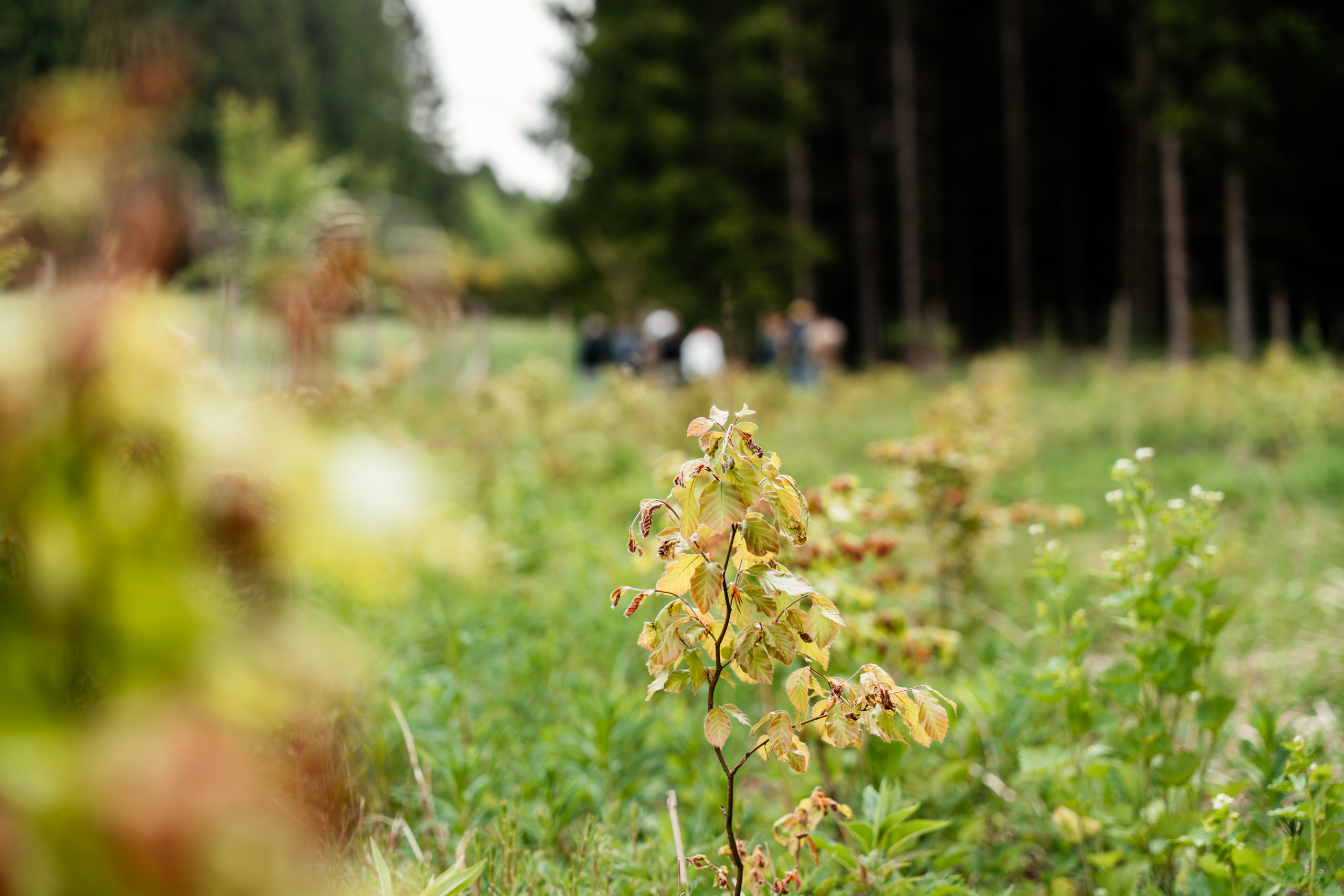
This reforestation was carried out with a view to diversification after the harvesting of mature spruces. Here, 8 species were planted: Spruce, Beech, Red Oak, Douglas Fir, European Larch, Scots Pine, Corsican Pine, and Atlas Cedar.
2,000 trees were planted with the support of committed businesses and citizens!
Project Details
The 8 species in detail:
- Spruce (Picea abies) – 605 individuals.
- Beech (Fagus sylvatica) – 152 individuals.
- Red Oak (Quercus rubra) – 152 individuals.
- Douglas Fir (Pseudotsuga menziesii) – 303 individuals.
- European Larch (Larix decidua) – 242 individuals.
- Scots Pine (Pinus sylvestris) – 182 individuals.
- Corsican Pine (Pinus nigra subsp. Laricio Maire ) – 182 individuals.
- Atlas Cedar (Cedrus atlantica) – 182 individuals.
In total, 2,000 trees were planted with the support of PlantC.
- Planting Period: Winters 2019-2020 and 2020-2021.
- Survival rate verified in autumn 2021.
- 213.68 tonnes of CO2 sequestered over 30 years.
Pines, cedars, and beeches enhance the biological interest of the project (associated species that will grow alongside the trees, and pines allow light to reach the ground). A major benefit of the project is also the significant CO2 absorption.
Finally, at soil level, the interspersed planting of different coniferous species will ensure good exploration of the various soil horizons.
This project is the result of our partnership with the Royal Forestry Society of Belgium.
-
Reforestation in GedinneGet inspired
Visit to the Plot in May 2023
On this plot, numerous species, primarily conifers, succeed a spruce monoculture.
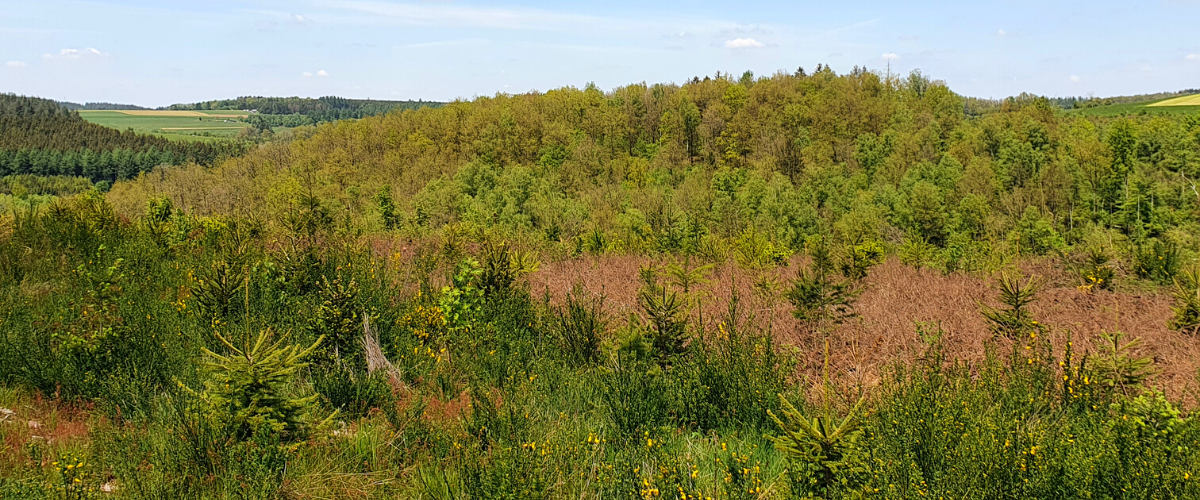
The coniferous species, interspersed, will benefit from their varied root systems to explore suitable soil horizons.
Our field visit reveals a good general survival rate. Furthermore, a beautiful floristic diversity is evident within this plot.
Common sorrel colors the compartments red, while broom, typical of acidic soils, showcases its yellow bloom.
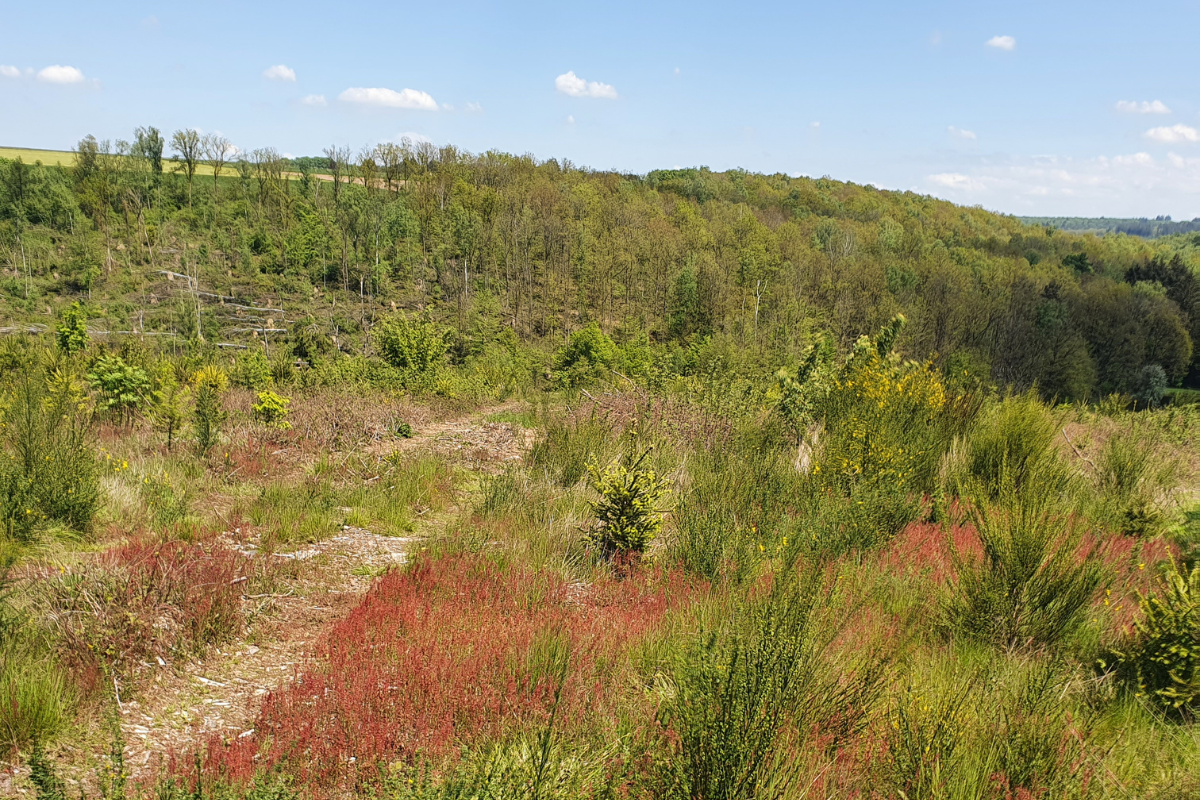
While clear-cutting contributes to degrading the forest environment, it creates transitional states that are beneficial for biodiversity: dormant seed banks awaken (remember we mentioned natural regeneration), and heliophilous species see the sun again.
Transitional environments that serve as biodiversity havens, renewed seed production, and temporary clearing effects.


Forest
-
Planting / installation period2021
-
PEFCNo
-
Number of trees2 000
-
Area49 400 m²
-
Carbon213.68 T of carbon sequestered over 30 years
List of selected species
| Spruce (Picea abies) | 605 |
|---|---|
| Beech (Fagus sylvatica) | 152 |
| Red Oak (Quercus rubra) | 152 |
| Douglas Fir (Pseudotsuga menziesii) | 303 |
| European Larch (Larix decidua) | 242 |
| Scots Pine (Pinus sylvestris) | 182 |
| Corsican Pine (Pinus nigra subsp. Laricio Maire) | 182 |
| Atlas Cedar (Cedrus atlantica) | 182 |