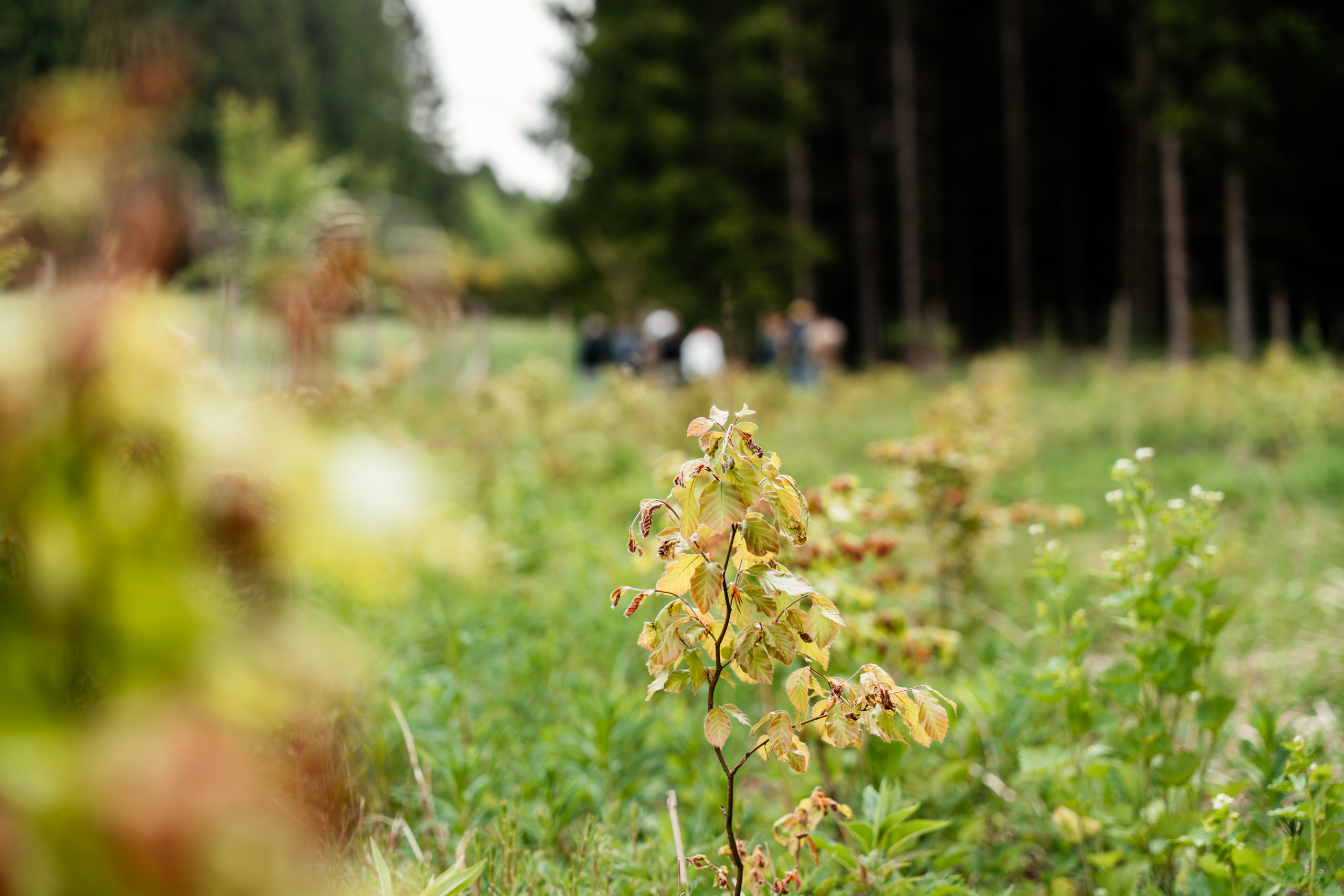
Restore a weakened ecosystem
In Haversin, in the municipality of Ciney, this reforestation project is part of the restoration of a spruce forest affected by the bark beetle. Faced with this decline, the ambition is to recreate a resilient forest ecosystem. This is achieved by carefully analyzing the site conditions and selecting species adapted to each zone.
We are here in Condroz-Famenne with a grouping of soil complexes of different textures, steep slopes, and rocky valley bottom soils.
The planting was thus designed according to the site’s potential, distinguishing between wet and drier areas.
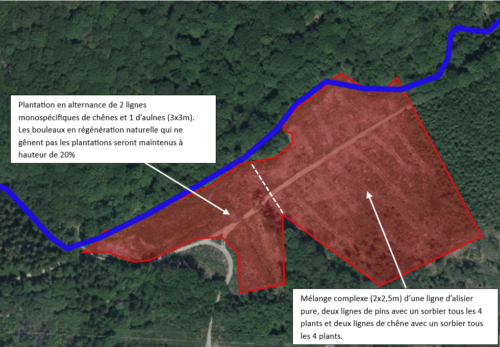
In wet areas, alder and pedunculate oak were favored, while drier areas host a mix of pines, sessile oaks, whitebeams, and rowan trees. The entire area is planted in an intimate mix to promote natural interactions and complementarity between species.
This is a PEFC (Programme for the Endorsement of Forest Certification) certified project. It is a label that promotes a forest management that is both environmentally friendly, socially beneficial and economically viable.
-
Reforestation Project – Ciney (Haversin)Get inspired
Species serving living organisms
Certain species choices also address specific ecological objectives.
Alder, for example, is a melliferous species particularly appreciated by bees: its early flowering provides a valuable resource at the end of winter. It also plays a key role in soil improvement, fixing nitrogen and facilitating the establishment of other species on sometimes compacted or waterlogged land.

Oaks (sessile and pedunculate), thanks to their deep root systems, contribute to soil structure and stabilization, while producing acorns and food resources for wildlife. Rowan and whitebeam trees, in turn, enrich the environment by offering fruits and habitats to numerous species.
Finally, Corsican pines show good future potential in the context of climate change. They are located in drier areas or where shale outcrops.

A project with measurable impact
Deployed over an area of 1.5 hectares, this project brings together 2,657 trees and aims for an estimated storage of 250.5 tons of CO₂ (over a 30-year period). It is part of an approach combining hardwoods for the ecological quality of the stand and conifers for timber valorization, in a site considered optimal for their development.

Towards a more resilient forest
The project contributes to restoring a functional ecosystem. It strengthens biodiversity, soil quality, and the services provided by the forest.
During our visit in April 2026, we had the opportunity to speak with the owner, Pierre:
He places great importance on natural regeneration and, like a true philosopher, coexists with the beavers residing at the bottom of his plot.


Forest
-
Planting / installation periodMarch 2025
-
PEFCYes
-
Number of trees2 657
-
Area15 000 m²
-
Carbon250.5 T of carbon sequestered over 30 years
List of selected species
| Black Alder | 972 |
|---|---|
| Sessile Oak | 545 |
| Pedunculate Oak | 323 |
| Wild Service Tree | 136 |
| Corsican Pine | 545 |
| Rowan | 136 |