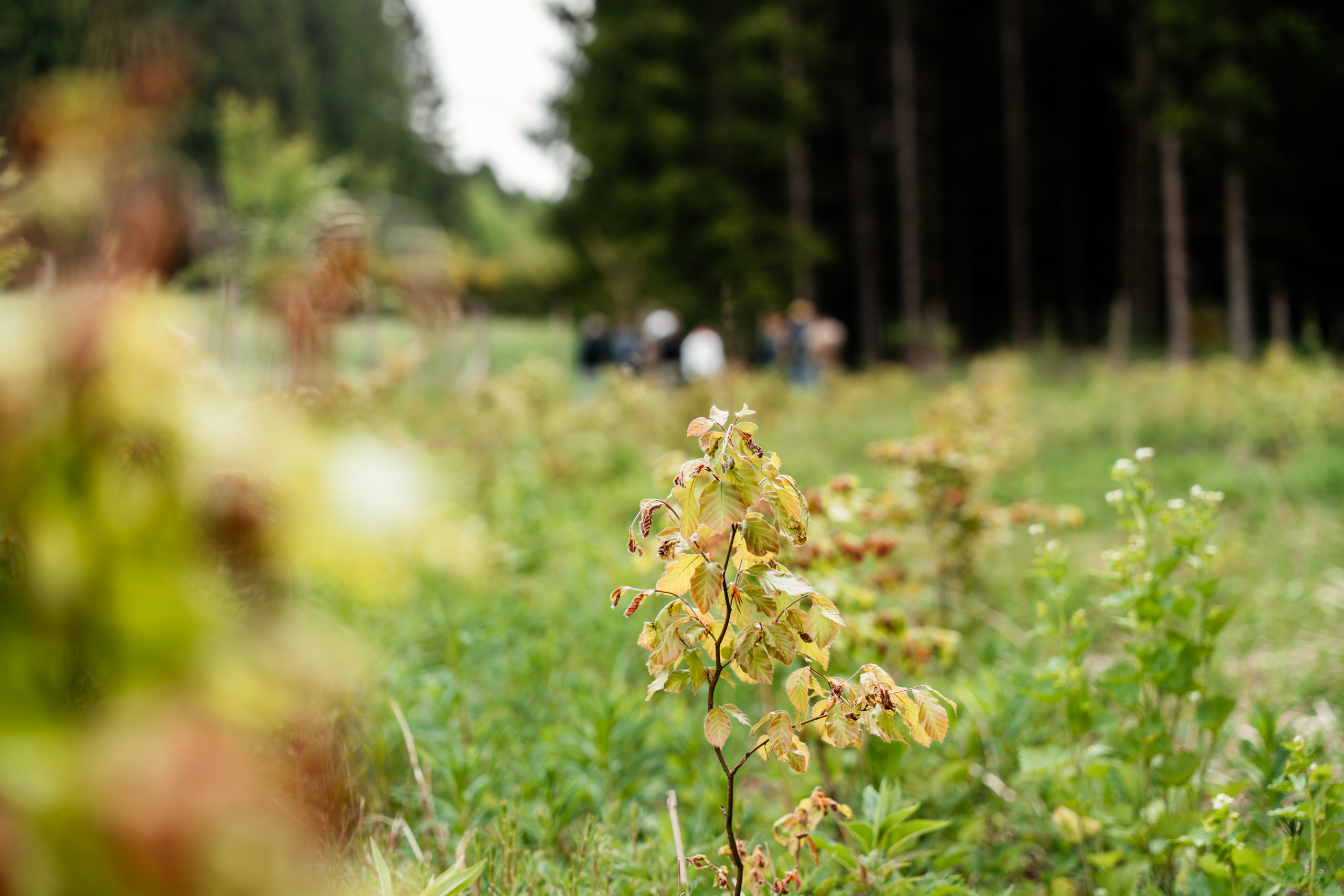
1,575 trees were planted in Bertogne (336) on a 0.8-hectare plot. The reforestation follows the presence of bark beetles. In total, there are four different species.

This combination of deciduous and coniferous species is part of a reforestation of a coniferous plot post-bark beetle infestation.
Using a diversity of species is beneficial for avifauna (flowers, fruits, and acorns, food sources for birds, insects, and small mammals, for example). Consequently, when leaves fall, humus is generated, and root systems are complementary. This will also impact the recycling of deep elements, the biological activity of the soil, the fixation and structuring of the soil.
- Planting period: February 2023.
- Survival rate: 95% (and that’s thanks to the excellent protective sleeves the owner was able to install!)
- 72 tonnes of CO2 sequestered over 30 years.
Project conducted in partnership with the Royal Forestry Society of Belgium.
-
Reforestation in BertogneGet inspired
Visit to the Bertogne plot in 2024
We visited the site on May 2, 2024, just before heavy spring showers. The sky was laden with heavy, grey clouds. However, we took our time to visit the planting plots at our leisure, and it was a very pleasant experience!
After a bark beetle infestation that affected part of the stand, the owner chose to call upon SRFB and PlantC to replant on their plot.
What struck us was the care given to this planting. The owner did not skimp on protective measures; they placed them on the most fragile species, but also on the species most palatable to game. The oaks are therefore out of reach of roe deer, and that is reassuring!

The owner chose to plant a mixture of sessile oak and American oak, which will protect its neighbor. This is a well-thought-out mixture because American oak, which has more sustained and earlier growth than sessile oak, will induce competition between the two species, encouraging the sessile oak to grow at a more sustained pace or at least straight if it wants to continue to have access to light.
On the adjacent plot, we find a mixture of hornbeams and European larches. The larch, very intolerant of competition, is protected by the hornbeam. Hornbeam is a classic species in silviculture that is often mixed to accompany other species. Its foliage is soil-improving, which allows the soil to regenerate, and it is one of the key species in the context of climate change.

Visit to the plot with CBC in 2025
In the rain, we guided the CBC team.
An opportunity to visit a diversified reforestation on a small plot.


The planting in 2027, what would it look like?
Perhaps you are wondering what the planting might look like in 2027?
Well, take a look!

Forest
-
Planting / installation period2023
-
PEFCNo
-
Number of trees1 575
-
Area8 599 m²
-
Carbon72 T of carbon sequestered over 30 years
List of selected species
| Sessile Oak | 275 |
|---|---|
| Red Oak | 275 |
| European Larch | 850 |
| Hornbeam | 175 |
Wonderful!
This kind of collaboration fills my heart with joy and hope for a better world…