You may already be familiar with it, the Corporate Sustainability Reporting Directive (CSRD) is a European directive aimed at harmonizing non-financial reporting carried out by our companies.

So, what exactly is it?
The CSRD, or “Corporate Sustainability Reporting Directive,” is a European directive enabling the establishment of non-financial reporting at the European level.
Specifically, it is based on a principle of double materiality, comprising:
- The impacts of the company’s activities on the environment and people;
- The impact of climate change on the company’s activities.
This non-financial report must comply with 12 standards: the European Sustainability Reporting Standards (ESRS), comprising four main pillars: Cross-cutting, environmental, social, and governance standards.

The goal, as you may have gathered, is to bring about transition within companies in order to prepare the various economic sectors for successive crises.
Who is concerned?
The CSRD directive came into force on January 1, 2024. This means that a company will publish its first report in 2025, covering the 2024 financial year.
Among the companies concerned:
- Companies listed on regulated European markets, including listed SMEs;
- Other large European companies, listed or unlisted, exceeding two of the three defined thresholds (250 employees, 40 million euros in turnover, and/or 20 million euros in total balance sheet);
- Non-European companies whose subsidiaries or branches generate a turnover exceeding 150 million euros within the European Union.
Companies not mentioned can voluntarily produce a CSRD report. In any case, sooner or later, partners, suppliers, or clients of large companies will have to comply with the same standards if they wish to remain attractive.
What does this change for your company?
This directive provides additional information to stakeholders (investors, partners, end consumers). Furthermore, it helps to combat greenwashing or any type of abuse, as the report will be reviewed by an independent body before publication.

Compared to the financial report, the non-financial report integrates, in addition to the principle of double materiality, the company’s strategy for managing these issues.
In case of non-compliance with the directive, sanctions compromising their reputation may be applied. These sanctions can be financial or order the cessation of activity.
PlantC supporting your CSRD strategy?
We offer companies concrete solutions to act in favor of biodiversity and climate. PlantC is therefore clearly positioned to help you as companies integrate biodiversity into your action plan and thus into your non-financial reporting strategy (ESRS E4 standard).

So, how can you act with PlantC in favor of biodiversity?
- Do you have corporate land with unused spaces or only composed of lawn? We implement a management plan for your space to encourage the establishment of fauna and flora.
- Is your value chain directly dependent on the local environment or its natural capital (e.g., water, food, timber sectors, etc.)? We design and implement biodiversity support measures within your sector, while working on adapting our territories to global warming.
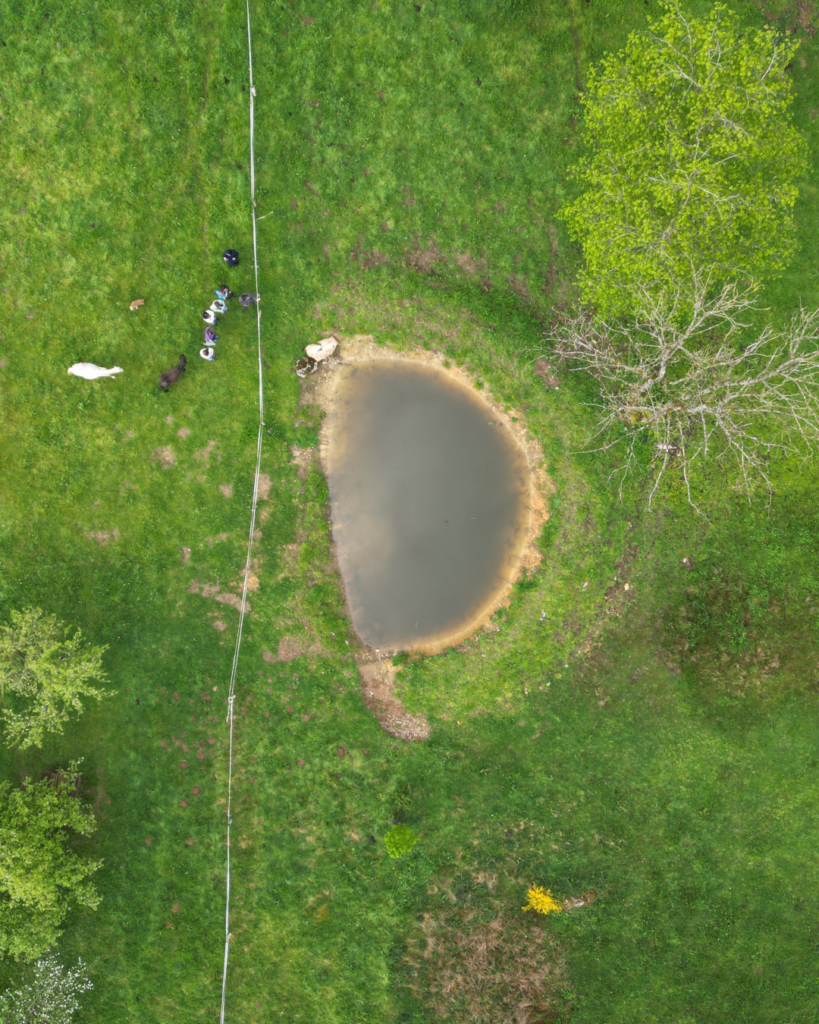
- You don’t have land but want to support biodiversity in Belgium? You can contribute to impact projects external to your company. These include hedges, orchards, agroforestry plantations, creation of ponds on agricultural plots, or reforestation projects in forest areas.

Finally, PlantC’s missions and raison d’être do not absolve us of all responsibility in terms of governance, environmental, and societal impact. We also have our role to play.
For our part, we also make the effort… not out of obligation but because we are convinced. Recently, we submitted our 2022 report to initiate BCorp certification. We are currently taking steps to obtain UNITAR certification. These certifications push us to question ourselves, to improve, and to adopt a fair, robust business model while considering today’s and future environmental challenges.