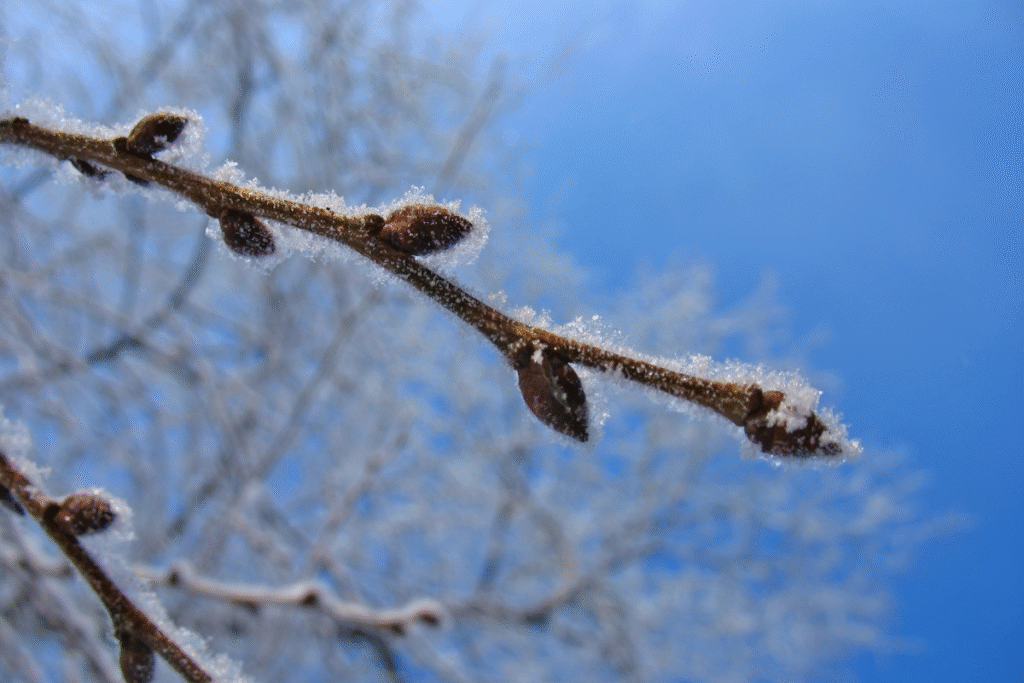
In this context, this is a reforestation project following a sanitary felling, where 4 species were planted. This program aimed to support the planting of 1,150 trees in Florenville.
PROJECT SUPPORTED BY

FLORENVILLE: A REFORESTATION FOR CLIMATE AND BIODIVERSITY
The challenges surrounding the Belgian forest are numerous. In this context, this is a reforestation project following a sanitary felling where 4 species were planted:

- Larch (Larix sp.) – 50 individuals.
- Sessile oak (Quercus petraea) – 400 individuals.
- Beech (Fagus sylvatica) – 400 individuals.
- Corsican pine (Pinus nigra var. corsicana ) – 300 individuals.
This provides a good array of associated species, beneficial for birdlife. The root systems will impact the recycling of deep elements and the biological activity of the soil. Of course, the complementarity of species allows for the fixation and structuring of the soil. Across the entire reforestation effort, PlantC supports 1,150 trees.
- Planting period: Autumn-Winter 2021/22.
- Survival rate verified in autumn 2022.
- 61.5 tonnes of CO2 sequestered over 30 years.
Species diversity contributes to biodiversity preservation: melliferous species and fruits produced (acorns, for example). It produces a leaf litter that decomposes properly, improving the fertility and life of the forest soil.
This project is the result of a partnership with the Royal Forestry Society of Belgium.
VISIT TO THE FLORENVILLE PLOT IN 2023
On May 26, 2023, the PlantC team visited the site to observe the plantation’s progress.

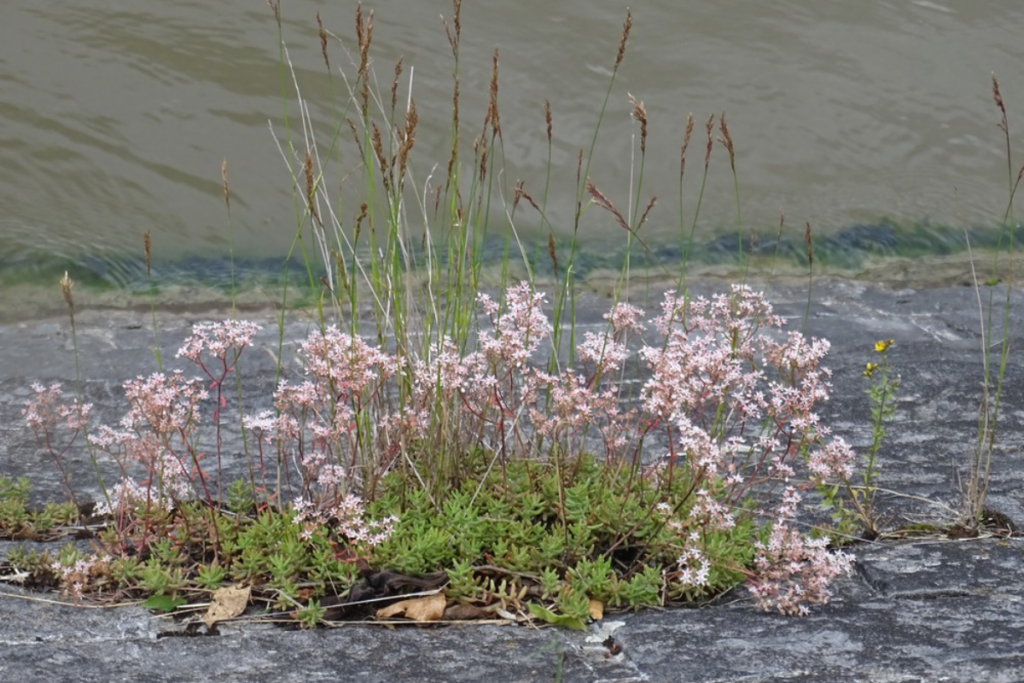
This woodland follows a sanitary felling and introduces a new deciduous/coniferous mix, whose growth is indeed progressing well. A beautiful floral diversity is expressed in this steeply sloped plot, in perfect coexistence with the woody plants.

An opportunity to focus on a less common species: the Corsican pine (Pinus laricio). As its name suggests, the natural distribution area of this species is almost exclusively in Corsica. It is present in less than 1% of Walloon forests. It shows strong resistance to high summer temperatures and drought. Rising temperatures could allow its optimal zone to expand within the Ardennes. It is sensitive to soil waterlogging and is better adapted to acidic soil (which is the case here), unlike the Austrian black pine, which is a calcicole species.

Pines allow light to pass through, which allows for the establishment of other species under their cover. Its positioning on this slope is highly relevant.