In Vielsalm, PlantC supported the reforestation of 2,000 trees! In total, four species were planted.
Project Supported by

Reforestation in Vielsalm in Detail
In Vielsalm, this is a reforestation project where PlantC is involved in supporting 2,000 trees over 2.6 hectares. Four species are planted: Norway spruce, Douglas fir, American oak, and beech.

This combination of deciduous and coniferous species is part of a reforestation of a coniferous plot post-bark beetle.
Using a diversity of species is beneficial for birdlife (flowers, fruits, and acorns, sources of food for birds, insects, and small mammals, for example). Consequently, when leaves fall, humus is generated, and root systems are complementary. This will impact the recycling of deep elements, soil biological activity, the fixation and structuring of the soil.
- Planting Period: December 2023.
- Survival rate: over 90%. However, the owner may potentially need to replant, as Douglas firs are increasingly affected by late frosts.
- 574.22 tonnes of CO2 sequestered over 30 years.
Project conducted in partnership with the Royal Forestry Society of Belgium.
Visit to the Vielsalm Plot in 2025
In winter 2023, a couple from Vielsalm, passionate about nature and forestry, undertook to completely reforest a two-and-a-half-hectare plot. They had acquired this bare woodland, as the previous owners had already harvested the beetle-infested trees. Through their project, they wish to give this land a new lease of life.

The choice of species primarily favors production, with a dominance of conifers adapted to the Ardennes context. This is a bold gamble, as the plot mainly hosts spruces and Douglas firs, species known for their sensitivity to global changes. However, locally, several factors offer hope for the success of this reforestation: the altitude is favorable, and the northern exposure, in a rather cold area, ensures good conditions for the establishment of these species.
A Brief Overview of the Species:

Beech is a large deciduous tree, very common in Europe. Its wood, light and smooth, is valued for carpentry and furniture. It grows well in cool, deep soils and often forms beautiful, bright forests, as its foliage allows little light to pass through.
Spruce is a slender conifer, recognizable by its short needles and drooping cones. It grows quickly and provides lightweight wood, used in construction and papermaking. It thrives in cool, humid climates but becomes vulnerable to insects and droughts with climate change.
Douglas fir is a conifer native to North America, introduced to Europe for its rapid growth and the quality of its durable and resistant wood. It can grow very tall and is recognizable by its long, flexible needles and the citrusy scent of its freshly cut wood. It tolerates various soils and a temperate climate well.
This oak, native to North America, is valued in Europe for its rapid growth and large, reddish leaves in autumn. Its wood is used in carpentry, although it is less durable than that of European oak. It tolerates various soils but can become invasive in some environments.

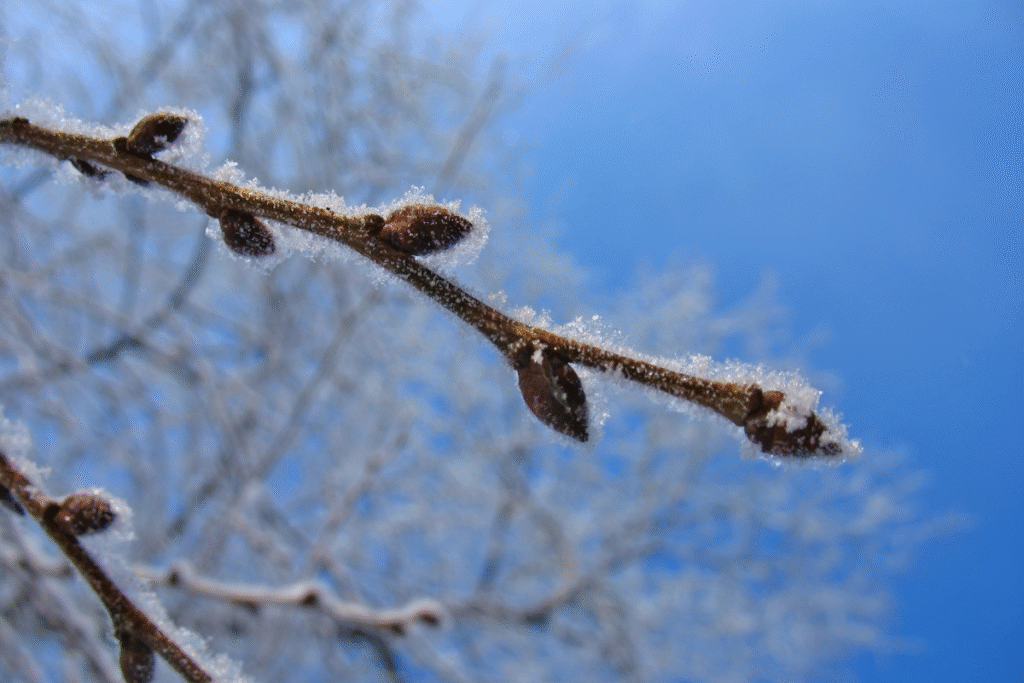
Late frosts can pose a significant risk to Douglas firs, especially in spring when the tree begins its growth. Its young shoots, still tender and full of sap, are very sensitive to sudden cold. A frost after budburst can burn these new shoots, slowing the tree’s growth, or even causing deformities or the death of the plant.

See you soon for forestry news!